travel
A quick happy film fix
I’ve been submerged in Byrne Miller’s world, hoping to finish the manuscript by January for a planned hard-cover release in September 2013. But two friends I met at the Oaxaca International Film Festival managed to wiggle into my cocoon and I just had to share the good news.
Felix Martiz, the director of “Santiago” who won BIFF’s first-ever Best Director award, is making another film and it’s a romantic comedy! He’s raising funds, and if you remember the story behind the making of “Santiago” you’ll know he’ll make the most of every penny. It’s easy to contribute http://www.indiegogo.com/amorimposible and maybe this time he’ll have more than 5K to work with! He’ll make a short first, to use as a trailer and opening sequence of a full-length feature and if we all pitch in, maybe the guy can afford a tripod this time.
Here’s the funny part. Because my “Mask of the Innocent” won best screenplay at Oaxaca, Felix thinks I know something about writing. So he hit me up to read some of his newer work. I loved it, except for one thing. I thought his female characters needed work – lots of prostitutes and angelic mothers but not much inbetween. I gave him such a hard time that he passed the scripts along to another writer we met at Oaxaca, the talented Laurel Minter, for a second opinion. She gave him the same hard time about women! Now he has to listen to us, because Laurel has gone and made finals in the Nicholl’s Prize (that’s like being a first-round draft pick in our world) It couldn’t have happened to a nicer person, especially since my screenplay got knocked out of the running after quarter-finals. I’m so excited for Laurel, and Felix – and talk about six degrees of separation!
Pina comes to Savannah on Sunday
On my trip to NY this summer to research Byrne Miller’s early life, I had the chance to see the 3D film “Pina” by Wim Wenders. I have never been so stunned by a film, though Wim Wenders’ work often leaves me speechless. Gary made me watch Wings of Desire when we first met, and that confused but delighted me. Then Buena Vista Social Club came along and literally awakened the world’s interest in Cuban music. Lisbon Story made me fall in love with Madredeus – the Portuguese Fada singer. I went from thinking Wenders had a knack for being in the right place at the right time to realizing he was equal to the genius he admired.
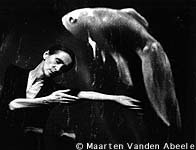
Wenders has said that he waited, almost all his life, to do a film about Pina Bausch, the great German modern dancer. It wasn’t until 3D came about that he realized why he’d waited. Unfortunately she died during the making of his latest masterpiece, but perhaps it freed Wenders to make, at last, a love story. He abandons the tradition of using archival footage as the thread – he stages Pina’s dances in modern-day Germany- in hanging trains and busy intersections, by the sides of swimming pools. He couldn’t afford the rights to the original music of her dances, so he just edits the numbers to a soundtrack that only a director who loves Fado and Tango and Son could imagine. He didn’t dabble in the usual documentary interview process, playing on our sympathies by pointing out all the hardships Pina faced. He didn’t try to draw a picture of the whole woman, her role as a wife or mother or dance pioneer – though she was all three. He let her work speak for all of that. “Pina” has no plot, but it is more riveting than any drama I have ever seen. The 3D effects are cool, but Sunday in Savannah I’ll just as happy to see the choreography the way she did when she created this amazing body of work. I may even sit through all three showings – 2, 5 and 8pm.

Pina Bausch reminds me so much of Byrne Miller — even though Pina was born 30 years after Byrne. They were both at the bleeding edge of modern dance in their time and their country. In my research I’ve learned how very influenced Byrne was by German dancers, how the art form could be argued as born there. She spoke of Pina’s predecessors, like Harald Kreutzberg, as so powerful to watch they were almost frightening. Even Pina Bausch’s mantra “Dance, dance …otherwise we are lost” reminds me of something Byrne used to say. “First there were people and then there was dance, because the people just needed to move.”
Mom-in-Chief
When you spend six hours a day writing about someone it’s hard not to imagine her here and now, reacting to the same things that amaze and inspire me. So it shouldn’t surprise me that as I watched our First Lady speak to the nation last night, I was thinking of what Byrne Miller would have thought.
She and Duncan watched nothing but PBS, listened only to classical music and quoted Nietzsche and Shakespeare to each other in their own metaphorical language. So I know she would have appreciated the literary flair of Michelle Obama’s words:
“If farmers and blacksmiths could win independence from an empire…if immigrants could leave behind everything they knew for a better life on our shores…if women could be dragged to jail for seeking the vote…if a generation could defeat a depression, and define greatness for all time…if a young preacher could lift us to the mountaintop with his righteous dream…and if proud Americans can be who they are and boldly stand at the altar with who they love…then surely, surely we can give everyone in this country a fair chance at that great American Dream.”
Byrne’s life story could fit in every one of those archetypes. She was the Jewish daughter of immigrants who lost everything in the Depression (which is why she became a burlesque dancer – the start of it all) She protested wars, marched for civil rights – even for communist sympathizers – and recoiled at the thought of government involvement in who we love and how we love them (this debate isn’t new) But mostly I heard her cheering for Michelle Obama as mom-in-chief. She would have cheered this because, by Byrne’s own count, she had adopted more than 100 “kids” along the journey of her life. Even when she could not help her own daughters – one was killed by a drunk driver and the other suffered from schizophrenia – she reached out to help other women, like me.
So last night I felt, in Mrs. Obama’s rhetorical mom-in-chief language, the spirit of a woman who gave everyone she could a fair chance at a different kind of dream: Byrne Miller.
Describing the Unspeakable
I just took a break from the Byrne book for a week, trying to let the contents of my most recent chapter settle in my heart. I’m trying not to recount stories Byrne told me on our porch in Beaufort, but rather to put myself in her shoes and feel what she felt. It’s difficult, and most of the time I’m loving it, except for the truly sad parts. Like when her oldest daughter was diagnosed with schizophrenia as a child. The doctors wanted to institutionalize Alison but Byrne refused. The only treatment at the time was shock therapy.
Not ever having had a child, it’s hard for me to grasp what that news must have felt like. I wonder if any readers might be willing to share any emotional insights with me – not necessarily about shock treatments but what it feels like to hear devastating news about your child’s health — either in the comments or just by email if its too painful.
Sylvia Plath, one of my favorites, described shock therapy like this: “I shut my eyes. There was a brief silence, like an indrawn breath. Then something bent down and took hold of me and shook me like the end of the world. Whee-ee-ee-ee-ee, it shrilled, through an air crackling with blue light, and with each flash a great jolt drubbed me till I thought my bones would break and the sap fly out of me like a split plant. ‘I wondered what terrible thing it was that I had done.”
When I think about how Byrne must have felt when the doctors ordered shock therapy for Alison, a dance image comes to mind, as if she walked into the doctor’s office straight from rehearsal.
“She sweeps into the hospital examination room with a walk that leads from angry hips. The doctor speaks, but his words are crashing cymbals in a discordant orchestra. The noise hits her in her stomach and she is momentarily off balance. She struggles not to fall, grips her bare feet in second position parallel, knees in demi-plié. Her core is in contraction, breath exhaled, hands flexed at the end of hyper extended arms. She is pushing the doctor away, the palms of her hands telling him no, he cannot take away her wounded daughter.”
Like I said, I’m still wrestling with this part, and I welcome any suggestions from my sisters-by-Byrne, friends and readers. Thanks!
The Week Women Will Want to Forget
Okay, so maybe a private viewing party for Lifetime’s debut of “The Week The Women Went” last night was a little catty. Afterall, a wonderful producer who pitched my first screenplay to Lifetime last month got a pass. “We love the true story part,” an executive apparently said about my work, “but it’s just doesn’t have that ripped-from-the-headlines feel.”
So I had to see what Lifetime does consider worthy of producing. Turns out it’s a new reality show starring the now-thoroughly-embarrassed town of Yemassee – with bit parts for Beaufort.

It’s billed as a “unique social experiment” which consists of separating the women of Yemassee from their husbands, children and jobs for a week. I’d read that many of the 100 women who agreed to share their lives with TV cameras have been dreading the heavily-edited final product. I feel for them. I’ve been in TV – I know how easy it is to change the context and sensationalize moments of candor. I also know how children ramp up when cameras roll, even ones who don’t routinely pitch temper tantrums that would peel the paint from your car. And when a local paper published a quote from a town official saying he’d gladly volunteer to have the show come back – as long as this time the men got to choose which women came back – I knew it was bound to be a walk of shame for our sweet, unsuspecting, neighboring town.
I can’t begin to put a “what would Byrne Miller think” spin on this blog posting – she simply couldn’t have imagined the scourge that reality TV has become in our time. I steeled myself for cringes – and they started with a four-year-old dancer. She’s the self-titled “drama queen” of her Yemassee family and the cameras relished showing her mortified mother as the little girl performed a bump-and-grind routine worthy of a burlesque show back in Byrne’s day. Wow – somebody please open a ballet school in Yemassee.
As Gary predicted, the men of Yemassee were almost uniformly portrayed as bumbling, uncouth idiots – a practise borrowed from contemporary TV advertising, which he despises. I was equally not surprised by the abundance of breast-enhancing tight dresses and heels higher than I’ve ever seen anywhere near the Yemassee railroad station. (maybe I’m not there late enough at night?)
But it was an admission of the fire chief’s mother that literally silenced our color commentary. Someone correct me if we all misheard this – but this mother of a 21-year-old, able-bodied, gainfully-employed man said she does everything for him – and that she might even bathe him if he asked her. Thankfully, he asked a normal-seeming young woman to marry him instead – right as the Amtrack headed south rolled into the station to take the women away for this week-long “experiment” that will drag on for five weekly episodes on Lifetime. “The Week the Women Went” airs Tuesdays at ten if you’re a fan of train wrecks unrelated to Amtrack. Sorry normal and decent friends in Yemassee, I think the four of us saw enough for a lifetime.
Smart stuff my father-in-law says

That’s Joe – on the right – next to his beautiful wife Angie. You may remember this picture from my blog about his 90th birthday party last summer. Well now he’s 91 and still just as sharp. We’re in Wisconsin watching the news together on the couch, which is when most of his bon mots come out (as opposed to rants, more common in our Beaufort house) He says I can share two with you free of charge.
The first came up when Gary wanted to know where the key to the family’s 1974-era pontoon boat might be. It wasn’t in the usual place, which didn’t matter because Joe follows his own advice.
“It’s easy to feel stupid as you age because you forget where you put things. So just buy two or three of everything you commonly need and scatter them about the house. Viola – you double or triple your chances of finding it!”
The second piece of wisdom came after Joe asked me what I’ve been typing all day. I actually took my laptop with me to finish a chapter on the Byrne book. He asked who proofreads for me and I told him Gary usually has first look – before it goes off to my real editor – Susan Kammeraad Campbell at Joggling Board Press. He considers his job to catch cliches, mushy stuff he thinks will bore readers and the occasional error of fact. Like this one that slipped into my description of first approaching Byrne’s garden I won’t say how many years ago:
“The air smelled of salt, wisteria and bolting rosemary.”
Gary said “Rosemary doesn’t bolt. The rest’s okay.” So I confirmed it with my garden guru Will Balk, changed it to bolting cilantro, and sent the chapter off to Susan.
Joe thinks that was a bad idea. “You should leave a few dumb things like that in. That way when the book comes out and critics complain, at least you’ll know they really read it.”
Now that’s some 91-year-old Midwestern logic for you. Hmm…bolting rosemary might have to go back in.
Not so bella Bela
Not surprisingly, I’ve been glued to the partial telecasts of the London 2012 Olympic gymnastics competition – despite the horrific commentary by people who should know better Elfi. I hope that enough time has passed since Gabby Douglas’s soaring all-around victory that discussing the not-so-upbeat side of the sport in no way cuts into her glory. But several friends have wondered what I thought of this article – about the recent tell-all memoir of Dominique Moceanu. I think she’s as brave as Gabby for speaking out. She’s right – what medal-hungry Americans accept as training is child abuse by any other name. That growling, media-clamoring bear-of-a-coach we all know as Bela Karolyi (and his other half Marta) is only one of a string of foreign-born gymnastics coaches who make great gymnasts overseas and then impose the same system on our girls. They’re proven champion-builders (Bela and Marta started with Nadia, remember her?) but it’s a warped system. The injuries the system promotes, which is what Dominique’s book deals with, are only part of the picture. Coaches who try to recreate Eastern European gymnasts on American bodies also enforce anorexia. And it’s probably even worse in Rhythmic Gymnastics where the Eastern European waif-thin body type still dominates the sport.
I know because I was scarred by it myself. At Olympic Training Camp in Colorado Springs the U.S. Rhythmic National group-routine team was ordered to run laps before and after each practice – the first run to sweat off any lingering effects of dinner the night before our morning weigh-in; the second one to sweat off any sips of water we drank during six hours of practise. Every day I didn’t lose weight I was threatened with expulsion from the team and I didn’t think my parents could afford a plane ticket home. It took years after a broken back ended my rhythmic career to even get a monthly cycle back, let alone a healthy attitude toward food. A disgusted gynecologist told my mother I might not ever be able to have children. A psychologist told me I had a form of PTSD. I’ll never forget a meal served to me by the Bela of rhythmic gymnastics in my day – Alla Svirsky. It was the night before my first World Championship in Strasburg, France. My parents were thousands of unsuspecting miles away. And I was told to eat a tomato for dinner, only a tomato, so that I’d lose another half pound or so before the judges saw me. I fainted three times during the competition, which was no big deal to our Russian coaches. We all collapsed after every routine but as long as we looked as skinny as the gymnasts they used to train, it was okay by them.
I say all this not out of sour grapes. I survived the sport and went on to a happy and fulfilled life. I still love to watch these competitions, but I can’t help but think if I ever did have a daughter I’d never send her off to train under one of those coaches. Some things never seem to change.
Mermaids and Karma
I’ve been dwelling a lot on karma these days, maybe because it’s too hot to do anything more productive – like contemplating or considering or rejecting karma. It may not even qualify as karma, but I’m referring to the kind that goes like this: if you make up a story to get out of a bind that story will end up coming true.
What this has to do with mermaids is this. Many of you know that I am one, have been long before Disney merchandised the whole concept with that cloying Aerial. But for the past two months I’ve had to stay clear of the river that flows in front of my house because of a small but pesky open wound that may or may not have started from a spider bite. For a mermaid, not being allowed to swim is the equivalent of being grounded. I’m not the only one. A mermaid sister of mine, Lolita, has been grounded thanks to a nearly-broken back. We’re both miserable. Which is why I’m wondering if karma is to blame. I can’t speak for my mermaid sister’s case, but I may have had it coming.
About three years ago I invented a story. (Okay lied.) I told my inquisitive nephew Brandon that the reason he couldn’t see my tail anymore* is because I was grounded by mermaid management. It isn’t necessarily permanent, but until the powers that be say so, I am no longer a mermaid.
*The tail he once saw (full disclosure here) was a costume I rented before his little brother could walk and before his little sister was born. On a visit to Florida, I wore the costume in his bathtub and posed for this picture. This does not prove that I am not a real mermaid. It was simply easier than auditioning for the Weeki Wachee mermaid show or giving up my voice to marry a prince. I’ve been Auntie Mermaid ever since.

I come by mermaidenhood honestly. I wanted to be a ballerina but I wasn’t tall enough. As I’m explaining in the book I’m writing for Joggling Board Press, my mother conveniently taught swimming lessons at the Hillsboro, Oregon indoor pool. Here’s a little sample (not yet edited):
“I spent hours each summer day cross-legged at the bottom of the shallow end, holding my breath and trying not to puff out my cheeks too much. Through the stinging, chlorinated water I looked up at my mother’s legs, treading water, and resolved never to look like I was riding a bicycle. I squeezed my legs together instead, pointing my toes and bending at the hip to propel myself under the struggling students. Blowing tiny bubbles from my nose, I could undulate across the entire length of the pool without coming up for air. I refused to wash my hair with the special chlorine rinse my mother used because I wanted my blonde hair to turn green, like the moss tangled in the illustrated Little Mermaid’s locks.”
I loved that my nephew knew me not as Teresa but as his Auntie Mermaid. But once he reached about ten the questions started coming fast and furious.
Q: Why doesn’t your tail come out every time you swim?
A: I have special lotion (sunscreen) that I always put on my legs to keep my tail invisible.
Q: Is Gary a merman?
A: No. He’s not a good enough swimmer.
Q: Can’t you make him one?
A: No, I love him too much to drown him.
Q: We won’t tell anyone. Can’t we see the tail again?
A: Sorry. Mermaid management found out about the first time you saw my tail and that’s why I’m grounded.
See what I mean about karma? The story I told to get out of a bind has actually come true, just ten years later. Swimming in the life-giving, organism-filled waters of our tidal ecosystem is a recipe for flesh-eating bacteria. I didn’t just ascertain this from the tabloids – actual doctors concurred. Wait until all broken skin is completely healed. No matter how hot and humid it is. This weekend marks the all-clear mark when it’s safe for me to swim again. So for the sake of karma, don’t mention it if you see a mermaid’s tail break the surface of the water.
Too Green?
There is a price to pay for being too green, I’ve decided. The corollary to my theory is that there is such a thing as eating too healthy – which my sister reminds me of every time I visit her, eat even a morsel of the tasty processed snacks she feeds her children, and then have digestive hell to pay. “Your body is too picky,” she tells me, “you’ve lost your normal food immunity.”
That, unfortunately, I can’t help. I’m doomed to eat healthy food by virtue of vanity and no health insurance. But this green thing, I’m beginning to wonder about. Starting a compost pile seemed like the right thing to do when we moved back to Beaufort. Turns out it does nothing to help our drought-battered sandy soil but we inadvertently created a nightly buffet for every rodent in Pigeon Point. Word apparently spread. Byrne Miller’s old house is fair game – they only have a cat and she’s trapped behind a screen porch!
The green penalty increased over time. Gary labored over a garden, only to have our first melons mysteriously disappear the night before we planned on harvesting them. He has a theory that only raccoons are smart enough to rig up some leverage device or stand on their hind legs and roll a heavy melon out of a raised garden. Me, I give squirrels the credit. They are even pickier eaters than I am and sample every tomato before deigning them unfit for our consumption. The melon obviously met with their approval and they simply amassed an army of their friends to take our prize.
I use the military analogy because squirrels are winning the war, let there be no doubt. When we decided to be even greener and put out bird seed during the drought, Gary had to buy a BB gun to keep the squirrels away. It is on ongoing standoff and the rats with fluffy tails resume the assault the minute he puts away the gun. Same goes with the water we put out for the birds during the heat wave this summer. Every night we watch families of raccoons finish their buffet dinner at our compost pile with a leisurely draining of the bird bowl. They’re often too full to waddle into the bushes to use the bathroom and find our deck quite convenient and sanitary.

It isn’t just the Low Country that retaliates against being too green. Last week we stayed at Kim Gundler’s rental cabin near Asheville, North Carolina. It sits on a working farm and the coolest thing about staying there is that you get to join the farmers and pick whatever produce you can eat. The okra was fuzzy and plump, the onions sweet and juicy and zucchini too tender to pass up. So I baked zucchini bread – the greenest, healthiest zucchini bread you can imagine. I used olive oil instead of butter and cane molasses made right there on the farm instead of sugar. Kim’s little log cabin smelled just like I imagined Laura Ingalls’ would have and I put the loaf outside on the porch to cool while we played a game of cards. It was dark when we remembered our healthy dessert and we couldn’t see it right away. We searched by flashlight but the empty loaf tin was halfway to the barn by the time we found it. If I’d stuck to a store-bought Sara Lee loaf full of preservatives and high fructose corn syrup, I’m sure the vegan, free range, organic raccoons of North Carolina would have turned up their noses.
The first night we were back from the farm, I put a fresh bar of soap on the tray of our outdoor shower. There is nothing more refreshing than a hose-supplied, un-heated shower under the Live Oak trees during a Low Country summer. But the next morning the soap was gone. I searched under the porch, thinking maybe I had knocked it off the deck in the dark. No luck, so I dug up our last bar of Trader Joe’s soap. We ignore our carbon footprint and make pilgrimages to North Charleston for this soap –it’s cruelty-free, Tea Tree Oil, pure vegetable soap. You don’t come out of a shower after using this soap smelling like a strawberry Margarita or an Irish sailor. You smell like, well, a freshly washed zucchini. Which is probably why we heard a thump at three this morning. Rosie snarled at the sliding glass door that leads out to the deck and the outdoor shower and Gary turned on the light to investigate. There, hanging from the privacy shutters that block our shower from our neighbor’s view, was a young opossum. Under her, covered in claw and tooth marks, was a freshly dropped bar of Trader Joe’s soap. Is a reclaimed wood, punched tin soap safe far behind?
 "TeresaBruceBooks"