Memoir
A Soiree for Other Mothers Everywhere
“Somewhere in the years of knowing Byrne, she had become my other mother, fearless and larger than life. I couldn’t have explained to the doctor or anyone when or how it happened any more than I could pinpoint the first time I became aware of my own name.” — Chapter 42 “The Other Mother: a rememoir”
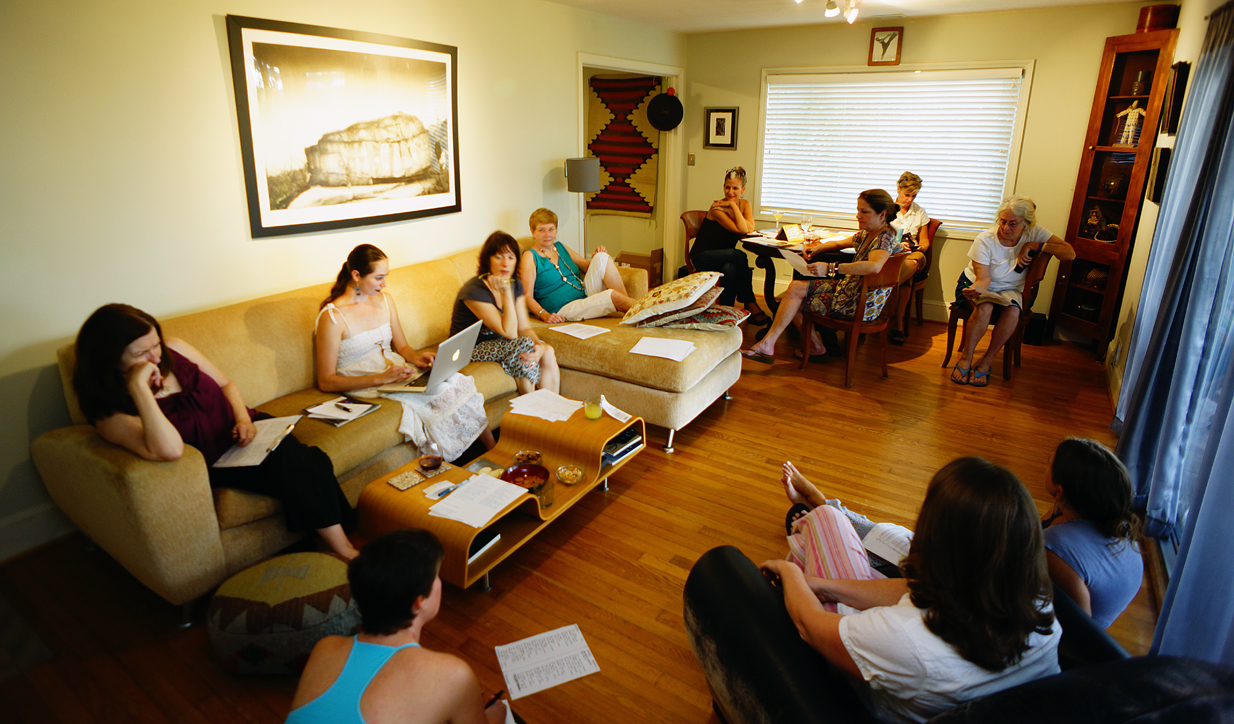
I may never remember the exact moment I found an Other Mother in Byrne Miller, but I will always remember the moment I realized that all women, instinctively, get it. It happened last night, at the first ever “Other Mother Soirée.”
My friend and fellow writer Barbara Kelly had the idea to combine a celebration of my memoir about Byrne and a tribute to the other mothers in all our lives.

Her soirée invite list started with her own Other Mother – Betty Tenare. In the same way Byrne added me to her collection of daughters, Betty befriended Barbara when she first arrived in Beaufort and folded the nervous newcomer into a circle of support.
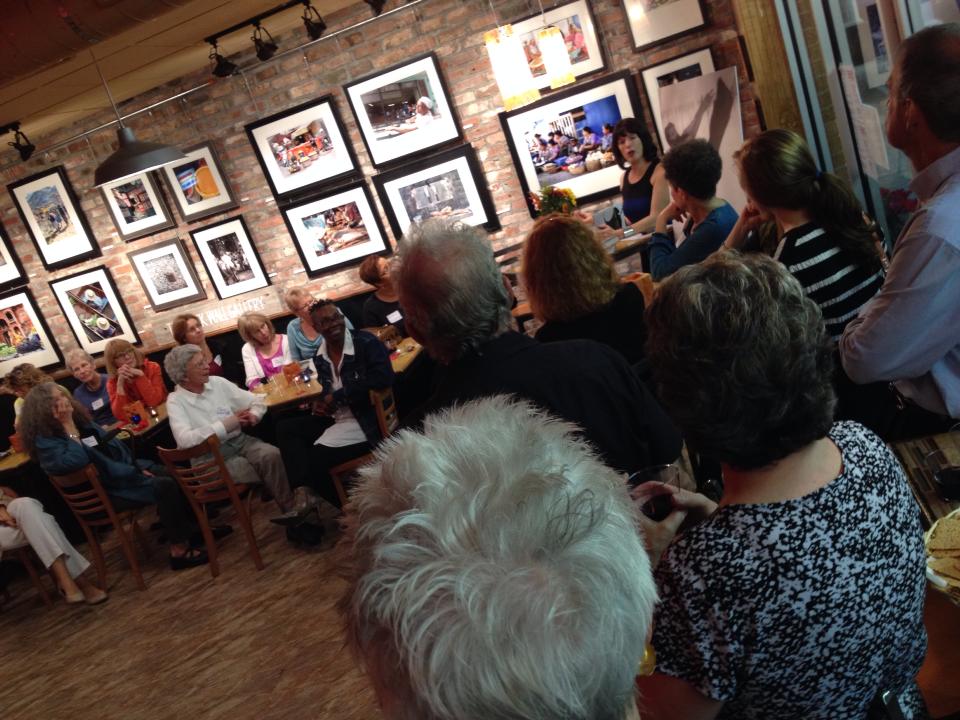
Betty sat just to my right as I read this passage from “The Other Mother: a rememoir” and I could literally feel how proud she is of Barbara and of being an Other Mother. Just as Byrne was.
“I didn’t have to ask what Lillian meant by collected daughters. I was beginning to know the silky feel of Byrne’s favor, the web she wove that made me feel more charming, witty and talented than I did with anyone else.”
—Chapter 14 “The Other Mother: a rememoir”


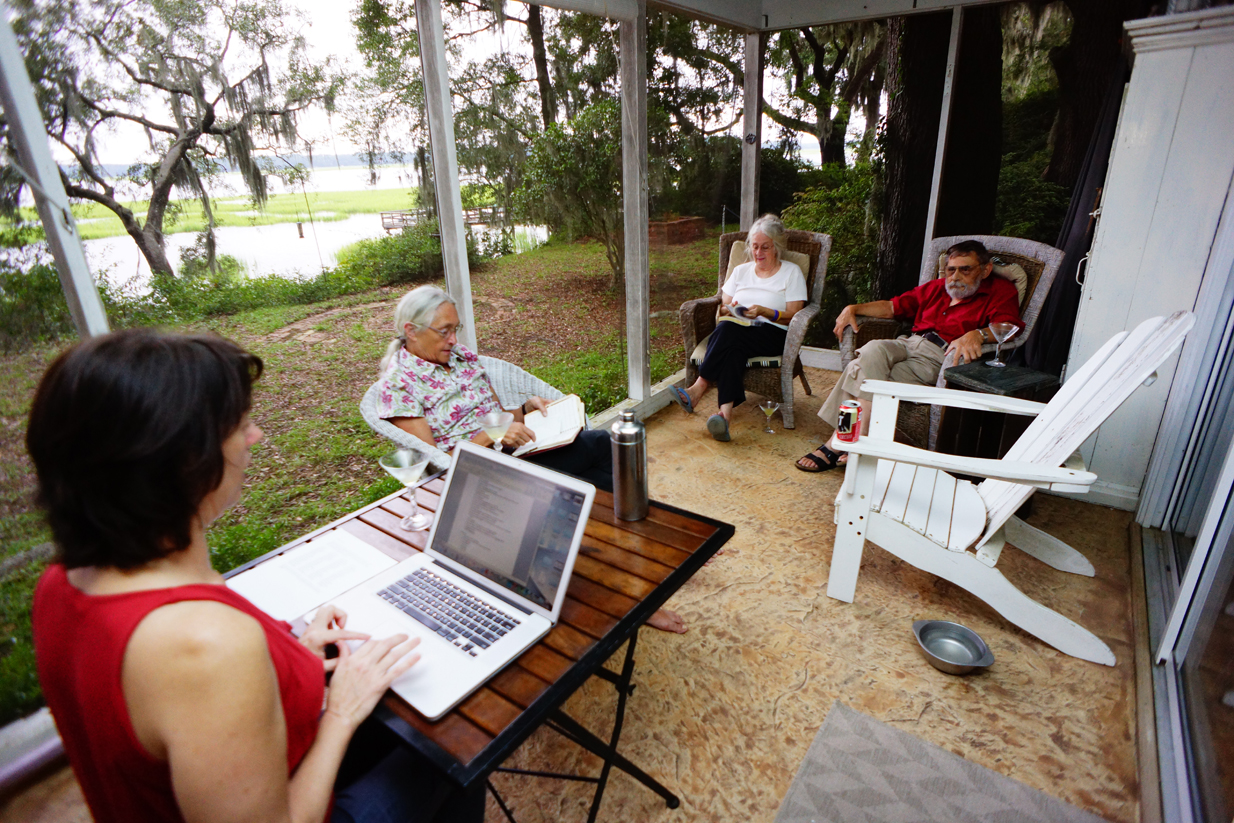
When we weren’t feasting on chef Jamie Darby’s creations, we raised glasses of wine and shared toasts and stories of Other Mothers. Some were literally shared. Like Casey Chucta’s story of how she used to be jealous of all the people “adopted” by her charismatic, theatrical parents Bob and Roxie. But then, when so many people paid tribute to her father at his funeral, she realized how lucky she was to have inherited an extended family. All because her father was an Other Father and her mother a generous, loving Other Mother.
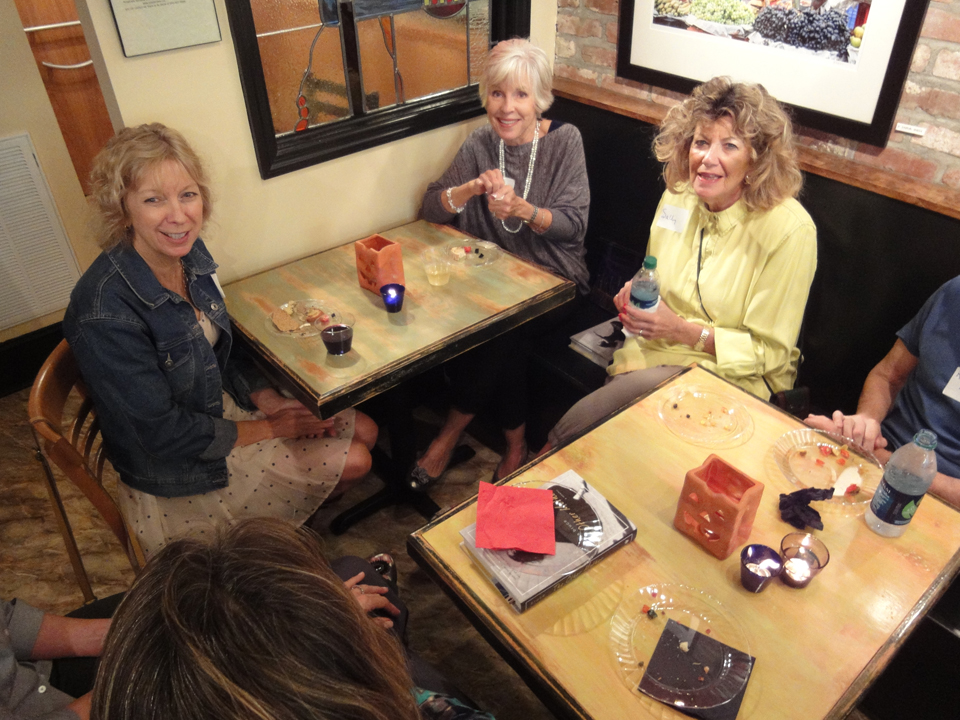
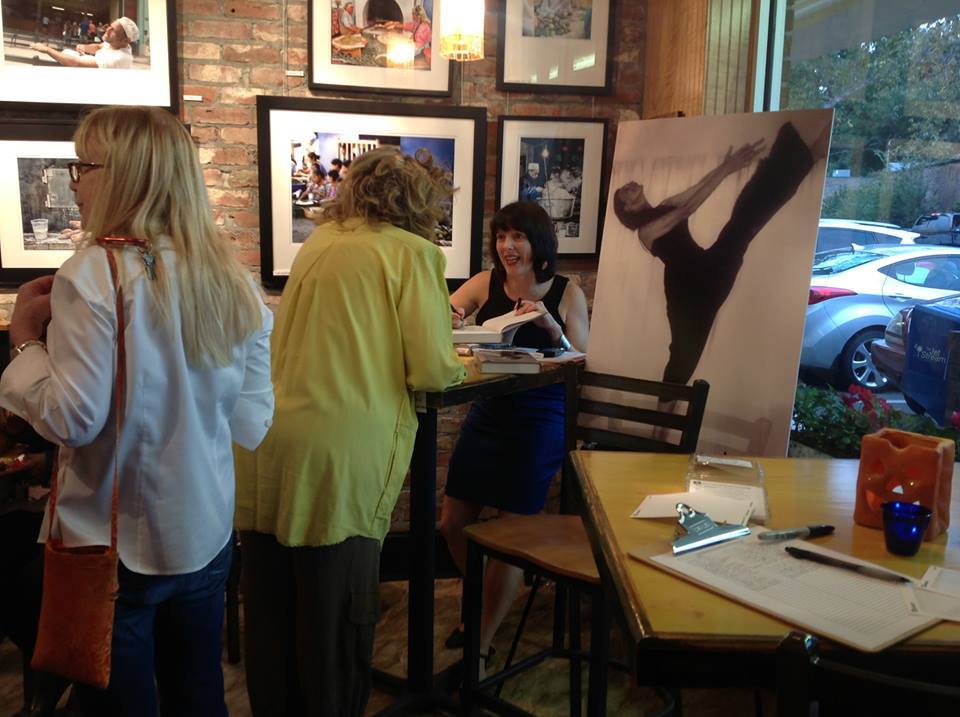


As a writer, it doesn’t get better than witnessing the way a book can connect people. Last night was my first chance since the Beaufort launch to sit back and revel in the power of othermothering. But there will be more opportunities. Two other dear friends, Andrea in Charleston and Audrey in Washington, D.C., are hosting Other Mother Soirées for me at their homes in November. And my TEDx talk in Charleston, on lessons from my Other Mother, keeps getting more views and likes as the national book release gets closer. Who knows, I may be collecting a few daughters of my own as this dance continues.
Hello Baby! Welcoming a book into the world

Regular moms make cute little photo albums when their babies arrive. I’m about to bring a new book into the world — “The Other Mother: a rememoir” so why not create an album for my baby too?
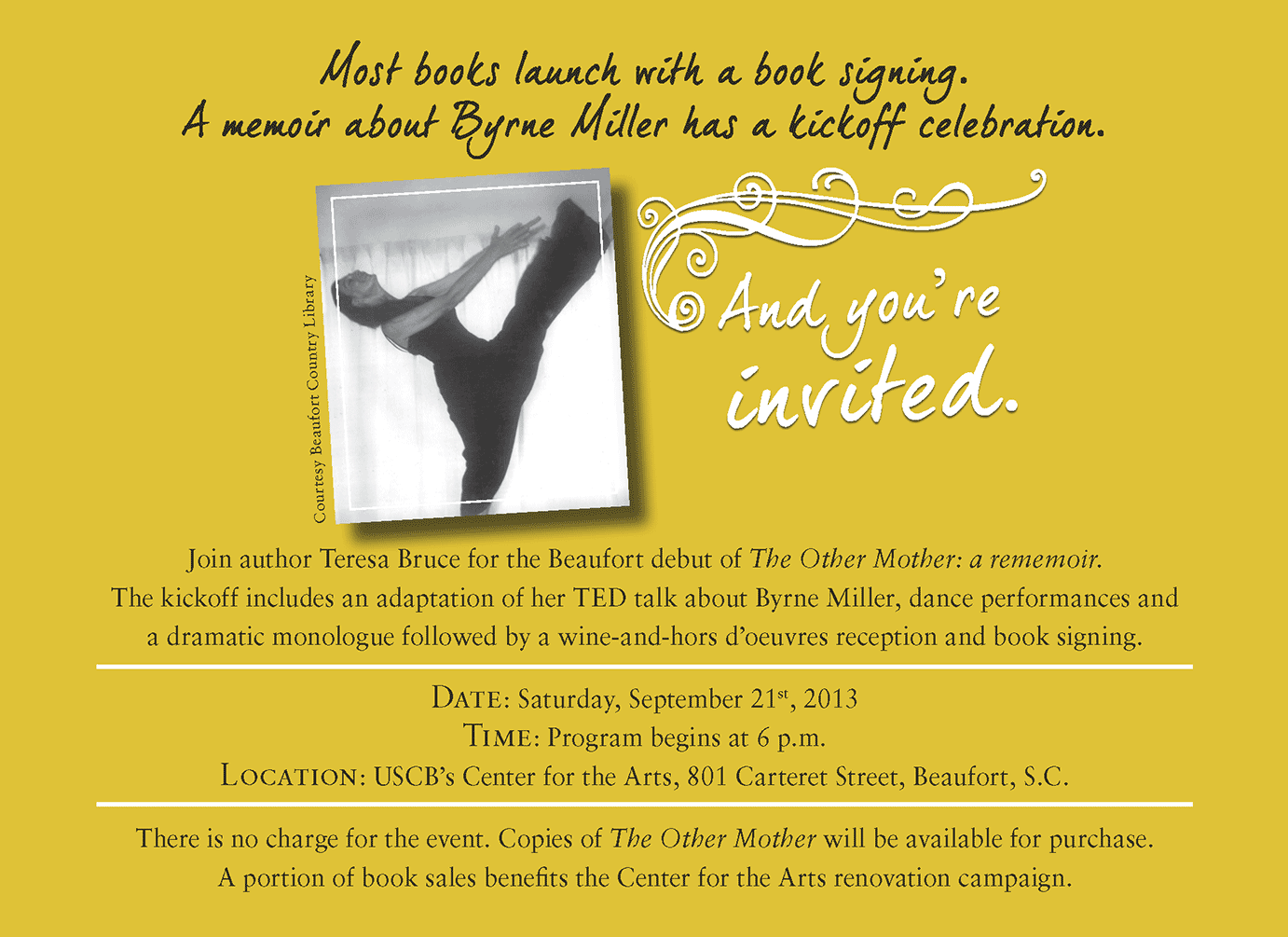 So here goes. It takes more than the author to make a book. It takes a great story — burlesque dancer choreographs a life with unrequited novelist and teaches a young TV reporter the dance of truth, becoming her “Other Mother.” It also takes a partner — and for almost five years my husband Gary has been cheering me on.

But “The Other Mother: a rememoir” wouldn’t have happened without — okay here comes the baby analogy — without midwifery of my publisher and editor: Susan Kammeraad-Campbell of Joggling Board Press. She took the manuscript of a former journalist and helped me deconstruct it. The story started fifty years before I was even born and I was trying to tell it chronologically, through stories Byrne told me over glasses of wine on her screened porch. It felt distant and restrained — nothing like the story that emerged after she showed me how to polish and string together the pearls.

And so began four years of research, writing and rewriting — interrupted by documentaries and video work to pay the bills. The former journalist in me loved the deep dive into Byrne and Duncan’s past. Even things I hadn’t thought important, turned out to be pivotal.


Eventually the research phase was finished and Susan and I began the process of editing each pearl — chapter by chapter. Coming up with
a title was the hardest part… we called it everything from “Dancing with Byrne” to “The Adagio” before settling on the phrase that defined
her. Once we had that, the marketing phase began. I gave a TED talk and created business cards featuring Byrne’s sassiest womenisms.

Byrne would have loved the design process — Torborg Davern did the spectacular cover and Shanna McGarry made the interior just as beautiful. Will Green got the social media ball rolling, making me Tumble, Tweet, Pin and Blog while the advance review copies went out to media, literary competitions and bookstores. So far the reviews are amazing — from Lowcountry Weekly and the Beaufort Gazette.
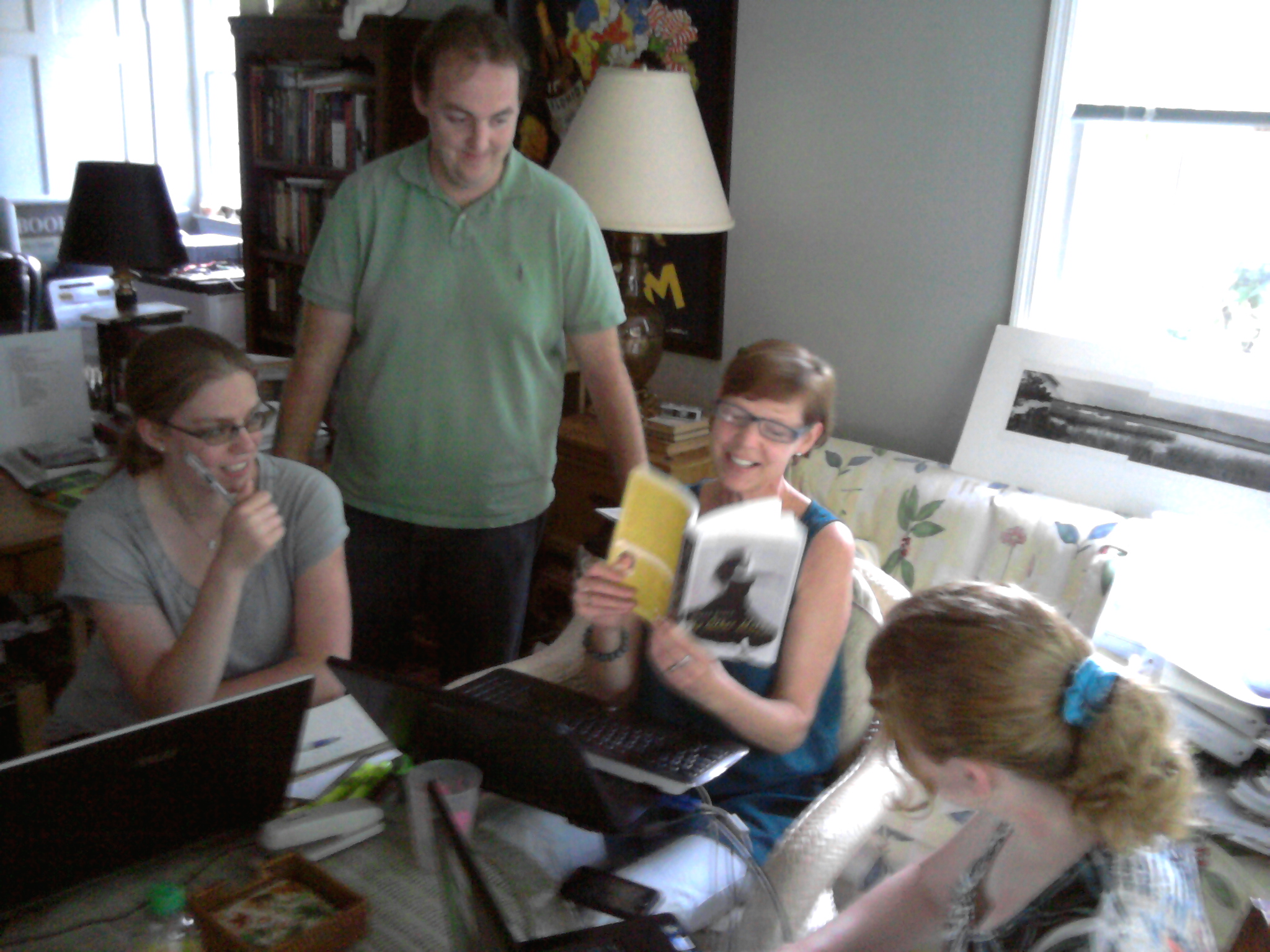

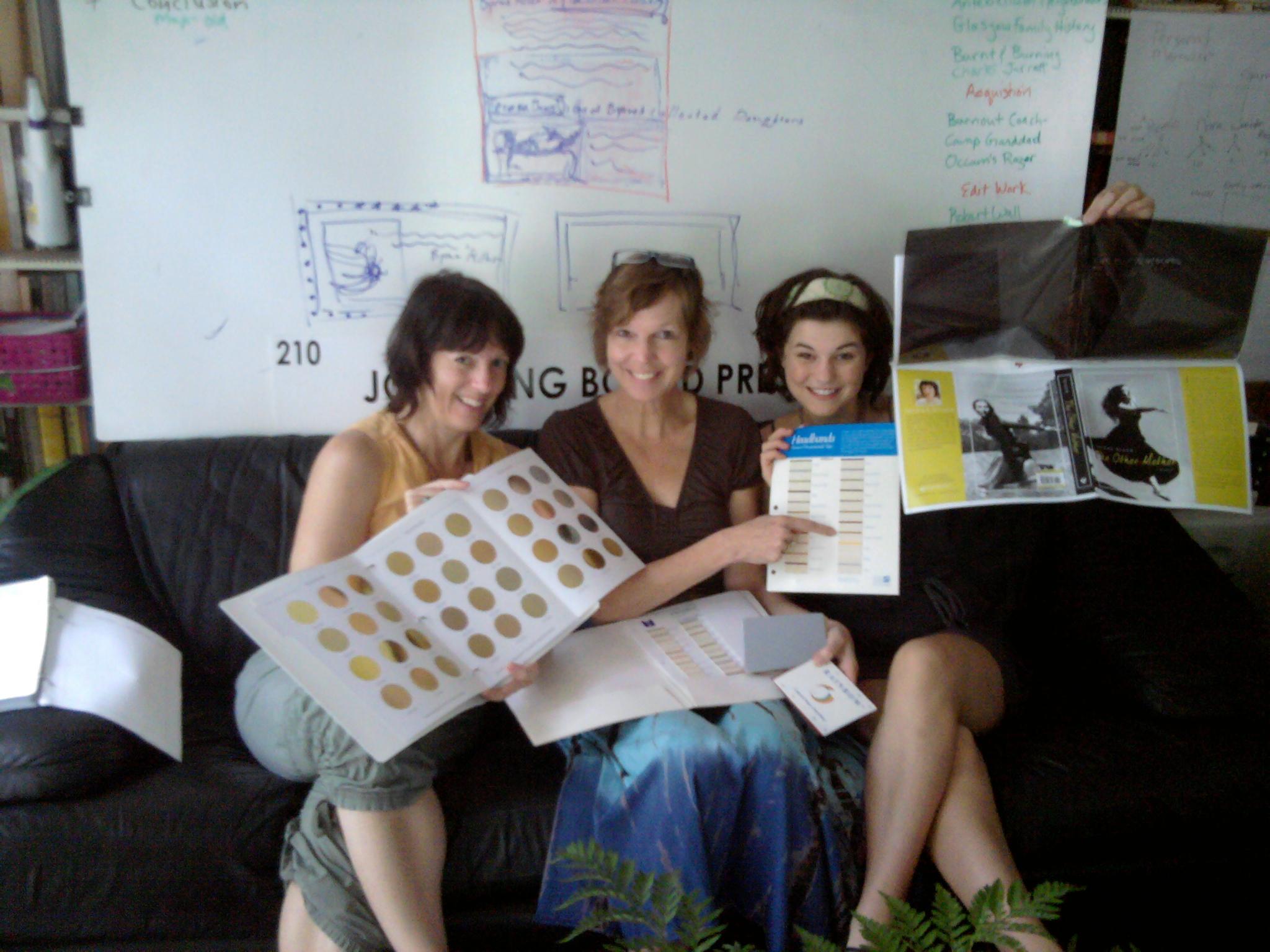
While the books were being printed — in Minnesota, USA thank you very much — we got to work planning the launch. Byrne taught
me well. Everything can be a party — from combing through mailing lists to figure out who died, remarried or moved, to
addressing envelopes. Byrne’s “collection” of children is still growing — even in her absence — because of this book. I’m sure
she’s leaping through the air somewhere at the thought of it.
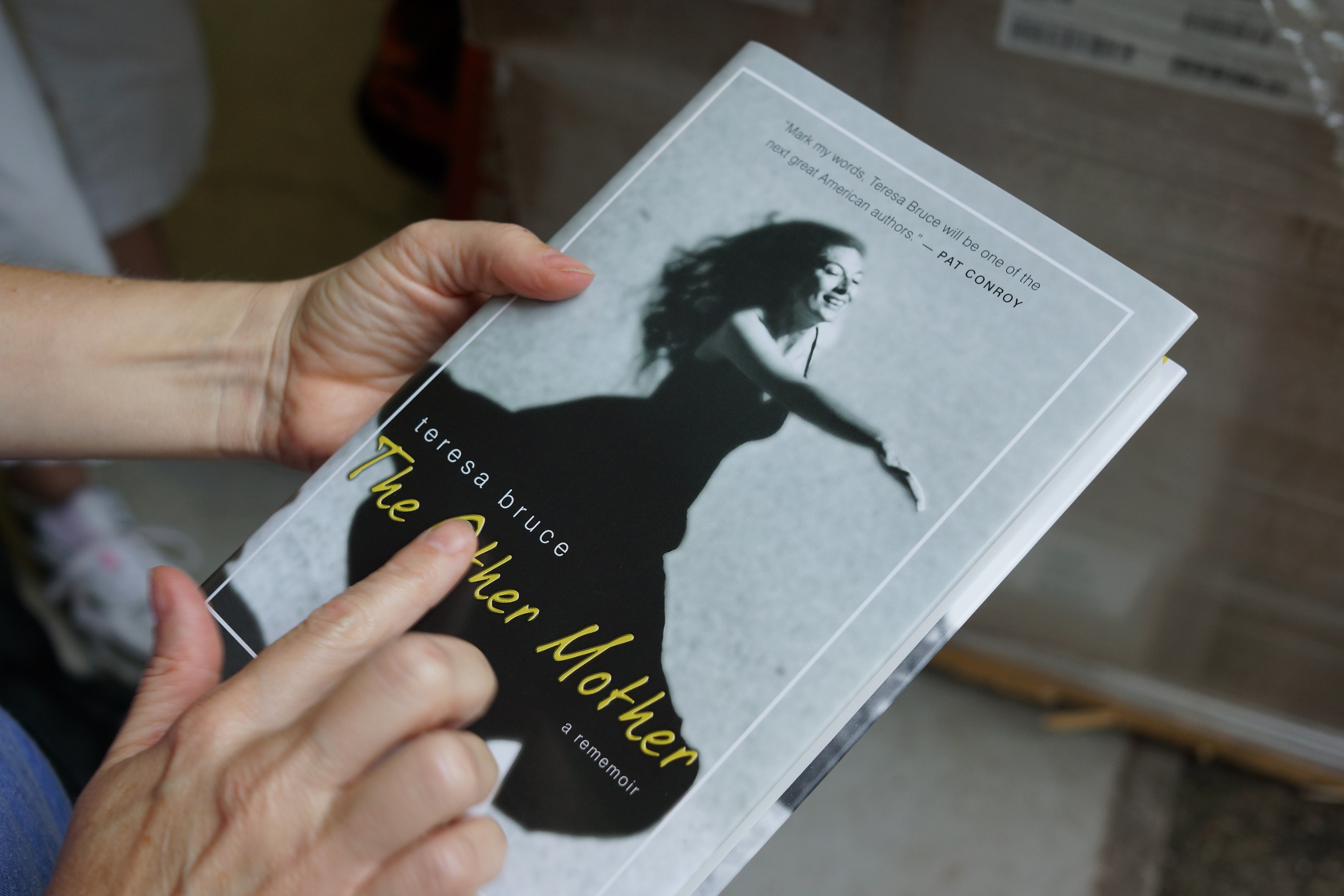
Yesterday, the books finally arrived from the printer. Six pallets worth. All of which had to be muscled from the end of Susan’s driveway to her warehouse — good thing for girl power. But at the end of the day I got to hold, in my hands, my baby. I just wish its Other Mother could have been there too, directing the new arrival.

Fun with commas in sex scenes
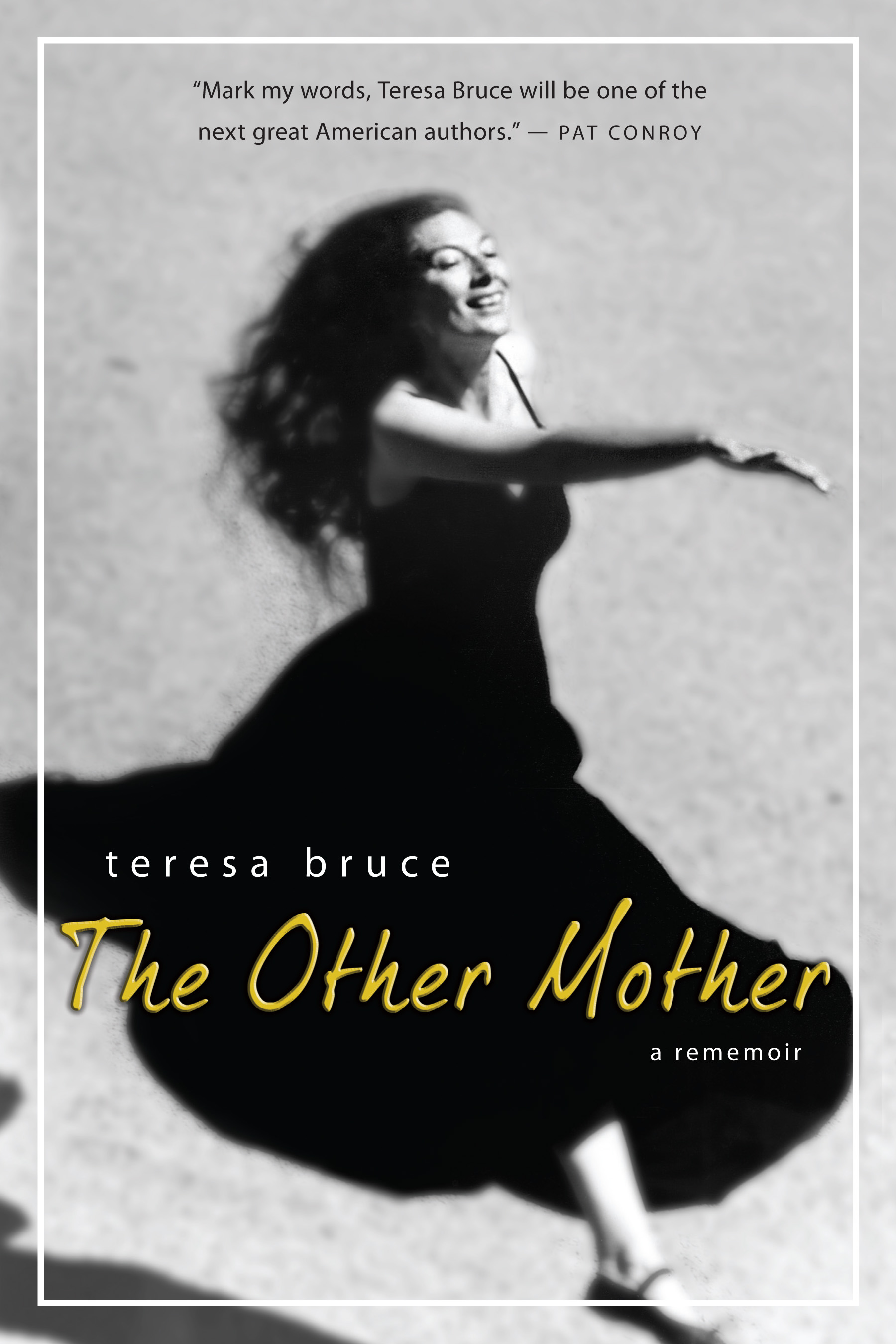
“The Other Mother” is finally at the printer – where it will be transformed from a gigantic electronic file to a 417-page, hardcover memoir with a beautiful embossed cover in a satiny matte finish. That last part makes my publisher and her staff moan and drool. Though I know nothing about the subtleties of paper textures and finishes – the team at Joggling Board Press does.
I was handed sample after sample of hardcover books and told to touch and feel. I pretty much commented on the heft and weight of tome, which elicited more groans. Apparently gloss is uncool and satin matte finishes are sexy. I wanted sexy for Byrne and figured the design phase was the end of it.
Turns out there’s sexy in the proofreading process too. Take, for example, commas. I’d like to blame my woeful inadequacy in comma placement on the fact that I was raised in South Africa, a country more influenced by British grammar than American. That’s what the proofreading team at Joggling Board Press assumed when my propensity to use the “Oxford” comma became evident. But in truth I just toss commas into sentences based on reading my own work aloud. I did pass AP style class in journalism school, honest I did. But I immediately began writing scripts instead of articles and in the world of broadcast, punctuation is a rhythm not a rule.
So how, you ask, are commas sexy? Take the moment Byrne first meets Duncan. She is 24, he is 18 and wears a twist at the corner of his mouth that makes her wonder if he’s smiling or laughing at her. This is how the sentence looked before a marathon, nine-hour proofreading session before we put the book to bed .
“I’m a Southerner who misses the water,” he said. It was a genuine smile, she was certain of it, once she saw the sparkle in his eyes.
Alas, the interior designer and the future-editors who are interning at JBP were not as certain of my meaning. So this is how they fixed it.
“I’m a Southerner who misses the water,” he said. It was a genuine smile; she was certain of it once she saw the sparkle in his eyes.
The first sex scene in “The Other Mother” comes on page 63 – when Byrne and Duncan consummate their almost-instant attraction in Central Park (back then the section known as “the Ramble” really was overgrown and possible to hide in.) But before they’d even unlocked limbs, the unconventional, free-spirited Byrne popped a question that shocked the younger Duncan.
“What kind of wedding shall we have?” she asked him when the spasms of his release still ricocheted through his body. She held him captive for an answer, her long, bare legs wrapped around his solid waist under the cover of her swirling skirt.
Can you spot the problem with the sentence?(and I don’t mean to imply that she should have waited until after the wedding to be tumbling in the Ramble.) The JBP team decided “when the spasms” should be “as the spasms.” I never thought I’d be discussing the grammar of a sex scene in such detail, let alone with super-smart interns, some still in high school.
It turns out nothing shocks them, except bad punctuation. In a scene where a much younger Teresa butts heads with an immigration official, there is much mental cursing. In the book, I indicate inner-dialog by italics, and in this sentence I’m insulted by the immigration official’s assumptions.
“Fuck you mister, I don’t owe Sonny anything.”
Before I could even blush at my own language, the youngest intern at JBP pointed out that I missed a comma after fuck you. Sorry, dear readers, it appears I have a lot of commas to catch up on.
Ghosts of Dances Past
I like my ghosts bite-sized, the connections to the past manageable. And so my visit to Santa Fe’s St. John’s college today was perfect. I wanted to see the beautiful campus where, in 1965, Byrne Miller talked her way on to the faculty without a college degree or any other experience teaching dance at the college level. And I wanted to see where the Byrne Miller Dance Theatre was born.

I snapped this picture on the walk up to the college. It doesn’t do the beauty justice. It’s a fifteen minute drive up canyons from Santa Fe and it feels as remote as a ghost town in the summer. The air smells of wild sage and fragrant Russian Olive tree blossoms. The arroyos are dry as a Georgia O’Keefe painting and the sky is a hypnotizing blue. The college was brand new when Byrne and Duncan arrived in Santa Fe nearly fifty years ago – an experiment in using the Great Books as the entire syllabus. It still does, only in the summer you can sign up for seminars like “Humanity Exists in a State of Rupture from the World”: Hegel, the Fall, and Spirit’s Alienation from Nature. Or the tidier-sounding “Reductionism, Naturalism and Undecidability.”
But I wasn’t here to check out the courses. There was a chance that I’d find more photographs of Byrne’s tenure here. On the back of one of her best publicity shots Byrne hand wrote the name Robert Nugent. During the research phase of writing “The Other Mother” I’d tracked down the accomplished photographer on the internet. We’ve talked on the phone and while he remembered Byrne and Duncan, he shot so many photos at St. Johns that he couldn’t place a specific shot. Since he did most of his work at the college in the 60s for hire, he thought the college would have copies in the library. Alas, they did not. At least not easily accessible on a random visit during the summer break.
But when I showed the photographs I already have to the college’s two librarians on duty (and their dog, behind the desk, it’s that kind of cool school) their faces lit up. It was like they’d seen a ghost – just not the kind I envisioned. It turns out the setting of this photograph of Byrne leading a rehearsal of “The Walls Between” still exists at St. John’s College – only now it’s a coffee shop.
And this photograph of Byrne’s collected son, Ben Barney, using a chair as a prop representing his departed grandmother… well the chairs still exist too. They’re called Jonnie chairs – St. John’s iconic piece of furniture.

It gets even better. The stage where the Byrne Miller Dance Theatre began is alive and well too. It’s called the Great Hall on the second story of the student center and it’s still used for lectures and dance performances.

Again, my cell phone photo doesn’t do it justice, but these plush red curtains open up to a stunning view of the Sangre de Cristo (Blood of Christ) Mountains. I can’t say for certain, but if there are ghosts of Byrne’s life work, they were dancing in the beams of light streaming into the Great Hall of St. John’s college this morning.
Duncan’s Sante Fe
Memoir is usually written in first person, a slice of biography told by the person who lived it. But “The Other Mother: a rememoir” is only half traditional memoir. I visualize the book as having two movements: one is mine and the other is Byrne and Duncan’s story. That other half is why I call it rememoir – it is the truth of their lives as they and I remember it.
This doesn’t mean that I just sat around and typed out conversations from memory. I’ve used every available source to get at the truth – from interviews with other “collected children” to newspaper articles written about Byrne and Duncan wherever they lived around the world. Another great source of information is Byrne’s papers – including a sporadic journal – which she donated to the Beaufort County Library’s Special Collections.
I’m blogging from Santa Fe today because I had the chance to see, first-hand, one of the places the Miller’s lived and left a lasting mark. They moved here after a sojourn on St. Thomas in the 60s. Right away, Duncan managed to get selected to write a stage play for the annual Santa Fe Fiesta. It was a big honor, especially for an outsider. The headline of a July 31st, 1966 article in the New Mexican declared “Miller Pair to Direct Fiesta Melodrama.”
The melodrama portion of the fiesta continues today – a new one staged each fall in conjunction of the burning of Old Man Gloom. But I’ve always wanted to see why Duncan chose the title and topic he did. His melodrama was called “The Sinister Secret of the Sawdust Sepulcher, or, A Capital Conspiracy.”

I knew from archival research that he was referring to the newly built New Mexico capitol – a controversial building that replaced the traditional capitol dome with what was called a Territorial Design. Duncan hated it and thought the round, stuccoed building looked like sawdust. Apparently he had company – it was quite a controversy in the mid-60s.
But I wanted to see if for myself, to see if Duncan was just being curmudgeonly. The first thing I noticed was how unpretentious and egalitarian it is. We pulled our boat of a rental car right up in front and parked without any meters or guard gates. We walked into the building itself, cell phone camera clicking, without being stopped. Guides, not guards, greeted us with information brochures and invitations to look at all the local art on display. The heavy wooden doors to the House and Senate chambers were unlocked – practically inviting admirers. I wouldn’t call the architecture beautiful but it felt so American to me, in the best possible way. Government by and of and for the people.

I walked out of the capitol thinking Duncan arrogant, even a little mean spirited for satirizing the statement the architect was trying to make at the time. Byrne used to tell me he never liked it here in Santa Fe – too dusty, monochromatic and void of water. He didn’t see the beauty in it she did, that now some 68,000 people who live here do. But then again, to be fair, in the 60s it wasn’t nearly the artsy-glamorous mountain town it is today. Compared to Charleston, where Duncan was from, it must have seemed a desert outpost. He took no comfort in the company of other artists and writers who had discovered the town and made colonies and studios here.
I have no script of “The Sinister Secret of the Sawdust Sepulcher, or, A Capital Conspiracy.” For all I know Duncan might have meant it as a joke, making fun of the controversy more than protesting the architecture. But given how happy Byrne told me he was to leave Santa Fe for Beaufort in 1969, I suspect he lived here as an expat in his own country.
It’s part of the mystery of rememoir. One of my dearest sisters-by-Byrne is a yoga instructor in Savannah. Judean said that when her mother died, her siblings had such different memories — even resentments — that she wondered if they were remembering the same woman. She told me to expect the same confusion as I wrote about my “Other Mother” and the man who shaped her life.
What it comes down to is being true to the truth of the person I knew, and I knew Byrne’s Duncan. All I have left is Byrne’s memory of the man who wrote that snarky play. She saw the Santa Fe Fiesta and it’s annual burning of Zozobra (Old Man Gloom) as a way to discharge demons. She hoped Santa Fe’s dry mountain air would clear the cobwebs in Duncan’s mind and allow his creativity to blossom. When it didn’t, she didn’t judge him – as I find myself doing.
What I learned on my tour of the Santa Fe capitol is how difficult it is to withhold judgment. Byrne could, because her love for Duncan was so strong and tested. Santa Fe released the gloom and reaffirmed her faith in the power of their partnership instead.
Byrne’s Santa Fe
I’m about to step into a time warp, only it’s all in my head. I’m flying to Santa Fe tomorrow, one of the four key settings in my memoir about Byrne Miller. She lived there in the early 1960s, a contemporary of Georgia O’Keefe. Santa Fe, not Beaufort, is where she started the Byrne Miller Dance Theatre.
I’ve never been, unless you count back porch conversations with Byrne and research for the book. Santa Fe exists only as a backdrop for me, a place frozen in time, and I’m a little nervous that the contemporary city won’t feel as magical.
Byrne reveled in the chance to reinvent herself and Santa Fe was a willing stage. This is how I described her driving the family out West.
Of the three westward-bound Millers, only Byrne allowed the stark freedom of the landscape to lift and thrill her. She drove with the front seat pushed all the way back to accommodate legs meant more for the stage than a station wagon. With her chin up-thrust and wrists draped over the top of the steering wheel she could just as easily have been racing a horse-drawn chariot around a Roman coliseum.
The Millers arrived at the tail end of its artistic heyday, when writers formed colonies and housing was cheap enough for artists to afford. Byrne rented a house at 203 Canyon Drive and turned it into the studio that would become the mother ship of the Byrne Miller Dance Theatre. That address will be my first stop in Santa Fe – to see the building where it all started.
I know that Canyon Road today will be a very different place – it’s been discovered and prettied up – the heart of the city’s gallery district. But I’ve braced for this kind of reality check once before, in the course of writing this memoir, and I’m learning to appreciate even whispers that places still offer from the past. Last summer, I found the building where Byrne and Duncan lived when they were first married, in Greenwich Village. Morton Street is nothing like the bohemian, immigrant-filled place it was in Byrne’s day, but I still felt a connection.

In Santa Fe, I feel certain I will find a sense of connection again. I am about to launch “The Other Mother” so it seems fitting to visit the place where Duncan also began a new novel.
For months he paced the portal that ran along the length of their Adobe house at 203 Canyon Street, his pipe in one hand and a writing notebook in the other. When ideas came to him, he shoved the pipe between his lips and exhaled through the corner of his mouth, keeping his hands free to scribble down dialog or exposition. He eased into a curved leather Equipal chair to sharpen his pencils or refill his pipe, catching the loose crumbs of tobacco in a soft Mexican blanket folded on his lap.
I suspect that one of the reasons Byrne and Duncan decided to relocate to Santa Fe was because Byrne hoped the company of other writers would inspire Duncan to write something fresh. She couldn’t have known that almost 50 years later, it would be a place that inspires one of her collected daughters to write the story Duncan never could.
Flashbacks
I’ve been dealing with a lot of flashbacks this week. Not the kind cool people who came of age in the ‘60s have, but the kind that make you wish you had paid more attention to grammar in high school.
I know why screenwriting “gurus” like Robert McKee strongly advise against using flashbacks in screenplays. Unless you’re really good at it, flashback sequences are clumsy excuses for not setting up the backstory when you should have. As you type you can practically hear the little musical interlude notes familiar to viewers of bad soap operas in the ‘80s, the kind of music that accompany cheesy visual effects like fuzzy ripples across the screen.
But when you’re writing about a compelling woman whose life spanned from 1909 to 2001, flashbacks are unavoidable. Without them, my book about Byrne Miller would be a three-volume biography instead of a memoir. What I’ve discovered, as I’m getting the manuscript ready for proofreading, is that many of my chapters start in a particular point in time and then float back to an earlier incident to reveal some juicy part of her even earlier past. It all feels pretty seamless, except for the grammar. I’ve been struggling with how long, within each flashback, I’m supposed to use the clunky past perfect tense – remember helping verbs? Not so helpful, when a flashback sequence is pages long.
Here’s where it pays to have brilliant poets and college writing professors as friends. Quitman Marshall put my mind at rest this afternoon when he told me that the reader only needs one grammatical cue that it’s a flashback – a simple she had worried, briefly, if two inches of cloth was enough costume to prevent arrest for indecency. Then I can revert right back to standard past tense. “Now that’s how to fill a costume,” the wardrobe mistress said when Byrne emerged from behind the curtain.
Thanks Q – I feel all buttoned up now. Cue the music!
Dolphin lucky
Southern transplant that I am, the unseasonable beauty of this place never pales for me. Even the front that blew through yesterday and dropped us twenty degrees (but dropped feet of snow everywhere else it seems) couldn’t dampen my winter spirits because the day started with a dolphin sighting. Dozens of them actually, so giddy with fish flowing into the river from the marsh-draining creeks that it looked like they were turning cartwheels just below the surface.
I always start my morning walk with a detour down to the Pigeon Point boat landing to look for dolphins. I’m not burning any calories this way, I know, but I make up for the pause by stretching while I scan the Beaufort River. I’m not the yoga-affirmation type, but when the dorsal fin of a bottlenose dolphin breaks the surface I know that it’s more than a privilege to live here.
Dolphins, especially on a winter morning, remind me I can’t possibly complain about anything the entire day when I am so lucky as to live here. I wrote about how I came to trust in the luck of dolphin spotting in one of the first chapters of the memoir I’m writing. I’ll set the scene: It’s 1990 and I’m looking for buried South Carolina dispensary bottles on a sandbar not far from Pigeon Point landing, with my boyfriend at-the-time.
“Look, dolphins!” I called out to him.
He looked up from the pile of mud and shells at his feet.
“You know what that means, don’t you?” he asked. “Every time you see a dolphin, it means you’re going to have a perfect day.”
“But what if the day’s already over?”
He paused, bringing a mud-covered hand to his chin. “I never thought about it but I guess it works retroactively. Didn’t we have a perfect day?”
It was the logic of the hopeful, the rationale of a dreamer and I have judged the perfection of a day by dolphin hindsight ever since.
Cleaning up Duncan

Until the winds of Hurricane Sandy made it impossible, I spent the last week trying to dry and clean up three unpublished Duncan Miller manuscripts I never wanted to see again. When a small group of Byrne Miller’s “adopted” children gathered to read them the first time, in 2009, we decided as a group that it was indeed not Byrne’s fault that her beloved Duncan’s work had never been published. Byrne had described Duncan as having “borderline schizophrenia,” and he ultimately died from complications of Alzheimer’s and Parkinson’s. But even those of us considered part of his extended family never realized how much his mind must have tormented him until we read his manuscripts.
I won’t go into detail but nobody in their right mind would want to read what Duncan wrote, let alone publish such thoughts. Gary and I buried them in 2009 as a sort of compromise – getting them out of our house but not going as far as burning the last known copies of a man’s life work.
It turns out three years being buried in black plastic lawn bags does little to preserve typed manuscript pages that were already fifty years old when they went into the ground. Dirt I expected, but water somehow seeped through the plastic lining of the manuscripts and spores of a bright yellow mold now crust each page. The archeologist who helped us find the hidden stash, Larry Lepionka, advised me to divide the stacks into smaller piles and when they were completely dry, to take a pastry brush to every page. While I dusted off each page, on the very same porch that Duncan loved to watch the river from, I forced myself to re-read one of the manuscripts. After all, that was the whole point of digging them up again.
I am writing about Byrne and Duncan’s years in Santa Fe and “The Air-Drawn Dagger” was the first of two novels Duncan began there. Ostensibly, it’s about prejudice toward a group of people he calls “Hispanos” by which I gather he meant Mexicans of Spanish descent. But the plot doesn’t matter because you can’t get past the sexually explicit language. The vocabulary might have been a factor of the times – Duncan’s later novels would have been influenced by the beat generation and authors like Kerouac, Burroughs and Ginsberg. But what disturbs me is more than the shock value of profane words. Duncan wrote in first person, about everything from rape to incest. I can only imagine, as I’m sure Byrne did, that these scenes came from something deep and wounding in his past. All I know of it is that he was estranged from his Charleston family and never allowed Byrne to make contact with them even when he died.
Reading the work of someone whose long-ago death means he can’t explain himself is a little like finding your father’s secret stash of pornography. You want to believe that it doesn’t mean anything, that reading nasty isn’t the same as being nasty. But you never see him in quite the same light again, and you judge his future actions, and the stories of his past, through a different lens.
What I struggle with now is how much, if any of it, I should reveal in the book I am writing about Byrne’s life. Duncan’s writing is an integral part of Byrne’s story – for the sixty years of their love-filled marriage she introduced him as a brilliant novelist. Yet after he died, she told me that her only regret in life was never getting him published. Her life included struggles like one daughter get electro-shock therapy as a young child for schizophrenia and the other daughter being killed by a drunk driver. But it was this sense of failing Duncan that kept her up at night and I think she hoped that I would find a way to remedy that after she died. Maybe I have. Perhaps through writing about Duncan and his great love for Byrne, the essential truth of him will have a voice. But deciding how much to reveal will be what keeps me up at night.
Into Africa
I have my friend Scott Graber to thank for the fact that I can’t stop thinking about Africa these days. He’s gone and written a novel called “Ten Days in Brazzaville,” about a love affair in and with the Dark Continent. I spent part of my childhood in Africa. (Look for the kids with matching homemade brown slacks – the cute blonde with the purse is my little sister and the boy with the blue sweater is me –holding hands with my South African cousins.)

When Scott realized we shared a love of writing, and Africa, he invited me to join his writers group. Pat Conroy popped in once in a while, mostly to make sure that our fearless leader, Bernie Schein, wasn’t telling too many egregious lies in front of the only woman in the group: me.
It was in the early days of our critiques that Scott read the first chapter of what would become “Brazzaville.” There were do-nothing agents and publishing recessions in the intervening years, but he has overcome all obstacles and actually finished the thing. Which sounds even better on the page than it did in a room trying to ignore Bernie Schein’s infamous cackle. I say “sounds” because that is how I read Scott Graber – he writes with a voice entirely his own, so true to his storytelling self that his pages put you on a Lowcountry porch sharing a bottle of wine while a marvelous story unfolds.
And this particular story takes me back to the Africa of my childhood. I remember it most vividly in sounds. Coins jingling in the pockets of my indulgent grandfather – always enough for me and Jenny to buy some “sweeties.” The rap of rulers on school desks – giggling girls on one side of the classroom and bragging boys on the other. Waves crashing on beaches netted to keep the sharks away. Drums beating to pace the Zulu dancers I begged to watch perform every weekend in Durban. The thrill of it pounded through my veins, frightening and fascinating. I didn’t know that these real Africans had to show pass books to ride buses back to their settlements while I, an intruder from the United States, hopped from foot to foot and slung imaginary spears into the milky sky of innocence.

It was decades later, when I returned to visit my grandmother after grandpa died, that the sounds of my happy Africa connected with its discordant truth. I’ve struggled with my nostalgia, instituted my own guilt divestiture plan over the years. And when I turned the pages of Scott’s book, I realized I may have left Africa in my childhood but it has never left me.

- ← Previous
- 1
- 2
 "TeresaBruceBooks"