The Other Mother: a rememoir
The other mother I didn’t recognize
I love it when readers point out something I didn’t know my memoir said – it reminds me that the love story that at times felt like a fairy tale to me is actually true. And the truth reveals itself in different ways, to different people.

The Other Mother of the book’s title is, of course, the Jewish burlesque dancer turned Johnny-Appleseed of modern dance in the Deep South: Byrne Miller. I chose to use “the” instead of “my” other mother because I recognized that all of Byrne’s collected children can claim her.
What I didn’t realize is that she is only one of several other mothers who come to life on the pages of the book. My sister was one of the first to read it and ask if the title referred to me. I’ve always considered myself “Auntie Mermaid” to her three children, but to Jenny I was also an other mother, someone she knows will always be interested in the details of the kids we both love – no matter how small.
Then there’s the other mother I never considered at all – Byrne’s mother Fanny. She was one of my favorite characters to write about in the memoir. At first she scared me. Afterall, Fanny passed away decades before I even met Byrne.

She spoke more often of her father – the Hungarian immigrant adored by her entire family, from whom she inherited her first love and talent: classical piano. But the Byrne I knew was more determined than dreamy, more practical than prodigy. She endured physical trails more painful than I could describe, yet was stoic – almost puritan in her toughness. “Pain is for the hoi polloi,” she’d say. Where did that side of Byrne come from?
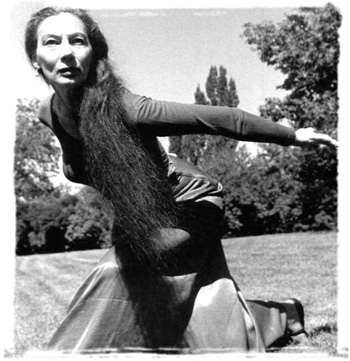
The answer, I realized, is Fanny. She was the woman who gave Byrne the delicate necklace of seed pearls that is one of my most treasured possessions. It was passed down from mother to other mother and finally to me, along with this necklace – a poison pendant Byrne said would protect me should a suitor ever proved unworthy.

But even as I grew to admire and respect the Fanny taking shape on my page, I didn’t see her as an other mother. I wrote right through a truth that readers picked up on right away – -that she was Duncan Miller’s other mother. Byrne’s treasured husband had divorced himself from his own family for some deep dark reason he never revealed. Fanny became the mother he always wanted.
It’s right there, on page 76, Byrne noticing something I had not. “…she’d watched as her husband took to Fanny’s attentions like a forgotten flower, finally watered.”
No wonder Byrne felt so comfortable in her role of other mother, she had been the understudy all her life. I only wish she could have given a copy of “The Other Mother: a rememoir” to Fanny for Mother’s Day.
Other Mother Landmines
With Mother’s Day approaching, I’m keenly aware of all the ways my sister devotes herself to her children. I’ll pester my niece and nephews all month to make sure they don’t forget to make her cards and breakfast in bed. My sister dotes on them, sometimes so much so that they take her for granted.
I’d probably be a much meaner mom – Type A personality that I am. There’d be a lot more rules and responsibilities. But it’s a tricky topic to bring up. It’s what I call that awkward part of othermothering. Even though my sister considers me “other mother” to her three kids – there’s no getting around the fact that I don’t have kids of my own. So is my advice worth anything?

I’m not looking for affirmations here. I’m genuinely skeptical. Byrne Miller, my other mother, had raised two girls of her own long before I came along. She could expand my horizons without worrying that her advice was untested.
It can seem like a big risk, offering yourself up as an “Other Mother.” Especially if, like me, you don’t have any first-hand experience. That’s where my sister, the full-time mother of three, bursts into a belly laugh.
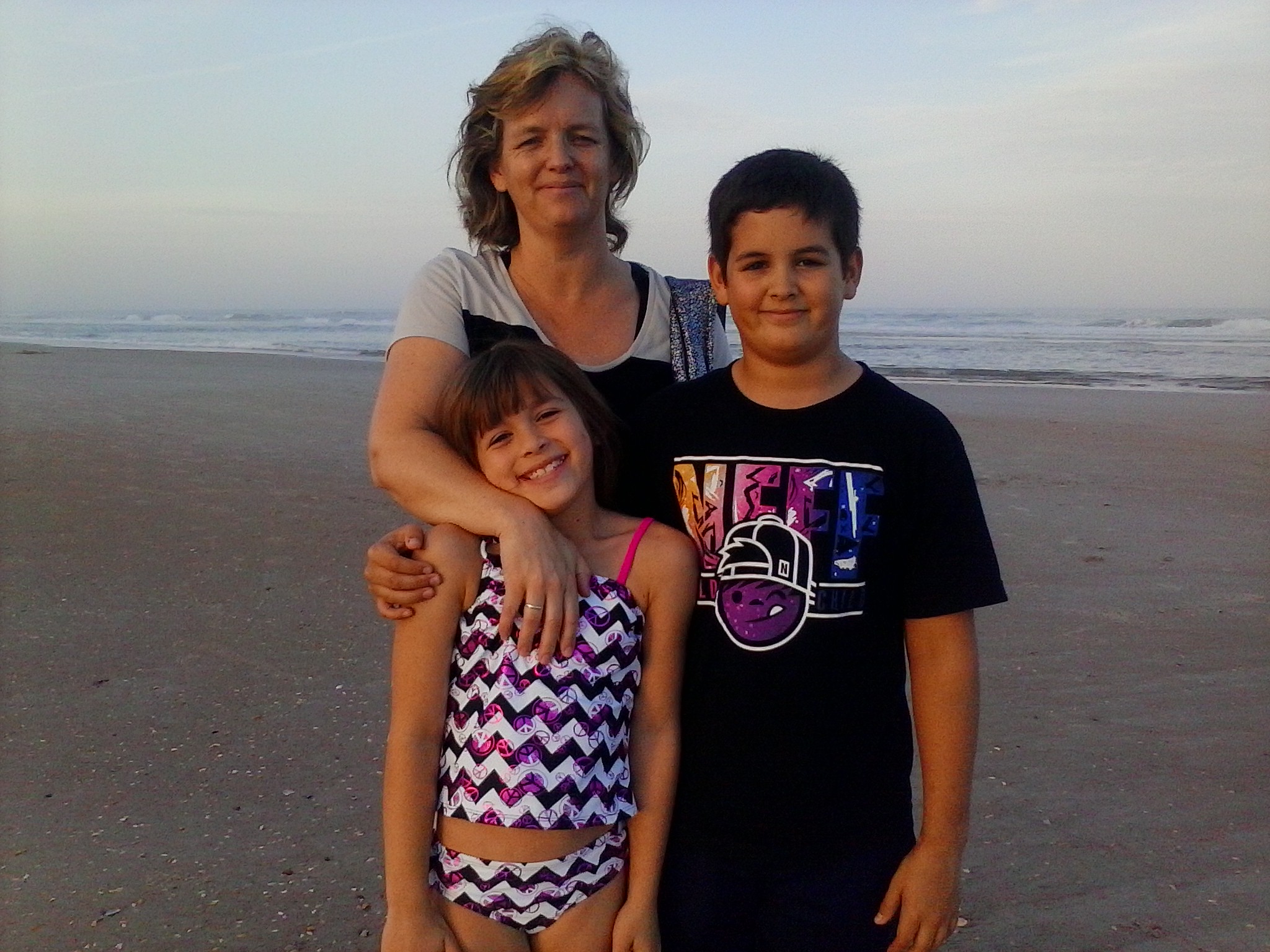
“And you think anyone knows what they’re getting into when they become a mom? Don’t wait until you’re a perfect role model. Just jump in and be there.”
Her youngest child Marina is such a sweetheart she attracts other mothers like a magnet. Instead of worrying whether these other mothers have parenting bonafides, Jenny’s biggest fear is that they’ll swoop in and form a bond and then get a new boyfriend or a new job or have a baby of their own and leave Marina devastated.
“An adult understands that you can’t always keep promises. Kids don’t,” she says.
It turns out there’s a much more important measure of othermothering value that has nothing to do with having kids of my own.
“You want to know what makes you a real other mother?” Jenny asks. “When you offer to do the gymnastics car pool.”
A Village of Other Mothers
If Byrne had been a psychotherapist in the 1980s she might have been accused of re-parenting me. If I’d met her when I was still competing she’d have been called some sort of life coach. If she had been a journalist or writer she might have been labeled a mentor. But none of these definitions describe the role she played in my life, or the role I believe many “Other Mothers” play in the emotional development of women.

I do not claim first dibs on the term othermothering. In the state where I now live it goes back to when slave mothers were sold off the plantation and other women took over the caregiving of the babies forced to stay behind. Anthropologists call these substitute mothers “Fictive Kin” and in her book “Black Women and Motherhood,” University of Maryland professor Patricia Hill Collins says “the tradition of othermothering constitutes a challenge to the notion that children are the private property of parents.”
It’s no coincidence that the pop-culture expression “it takes a village to raise a child” stems from African parenting traditions, according to philosophy professor emeritus from the University of Wisconsin Milwaukee, Dr. Carl Hedman. “We only hear about the negative stereotypes in the black family but in this sense they’re way out ahead.”
He should know. While his wife was getting her master’s in nursing in the 70s, their family lived in a multi-racial commune. “ I don’t know why society is so locked into private attempts to be happy,” Hedman says. “Having other mothers to help raise our two sons was good for our marriage.”

Even the way he pronounces commune, more like the what-you-do-with-Mother-Nature verb than the wacko-hippy connotation, confirms what he sees as the benefit of othermothering. The Hedmans stuck with group housing even after their own boys were grown. “It eased the empty nest syndrome. I could still be a father figure in everything from teaching little boys to ride bikes to helping one of them cope with the stress of getting through Yale.”
Perhaps the same forces were at work when Byrne Miller added me to her collection of daughters.
More is better, with other mothers

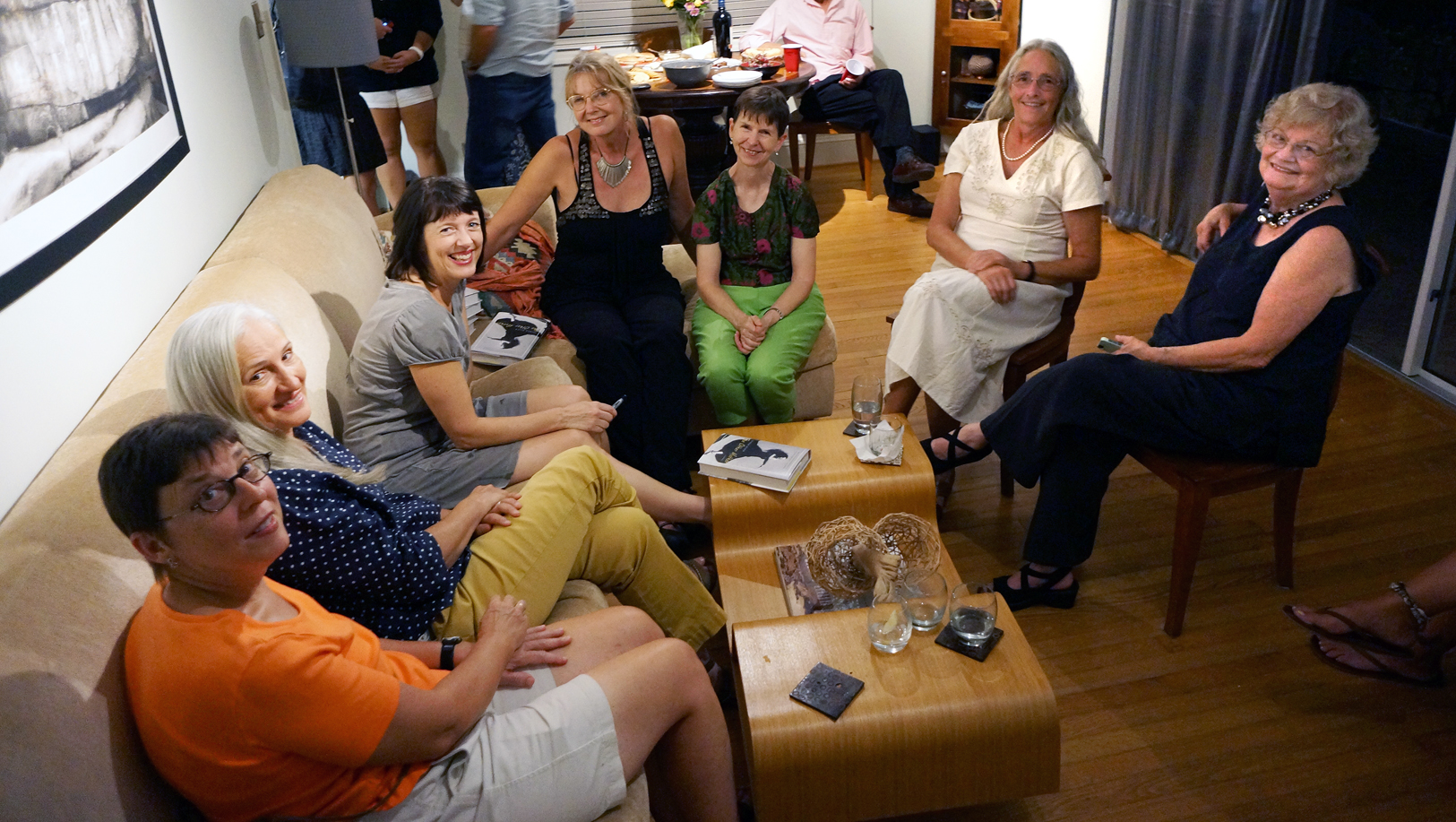
By now you’ve read all about the woman I call my other mother. Byrne Miller was the other mother of my book’s title. But just as there is no one, single definition of other mothers, there’s no law that says you can’t have more than one.
In and of itself, that’s one major difference between other mothers and the kind we’re born with. The very fact that we choose them, or they choose us, makes the bond something most of us don’t have with the mothers who raised us. Not that we’d trade our mothers in – other mothers are never replacements, just lucky additions to a treasured life.
I’ve been lucky enough to have more than one. I share an other mother right now, with dozens of other people who came to Beaufort, South Carolina from other places. Her name is Georgia Phillips and she runs the gallery where Gary’s work was first exhibited. I mention that because it’s the way she othermothers – she spots people with talent, makes sure others come to share her opinion and then if they’re really lucky, invites them into her coveted circle of dinner guests. Which isn’t to say she’s a new-age, everything-you-do-is-wonderful kind of other mother. She never lets me forget how bad of a cook I was when she first took me under her wing. I’ve never lived down the over-salted bean soup I attempted to serve her in the 90s, and to this day she’ll only come for dinner if I tell her Gary’s doing the cooking. She’s the kind of other mother who keeps you grounded. And five pounds heavier than you should be. And when I’ve been away from Beaufort on shoots for too long, she’s the one I’m homesick for. I’ve even called her from the road, just to hear her voice and know that she’ll still make fun of me and feed me when I return.
I’d have to say that Patricia Brewer-Jones, the ballet teacher you meet in Chapter One of “The Other Mother” was the first other mother I can remember. She never even knew how much she broadened my horizons, or how often she came up in conversations around our living room. I talked of her so incessantly that my father nicknamed her “Patti Who?”

I’m often asked if my mother was ever jealous of Byrne. By the time I met Byrne I was 22 and so far removed from the circle of my mother’s influence that she was relieved, if anything. Not so when I was 12 and dreaming to become a ballet dancer. But still, I don’t think she was jealous of Patti. If anything she was envious that in her I had found a champion, someone who believed in my talent more than anyone had ever believed in my mother’s. (insert photo)
That’s why other mothers are so important. I wish my own mother had had a Patti, Georgia or Byrne. So as Mother’s Day approaches carve aside a little space to think of your other mothers too.
Secrets you can’t tell mom
 I still remember the first time I confided in my mother about sex. I was nine years old, living in South Africa, and had a secret that seemed so terrible I thought everyone could tell what I’d done just by looking at me. I had played spin the bottle with Simon from up the street. He spun. It pointed at me. I let him see my underpants.
My mother immediately went to my father with it and I never told her another embarrassing secret. Even when I really could have used her advice.
Fast forward thirteen years to Beaufort, SC when I began to realize that Byrne Miller was my other mother. She was 82 and I was 22 – so the age gap alone made it somehow easier to talk to her. But it was more than that. I could share secrets with her because we had chosen each other, we shared no genetic ties. She didn’t know about Simon or spin the bottle and she wouldn’t have cared. This former burlesque dancer had seen and done things that would shock Miley Cyrus today.
Over the course of ten years, I was able to tell Byrne things that would have upset my mother more than she could bear. If I had told mom about the man who stole my dog, broke my hand and tried to crash a plane with me in it – she would have been reminded of too many parallels in her own marriage.
But Byrne and I had no shared history. Our relationship was fresh and self-determined. I learned to trust that she would never judge my decisions or critique my opinions. She didn’t have to. She wasn’t responsible for me. She just told stories of choices she made in her life, colorful anecdotes and analogies I call womenisms in the book.
“Every woman should have at least one affair. It builds confidence,” my other mother used to tell her collected daughters. “Monogamy is overrated. Honesty is imperative.”
I could never even discuss spin the bottle with my mother, let alone infidelity and forgiveness. There are some things only meant for an other mother’s ears. And Mother’s Day is the perfect time to make sure she knows how much you appreciate zipped lips.
Why “rememoir,” not just memoir?
One day I hope you’ll look up “rememoir” in Wikipedia and see the word credited to me, and “The Other Mother.” Right now each time I type it, Word underlines it red as a misspelling, like a red flag of warning. Something’s different here! Pay attention!
It would have been simpler just to call “The Other Mother” a memoir. But I invented the word rememoir because it’s the truth as I remember it. I am the only one who could tell this story – it’s about a relationship that defined me. The thoughts, dialog and emotions I write about come from my own recollection, from the stories Byrne shared with me, the womenisms she told her other collected daughters, quotes she gave to reporters (including me), letters she invited me to read and events she documented in her personal journal. I sifted through these memories and arranged them in a way that represents the truth to me.

There will always be a place for the pure biography. At its best, it is research elevated to an art form. But in this age of instant access to worldwide “facts,” readers want something more than readily knowable facts when they buy a book.
I’m not frightened by this, as a writer I find it freeing. Truman Capote gave us the nonfiction novel, with every cold blooded detail recorded and reconstructed by his photographic memory. Not everyone can do that. So luckily there’s a whole genre out there of creative non-fiction, and now there is novelization, the art of imagining the story and thoughts behind a person already in the public eye, like “The Girl With The Pearl Earring” but no longer an anonymous character.
Rememoir, a remembered memoir, is even more personal – it finds the story in a personal truth, told by the imperfect human being who experienced it.
The Granny Gap
Earlier this month, the Wall St. Journal had an article about baby boomers impatient to become grandparents. The irony, the article pointed out, was they themselves were the first generation to delay getting married and having kids. And now their grown children are waiting even longer – putting off motherhood until they’ve earned advanced degrees or the right work/life balance.

I call it the Granny Gap – it’s been something I’ve thought about since I started writing “The Other Mother: a rememoir”
I’m lucky enough to have a younger sister who had kids relatively young and took the heat off of me. I’m also lucky enough to have been both othermother and mothered and I contend it could be a practical solution for would-be moms and grandmothers to bide their time.

The average American woman today waits four years longer to have her first child than her own mother did. Other than celebrities and trailblazing women having their first babies when they’re 45 or older, the overall U.S. birthrate has been on a steady decline since 2007. The average age a woman in the U.K starts a family is 30. They’re so freaked out by this across the pond that a pregnancy testing company runs ads of a photo-shopped, grey-haired hag in a Demi-Moore, bare belly pose to scare women into reproducing earlier. The June 28th, 2013 edition of the Daily Mail informed readers that women with university degrees are bulging the belly curve even later by waiting until they turn 35 to make babies. The horror!
“If the phenomenon continues for another generation,” the article contends, “it means some grandparents will have to wait an extra 20 years, until the age of 70, to have their first grandchild.”

Let me clear my throat. If there is indeed an impending granny gap, othermothing is a low-tech way for women on both ends of it to meet their nurturing needs. Not to mention the chief beneficiaries of multiple mothers providing emotional support: the children both mothers and grandmothers cherish.
- ← Previous
- 1
- 2
 "TeresaBruceBooks"