travel
Public Speaking Butterflies
Georgia Southern professor Tiffany Russell was nervous yesterday. Really nervous. It was the first run-through for speakers at the first-ever TED Talks in Charleston, SC and we were being graded by volunteers with clipboards and score sheets. And filmed.
Tiffany’s run-through was right after mine and we had a chance to whisper, in the front row, about nerves. Specifically why, even when you speak publically all the time, they don’t go away. She talks to college students everyday; I used to be on TV every night and I talk about Byrne Miller every chance I get. You’d think this would be a breeze for people like us but it isn’t.
My method of coping with nerves has always been to rehearse so much that my worry switches to whether my presentation still feels natural. Once I’ve got my talk memorized, about half of my nerves disappear. It’s not a theory I claim to have invented. It was drilled into me in my previous life as a U.S. Rhythmic Gymnastics team member. I trained six hours a day, six days a week. The music my routines were set to became worse than earworms; I heard my ball, hoop, clubs and ribbon music in my dreams.
But practicing in a gym isn’t the same as walking out onto the mat in a huge stadium, with television cameras, a live audience, a panel of judges and your Olympic career on the line. All you can hope for is that muscle memory kicks in and you can lose yourself in that music.
Which is exactly what happened yesterday. I didn’t have to use my notes but I got lost in the story I was telling. So until I see the tape I have no idea if I left anything important out. Tiffany was certain that she did leave some parts out. And it made her even more nervous.
But it occurred to me, as we commiserated, that there is a flip side to being nervous. I told her that if we ever get so blasé about our topics that we aren’t nervous, then we have a problem. Being nervous just means we care so much about the content that we want to get it right. We want the audience to lean forward, light up and remember.
Probably because my TED talk is about my “Other Mother,” I’ve been thinking about all the mothers I know. How they never stop being nervous about their kids. Whether they’re giving them the right advice, how much they should push or hold back, when to intervene in life’s everyday little battles. Much more is at stake than a TED talk for them. There is no script to memorize. There will very likely be no applause, even if they get it perfectly right. They are nervous because they care so much. It’s a sign of how much they love their kids. It puts it all in perspective for me.
So bring on the butterflies – I’m fine with a few dancing in my stomach.
Is fame a worthy goal?
Fame is powerful motivation. It sustained me through childhood expectations that I would become an Olympic gymnast. I watched Nadia on TV as a little girl. I must have stood up in our Oregon living room and done a handstand or something because from that moment on my parents decided I could be just as famous. They both hated their jobs, where they lived and how hard it was to scratch together a living in rural Oregon so my Olympic quest became our entire family’s path out of ordinary.
I never questioned it – not even when a six-hour-a-day training schedule meant no sleepovers with friends, no hanging out at the mall, no birthday parties with fattening cake. The fame that would come with competing in the Olympics would make up for everything. When I broke my back in a training accident in college, I had to find some other way to be famous and decided on the oh-so-meaningful career of broadcast news. Which is how I ended up in Beaufort – the one good thing that came from it all.
The problem is that you can’t control fame, so I’ve come to believe that it’s actually a terrible way to motivate kids. They might work as hard as I did, back-breaking hard, and through no fault of their own not “make it.” I’ve always thought that if I had kids I would steer them into worthier pursuits, try to build their self-esteem on achievable goals and attributes like scholarship, civility, patience, dedication, compassion.
The thing is that building character instead of pursuing fame is much less glamorous. I never realized just how much less until I signed up for a second year at St. Helena Elementary’s career day. It’s a great cause – showing kids out on the island that there’s a whole world of opportunities beyond what they might see every day. Last year I talked about screenwriting and had the kids read parts from my most recent screenplay “The Wedding Photographer.” Movies impress fourth and fifth graders – even when they haven’t been sold or made. They pretty much thought I was famous and I have to admit, it felt all warm and fuzzy.
So this year I had to top myself. I decided blogging would be a good topic, probably more achievable than a career in journalism these days. Gary pointed out that I couldn’t use my own “Womenisms” blog as an example (even after I removed the word orgasm from the definition of the invented word). So I created a blog just for that day: www.careerdayblog.wordpress.com. I figure I could get the kids to feed me topics and I’d transcribe them live online. For Miss Brooks 5th grade class I tried to get them to open up about their everyday fears and challenges. It turns out standardized tests weigh heavily on their minds. But, as you can see, it didn’t make for riveting reading. I could hear the yawns they tried to stifle. One kid just put her head down on her desk and slept through the whole 20 minutes.
So I caved on my other two classes. If you scroll down the blog you’ll see that I used fame as a motivator. Not my own faux fame, but home town girl Candice Glover’s fame. On American Idol. I couldn’t type fast enough to keep up with the shout outs from students. They want to be just like her, I realized. They aren’t thinking about careers in writing, or how blogs can share their thoughts with the world. They want to be famous, just like Candice. I suppose it’s no different than wanting to be a professional basketball player, or rap star, or model, or Olympic gymnast. There’s nothing wrong with being any one of those things. But fame is still a goal that these kids won’t ever be able to achieve based on their own talent or dedication. Fame is fickle and unpredictable. Undeserving people sometimes get to be famous. Hard workers often don’t. What was I teaching them after all?
Before I left, one little girl came up to me and said, “Miss Teresa, I remember you. You came last year with that wedding movie and I was one of your stars.” I looked a little closer. It all came back to me. She was the girl I’d coerced into playing the lead, Amanda, not knowing that she couldn’t stand the little boy I’d picked to play Dillon. I thought she was just shy, so I persisted, even when the teacher’s eyebrow was sending me serious don’t-go-there signals. And guess what? That little girl threw so much attitude and resentment into her lines that it cracked up the whole class. She was a star, if only for that morning. And a year later, she made me feel like I won an Olympic gold medal.
Goosebumps at the library
Now that the film fest is over, I’m back to focusing on the Byrne Miller book and spent a great day at the Beaufort County Library identifying photos to possibly use. Byrne’s estate donated all of her papers (and luckily for me her stash of publicity photos) to the District Collection under the expert care of Grace Cordial.
I thought I’d seen them all but today I literally got goosebumps when she pulled out a photograph of Byrne’s mother: a Jewish immigrant from Russia named Fanny Meyer.
I’d heard so many stories about this towering mother figure from Byrne herself — how Fanny went out and got a job at the Home Relief Bureau when all the men in the Miller family lost their jobs in the Depression, and how she looked the other way when Byrne became a burlesque dancer to bring in the family’s second paycheck. Fanny is a fierce character in the book — the woman who made Byrne take ballet lessons as a gangly teenager and the woman who told her to quit the Vaudeville circuit when her new husband Duncan became so depressed he stopped eating.
I even have a seed pearl necklace that belonged to Fanny, given to me by Byrne. But somehow seeing the photos of Fanny — in an 1800’s formal group portrait and in a damaged but sweet snapshot on a country road — made Fanny so much more real to me. Imagine the strength of the woman who raised a woman as strong as Byrne Miller!
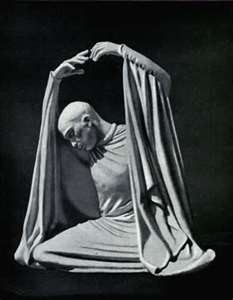
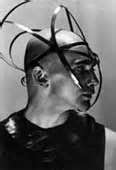
The photos Grace Cordial helped me find today also include some early images of the Byrne Miller Dance Theatre back in the days when it was a performing group doing her own original choreography. I got goosebumps all over again because I recognized, in a cast photo against a velvet stage curtain, the influence of the first modern dancer Byrne ever saw: Harald Kreutzberg.
I can’t share the photos with you yet (we’re still working on permissions) but the costumes Byrne created for her Beaufort dancers are clearly inspired by the stark German modernism of her idol. Just wait til the book comes out!
How to Sell a Screenplay
Five years after moving to Beaufort from LA, Haden Yelin is figuring out that if you brush aside a clump of Spanish Moss here you’ll find a writer (who is probably also an artist or a photographer.) Which is why there’s likely to be a good turnout for her Valentine’s Day presentation at the Beaufort International Film Festival: How To Sell Your Screenplay. (it starts at 6pm, just before the screenwriter’s wine-and-cheese table read session)
If you check out H. Haden Yelin’s IMDB page you’ll find dozens of TV movies she’s written. And more importantly sold and produced. You might even remember the big-name stars that have appeared in them, like Louis Gossett Jr. in the CBS movie “A Father for Charlie” which got Haden her Writer’s Guild nomination for long form writing.
But I wanted to meet her because a producer I worked with last year and greatly admire, Sunta Izzicupo, told me Haden is a lovely and talented person. She forgot to tell me how funny, sweet and encouraging she is as well.
Here’s an example. Over a long cup of coffee on a rainy afternoon, this uber-successful writer confesses to Facebook and blogging-phobia, answers just about every screenwriting question I can think of, changes my whole way of envisioning a lead character, makes me laugh a hundred times, gives me a copy of her only screenplay that survived a recent cross-country mass storage drive disaster AND a copy of her first self-published novel and when I get home there’s an email from her hoping she wasn’t too discouraging about breaking into the business.
Even when she’s funny and self-deprecating I recognize the straightforward truth of what she means. TV movies of the week are virtually non-existent anymore and with their demise disappeared a steady stream of work for writers. Cable channels have less mainstream and more fickle tastes, as I found out when Sunta couldn’t close a sale on my true-story drama because Lifetime wanted stories “ripped from the headlines.”
But Haden thinks the pendulum will swing back again. “Ugh those reality shows are shapeless blobs,” she moans. “Scripted but vulgar and vicious. Surely people will become more sophisticated in time and get tired of the Kardashians.”
While she waits for that pendulum to swing back, she’s trying her hand at writing fiction instead. She chose to self-publish “The Conjurer” (set locally, btw) so that “like it or lump it, the only fingerprints on it are mine. I never doubted I would learn from a good editor. But the trick is would I get a good editor?”
She says screenplays are like paintings – very structured and disciplined. Books are like sculpture. “They’re three dimensional. You’re dealing, as a writer, with more than just what is seen or heard on screen. You get to describe feelings and thoughts as well as beats of action.”
She wrote her book in the same amount of time as it takes her to do a draft screenplay: six weeks. “That’s my attention span,” continues the self-deprecating humor of a veteran, disciplined, Hollywood “A-list” screenwriter. And then she grills me about the book I’ve just finished writing (The Byrne Miller rememoir my blog readers know well) as though we’re writers of equal standing.
I have to admit we do share one common trait. I tend to write until I get stuck on a transition or timeline problem. It isn’t until I’ve taken a nap with Rosie purring on my lap that the answer comes to me. Haden has a similar problem-solving ritual.
“I write my characters into a predicament that I don’t know the outcome of, then I go off to play mahjong on the computer and somehow the solution presents itself out of the muddle of my mind.”
Me: “So that’s the secret. Mahjohg is like a Ouija board for writers block?”
Haden: “Let the universe bring you the answers.”
Might be time to give up Facebook and start playing mahjong. I, for one, am grateful that the universe somehow brought H. Haden Yelin to Beaufort and BIFF’s screenwriting community.
BIFF die-hard fans

When you slip into the USCB auditorium next week and look around for seats at the Beaufort International Film Festival, see if you can spot an attractive woman appearing to guard a section with her life. That would be Kate Zalusky – the unofficial bouncer of a group of die-hard BIFF fans who have attended every single screening every single year since the festival started. They get there early and stay until the bitter end. Before BIFF offered concessions they brought their own food and drinks for the duration, unwilling to take a lunch break if it meant missing even a single student film. If they were of the Facebook social media generation, you’d call them BIFF’s BFFs – but these are people whose first-date movies include “Gentleman’s Agreement” and “The Music Man.”
Since I’m a relative newcomer to the film festival, Jan and Ken Bruning, Joan and John Berra and Diane Voge agreed to meet me for coffee this morning to explain their BIFF obsession. The first thing I learned was that they are all transplants to Beaufort from other parts of the country and that they’ve all worked abroad in their professional lives.
“No matter where you go in the world, when you sit in a dark theatre, smell stale popcorn and wait for the big screen to light up you feel like you’re home,” Joan explained. Her husband John can recite the date and year of the first movie he ever took her to: July 20th, 1962, “The Music Man.” He can also recite her favorite line: “You pile up enough tomorrows, and you’ll find you are left with nothing but a lot of empty yesterdays. I don’t know about you, but I’d like to make today worth remembering.” Joan says she and John have spent the last 51 years making todays worth remembering, which sums up the zeitgeist of this group of die-hard BIFF fans.
They don’t pick and choose among the films in the program by reading little blurbs before hand or going online to watch trailers. They buy all-day passes and watch them all back to back because they appreciate the work and passion involved in making any film that qualifies as an official selection at BIFF.
Diane: “What’s the point in watching only movies that fit your preconceived view of the world? If you’ve traveled, you’re open to new ideas. If you haven’t traveled, films are your airplane ticket.”
Ken: “When we grew up, big cities had art houses. In this day and age it’s too expensive so film festivals like BIFF are the chance to see up-and-comers.”
John: “There’s more to a great film than just the storyline, which you may or may not agree with. You learn to appreciate the cinematography, the editing, the acting. There’s always something that’ll blow your mind.”
Jan: “Thirty different filmmakers are coming to this year’s BIFF to answer questions about their films. Where else can you get that?”
If past BIFFs are any indication, those thirty filmmakers coming to Beaufort next week are in for some serious audience feedback. John Berra was so taken with one short film by a student a few years ago that he tracked the director down after the screening to ask if he could buy a copy. “I wasn’t sure if that would violate his amateur status but it was just so good I had to have it!” The filmmaker’s proud dad went back to his car and gave John a DVD from a stack he had made just in case his son got discovered. John is now convinced that kid will end up winning an Oscar.
For Jan Bruning, movies are life-changing. She remembers going to see “One Potato, Two Potato” with a bunch of university women. But it was Memphis in 1964 and the mixed race relationship depicted on screen was controversial. “I’ll never forget. One woman never spoke to me again because I defended the film.”
That’s why even though her favorite-ever BIFF film was a sock-puppet animation called “Sebastian’s Voodoo” she applauds the fact that Ron and Rebecca have shown films dealing with everything from homosexuality in the Marine Corps to gang life in LA. The same goes for Joan. Never mind that her tastes lean toward sweet-and-funny standouts like 2010’s “Slice of Pie” and student films. This is an all-in crowd and they’ve got the seat muscles to prove it.
Docs will rock BIFF this year
What’s remarkable about this year’s Beaufort International Film Festival isn’t that there are no feature films. It’s that the documentaries are as good as any feature film.
Gary and I are screeners for BIFF, which means we see the good, the bad and the ugly submissions every year. This year the features were in the latter category and I give Ron Tucker and Rebecca Berry enormous credit for not lowering the high standards of the festival just to fill the category.
Luckily for Lowcountry film buffs, the stack of submissions did include some of the best documentaries ever and all our favorites became official selections of the 7th annual Beaufort International Film Festival. Here’s why: they didn’t fall into the trap of passionate insiders. Producing a documentary usually takes longer than a feature because to be any good, the filmmakers have to gain the trust of subjects and earn access. It’s easy for producers to be so grateful to their subjects that they lose the ability to edit any out. Redundancy is the death of so many docs we screen, particularly those that try to document a church or charitable mission to raise awareness for a good cause. When you’re too close you feel bad about leaving any tearful, heartfelt story on the cutting room floor. Even when almost everyone interviewed says the same thing.
None of that happens in the documentaries screening at this year’s festival. And given the incredibly emotional nature of them that’s a real achievement. Take our favorite doc for example: “Besa: The Promise” which will show at 3:30pm on Thursday February 14th. Catch a cold mid-day if you have to take off work to see this. This film has already racked up awards from major film festivals around the world, and accolades from less-than-average Joe’s like this one:
“At a time when conflict between Muslims and Jews attracts the attention of the media, it is heartening to be reminded that mutual aid and friendship also have characterized the relationship. The story told through the photographs of Norman H. Gershman is especially inspiring, because the Muslims who saved Jews in World War II did so at enormous risk to their own lives.”
Jimmy Carter
“Besa: The Promise” follows several Jewish families who were hidden and rescued by Albanian Muslims during the Holocaust. Each family has an amazing story and in some respects they all share the same story. But the producer/editor, our good friend Christine Romero, managed to select only the parts that didn’t overlap or repeat. And in the process of winnowing and editing, she told the one story that is both universal and incredibly personal.
The logline is “An Albanina man must fulfill the promise made to the Jewish family his Muslim father rescued during the Holocaust.” We got sucked into that son’s journey of understanding his own father and a man he barely remembered. By letting that one story breathe and develop, Christine found an actual, dramatic plot that keeps us riveted to the individual while slowly revealing the universal. If you think you’ve seen all the Holocaust-related stories your heart can absorb, make room for a surprise.
If “Besa: The Promise” was the only documentary of this level in the festival it’d be worth buying the pass. But it has stiff competition.
We were also drawn into the incredibly personal story of a woman who finds her long-lost brother after his mental illness caused him to drop out of her life for twenty years. It’s a first-person narrative, told in Rebecca Richmond’s own voice, and usually those make me nervous. In the hands of less talented filmmakers, this technique can feel self-serving and distract from the point of the film. But director Kyle Tekiela found the sweet spot and spooled out the story with as much suspense as any feature.
You’re not sure you even like the sister in the beginning. Her search seems somehow emotionally distant, like she’s not coming completely clean. But when you realize why, “A Sister’s Call” packs an even bigger punch. It plays at 11:50am on Thursday and the director will take questions afterward.
The other blockbuster documentary entry is one that just aired last night on PBS’s Independent Lens. But don’t wait for a rerun to see “As Goes Janesville” when you can watch it on the big screen at 1:45pm on Friday the 15th. Ostensibly, this is about the closing of a GM plant in Wisconsin right and the new governor’s battle to bust unions. Gary’s from Wisconsin. I’m the granddaughter of a labor union rep. We thought we knew this story and couldn’t stomach another kick in the stomach of the middle class. But again, the storytelling lifts it out of the political running-in-circles you might expect.
And one other documentary I want to spotlight isn’t technically competing in the documentary category. That’s because “The Children of Kabul” is technically a student film that plays at 9:20am on Saturday the 16th. I can’t remember any student submission tackling a topic as tough as child labor in Afghanistan, but Jawad Wahabzada uses his nationality to gain access you can’t imagine. The cinematography is as beautiful as the four street kids Jawad follows: Omid, Sanabar, Yasamin and Fayaz. They pick garbage, wash cars and hammer metal to support their families. It’s not an uplifting film and I give Jawad credit for not finding happy endings to a story without one. This is one documentary where I actually would like to know more about the filmmaker – his own story might provide the hope I craved after watching this powerful film.
Beatnik Duncan, cat burglars and full moons
Image Posted on

If you have a calendar, you have an invitation. Just circle the first Saturday night after the first full moon of every new year. This year the first Saturday was the first full moon so I thought it was a well-fated night to attend my first beatnik cat burglar party.
The beatnik cat burglar party may be the longest running poetic event in Beaufort County, at least according to David Adams, the underground, unofficial leader of this throwback group of hippies and appreciators of Beatnik poetry. The only rules are there has to be a bonfire, words must be spoken and black must be worn. At times during the history of the beatnik cat burglar party there have been rumors of all-nighters, scantily-clad women and full-throated R-rated poetry. I can’t attest to that, but I can tell you that nobody blinked an eyelash when I threw out the first P-bomb of the evening. (That’s the word “penis” used in the service of poetry) Actually, I should give Duncan Miller the credit. I was reading some passages from his unpublished novel, “The Air-Drawn Dagger.”
Duncan’s work was rejected by the New York publishing world, and I’m not sure he ever submitted to the good people at City Lights because he might not have considered his work counter-cultural or beatnik at all. But when a group of my sisters-by-Byrne gathered to read some of his books, we all got that impression. Duncan wrote six novels from 1933 to his death in 1992 and if he was as well-read as he was prolific he surely was influenced by the likes of Anaïs Nin, William S. Burroughs, Jack Kerouac or Allen Ginsberg.
So at the beatnik cat burglar party twenty years after Duncan Miller’s death, I took the liberty of excerpting four separate passages from the book he began writing when he lived in Santa Fe (yes, Byrne and Duncan were that cool, contemporaries of Georgia O’Keefe) Judging from the sounds of fingers snapping around a bonfire, Duncan might have had more success as a beat poet.
From Air-Drawn Dagger
Am I mad?
or are my nerve endings stretched wire thin
acting as antennae picking up the sounds stored in my cortical library
always ready to respond to the push button pressure
of my penis?
I am no longer an air-borne spore but
a parasitic growth that must suck on the vitals of others
to survive
I have only been half alive til now –
that I feel the winds blowing against parts of me never exposed or even suspected before.
with buffetings of fear that shake articulated bones against areas of heart
I never knew I had,
hurricanes of love roaring in caverns, the depths of which
I have never plumbed before.
I am at last
Naked to the world!
Perhaps it is strange that I do not remember her name
or see her face yet see the opal in her hands clearly.
But that may be the way of memory which, like a river rolling on to its mouth
picks up debris along the way.
Word. Duncan.
| Noun | 1. |  beatnik – a member of the beat generation; a nonconformist in dress and behavior beatnik – a member of the beat generation; a nonconformist in dress and behavior
beat generation, beatniks, beats – a United States youth subculture of the 1950s; rejected possessions or regular work or traditional dress; for communal living and psychedelic drugs and anarchism; favored modern forms of jazz (e.g., bebop)
recusant, nonconformist – someone who refuses to conform to established standards of conduct
|
Flashbacks
I’ve been dealing with a lot of flashbacks this week. Not the kind cool people who came of age in the ‘60s have, but the kind that make you wish you had paid more attention to grammar in high school.
I know why screenwriting “gurus” like Robert McKee strongly advise against using flashbacks in screenplays. Unless you’re really good at it, flashback sequences are clumsy excuses for not setting up the backstory when you should have. As you type you can practically hear the little musical interlude notes familiar to viewers of bad soap operas in the ‘80s, the kind of music that accompany cheesy visual effects like fuzzy ripples across the screen.
But when you’re writing about a compelling woman whose life spanned from 1909 to 2001, flashbacks are unavoidable. Without them, my book about Byrne Miller would be a three-volume biography instead of a memoir. What I’ve discovered, as I’m getting the manuscript ready for proofreading, is that many of my chapters start in a particular point in time and then float back to an earlier incident to reveal some juicy part of her even earlier past. It all feels pretty seamless, except for the grammar. I’ve been struggling with how long, within each flashback, I’m supposed to use the clunky past perfect tense – remember helping verbs? Not so helpful, when a flashback sequence is pages long.
Here’s where it pays to have brilliant poets and college writing professors as friends. Quitman Marshall put my mind at rest this afternoon when he told me that the reader only needs one grammatical cue that it’s a flashback – a simple she had worried, briefly, if two inches of cloth was enough costume to prevent arrest for indecency. Then I can revert right back to standard past tense. “Now that’s how to fill a costume,” the wardrobe mistress said when Byrne emerged from behind the curtain.
Thanks Q – I feel all buttoned up now. Cue the music!
Dolphin lucky
Southern transplant that I am, the unseasonable beauty of this place never pales for me. Even the front that blew through yesterday and dropped us twenty degrees (but dropped feet of snow everywhere else it seems) couldn’t dampen my winter spirits because the day started with a dolphin sighting. Dozens of them actually, so giddy with fish flowing into the river from the marsh-draining creeks that it looked like they were turning cartwheels just below the surface.
I always start my morning walk with a detour down to the Pigeon Point boat landing to look for dolphins. I’m not burning any calories this way, I know, but I make up for the pause by stretching while I scan the Beaufort River. I’m not the yoga-affirmation type, but when the dorsal fin of a bottlenose dolphin breaks the surface I know that it’s more than a privilege to live here.
Dolphins, especially on a winter morning, remind me I can’t possibly complain about anything the entire day when I am so lucky as to live here. I wrote about how I came to trust in the luck of dolphin spotting in one of the first chapters of the memoir I’m writing. I’ll set the scene: It’s 1990 and I’m looking for buried South Carolina dispensary bottles on a sandbar not far from Pigeon Point landing, with my boyfriend at-the-time.
“Look, dolphins!” I called out to him.
He looked up from the pile of mud and shells at his feet.
“You know what that means, don’t you?” he asked. “Every time you see a dolphin, it means you’re going to have a perfect day.”
“But what if the day’s already over?”
He paused, bringing a mud-covered hand to his chin. “I never thought about it but I guess it works retroactively. Didn’t we have a perfect day?”
It was the logic of the hopeful, the rationale of a dreamer and I have judged the perfection of a day by dolphin hindsight ever since.
The Modern Dance of Football


As the NFL playoffs continue, we will be forced to hear more inane commentary by the likes of Joe Buck. In the ongoing campaign of sportscasters to eulogize their favorite teams, they will continue to say things that make no sense. Like that a synchronized, diagonal shift to the left, by all members of a defensive side, is somehow similar to ballet.
I beg to differ. The choreography of football is clearly more aligned with modern dance. Take the position Aaron Rodgers frequently finds himself in, courtesy of his teammates somehow allowing him to be the most sacked Quarterback in the NFL. He’s flat on his back, with shoulders, head, hips and knees raised in an uncomfortable contortion that we dancers instantly recognize as the Martha Graham contraction. She described her signature move as the physical manifestation of grief. Aaron Rodgers would agree.
Even when he’s not being sacked, his moves are definitely more modern dance than ballet


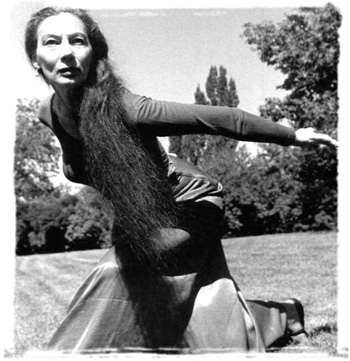
Then there’s Clay Matthews signature dance move – “The Predator” compared what I call Byrne Miller’s predator modern dance move. If these two photographs don’t frighten you into believing me, here’s a technical explanation. If football were akin to ballet, as the commentator suggested, Clay’s second position plie would be done with curved, welcoming arms and toes pointed out instead of parallel and forward. Got it Joe Buck?
 "TeresaBruceBooks"