The Other Mother
What not to ask a college student at Thanksgiving
Thanksgiving is a tricky trip home for college age family members. They’re getting free food and use of a washing machine and that’s welcomed. But the minute they lift a forkful of mashed potatoes to their lips some uncle or grandmother is going to ask what they’re going to do when they graduate. This blog posting is a plea to cut them some slack.
I was reminded of just how stressed out college students are when I talked to students at a leadership conference sponsored by the College of Charleston’s Higdon Student Leadership Center. There’s no way I would have said no when a student who watched my TEDx talk liked it so much she lobbied for me to be the keynote speaker. They even themed the conference after my talk: The Wisdom in Quitting. Still, I was nervous. I had an hour to fill and I wasn’t sure that College of Charleston and Citadel cadets would really “get” Byrne Miller’s words of wisdom.
It turned out they wanted mine. Not because they all want to be writers, or dancers. But because they could relate to the fear I had of disappointing my parents when I had to quit my Olympic quest. I make no secret of how much I hated competing — now. But I’d been raised never to quit and back then I felt like my parents, my coaches, my college – hell even my country was depending on me to represent the U.S. in the Olympics. It seems ridiculously pompous and self-absorbed but that’s how successful kids are raised – when you are the center of your parents’ universe you think their happiness depends on you.
I was terrified to quit anything… from a boring book to an abusive boyfriend… because being perfect was my entire identity. It took the wisdom of my Other Mother to choreograph the steps of my own life.
So back to the talk at the College of Charleston. I’m used to smaller audiences, where it’s easy to make eye contact and get a read on the room. The students were polite, but I couldn’t tell if I was getting through. I offered to take questions but the organizer interrupted and asked if I would meet with students one-on-one after the conference. As it turns out, he knew that the silence during the talk was actually the sound of brains churning. I ended up talking to Citadel and College of Charleston students for 45 minutes and it hurtled me back to my broken back and the days when I had no idea who I was supposed to be. They told me of being the only person in their family to go to college. How they were finding out that they didn’t want to be the doctors or lawyers their parents expected. One African American cadet in her impressive Citadel uniform asked me how to tell her proud family that she wants to walk into another room – and not into the military.
Suddenly Byrne’s sassy womenisms didn’t seem appropriate. I didn’t want these vulnerable students to think that there’s an easy answer for one of life’s most difficult transitions – the one from following our parents dreams to speaking up for our own. I told them that they were way ahead of where I was at their age – it took a broken back for me to even begin to think of quitting what wasn’t right for me. And I told them that change doesn’t have to be instant. Researching, exploring and planning alternatives before taking a major step isn’t the same thing as procrastination or indecision in the same way that quitting isn’t the same as failing.
We took some pictures, had some hugs and they were off – bravely plunging into the confusion and pressure of lives still on the threshold. And of course, I thought of the advice I should have given too late – on the long drive back to Beaufort. So this is for any of them reading this blog – or any 20-something at your Thanksgiving table. It’s one of Byrne’s wisest womenisms: “There is not a contract on earth that cannot be rewritten.”
I take great comfort in the truth of this — even now. It gives me the courage to trust my instincts instead of pre-judging every step I take. After all, identity is just a contract we make with ourselves.
Why Mothers Go Other
Do women assume their mothers are insecure and jealous? I am beginning to wonder, after the same question comes up at every reading or Other Mother book soiree. A hand goes up and someone will ask, almost apologetically, if my real mother was ever jealous of Byrne Miller – the other mother of my memoir’s title. I’ve stopped being surprised by the question, even though in truth it never occurred to me before I wrote the book. I loved both mothers without comparison and assumed the inverse was true. Because my mother was a coach and therefore an other mother to many gymnasts, I never even wondered if she’d mind about Byrne. I knew, with the lucky certainty of the truly loved, that she always wanted the best for me and never declared a monopoly on what the best was.

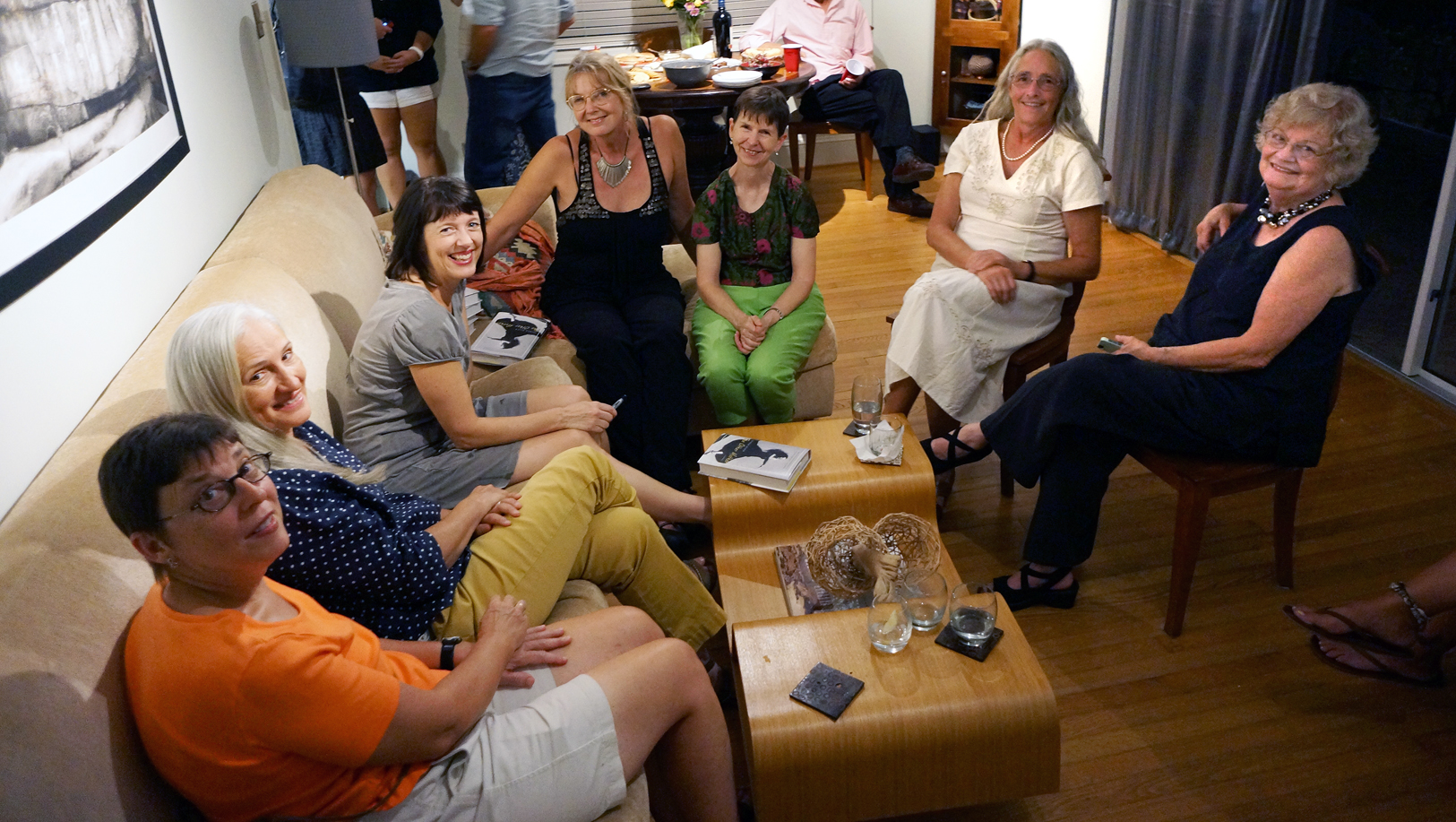
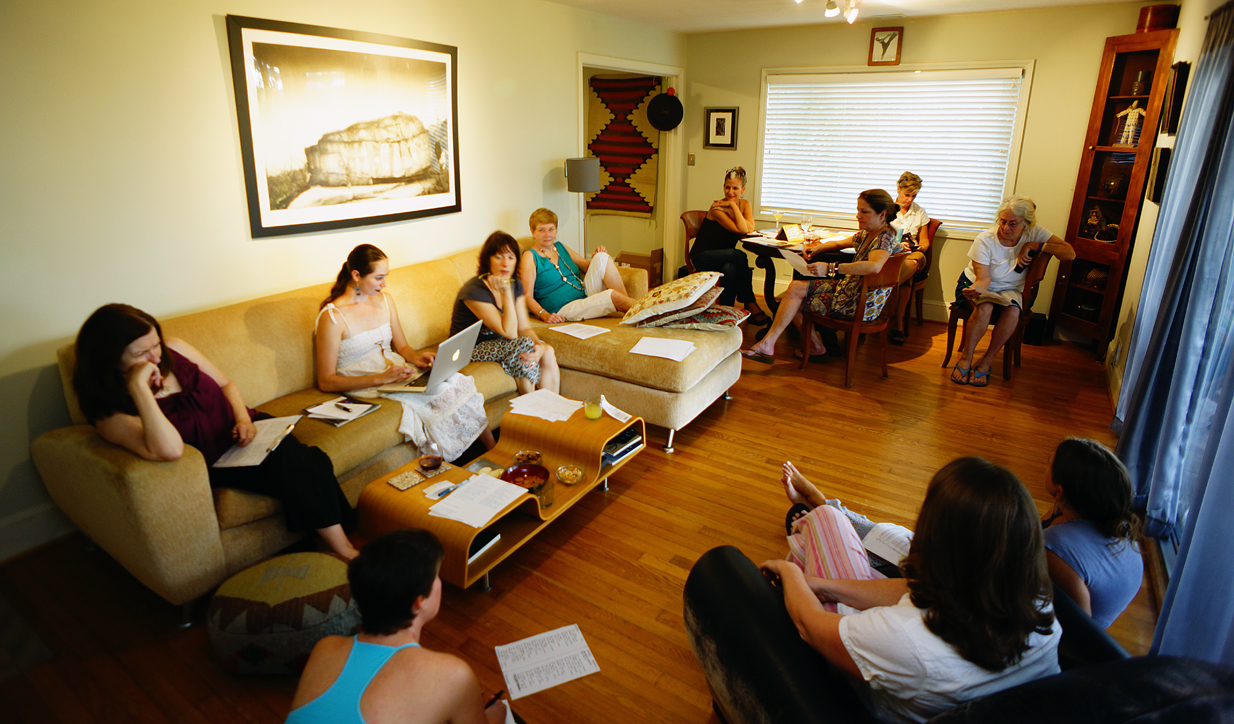
Last week dear friends in Charleston threw a soiree for the book and for the first time, the discussion quickly moved into deeper, fascinating territory. I was prepared for the jealousy question and I could see by the smiles in Andrea and John’s elegant sitting room that my “no, I think she was relieved” answer met with agreement, and approval. These were confident women, some of them mothers, some them daughters of other mothers. The questions quickly moved on to all the other juicy topics in the book, like Byrne’s insistence that all contracts in life – including identity and marriage – can be rewritten.

As I was signing books, the conversation bubbled over champagne and macaroons and I overheard young women showing off cell-phone photos of their other mothers and older women discovering that they’re considered other mothers. Othermothering works like that; I can’t pinpoint the moment I knew Byrne was my other mother any more precisely than when I became aware of my own name. You know it when you feel it.
The next morning, over breakfast, an artist who’d been at the soiree articulated what’s been gnawing at me. Every time the jealousy question comes up, a little part of me wondered if I am just incredibly insensitive. I never even asked my mother if my relationship with Byrne hurt her feelings. But Donna made me think of it in a new light. We turn to other mothers for new perspectives and because they are not genetically tied to our identity they offer us radical, fresh opinions. I don’t know about anyone else, but I would never broach a subject with my mother that would result in Byrne’s favorite womenism:

But perhaps we are open to the advice of other mothers because we assume too much about our mothers. Just as we think they judge us, we judge them to be too insecure, too old-fashioned, too un-hip, to stay-at-home to understand our careers or love lives and conflicts. We’ve stopped seeing the complexity, the changing nature of the mothers we’ve known since birth. We can all point to the time our mother freaked out – over a hair color, or a boyfriend, or girlfriend for that matter. But do we hold onto those moments, those confirmations of conflict so tightly we refuse to acknowledge that mothers change too?
Because of the book, I researched and found proof that both Byrne’s mothering and othermothering evolved over time. By the time I came along she was much better at it than she had been with earlier “collected” children – the memoir documents other relationships more forced than forged. With me she was burlesque – intriguing rather than intimidating. She drew me into our dance together and only now am I realizing how much she needed me as well.
There are a million benefits to being an other mother. There is no age limit and no experience is required. It’s not a forever commitment. Other mothers are not expected to pay for college tuition. And they don’t have to switch off the nurturing gene when their own nest is empty. But perhaps most importantly, other mothers have a chance to redefine themselves. With their collected daughters they can flirt with unexplored wisdoms and unpracticed reactions.
Byrne always said “You can never be everything to a man, to try is beyond valiant. It’s stupid.” But maybe the same is true of mothers and daughters.
Get Thee to an Other Mother!
I can’t pinpoint when I became aware I had an other mother any more than when I became aware of my own name. I remember when I met her, sure. I was a floundering 22-year-old from the backwoods of Oregon and she was an 82-year-old former burlesque dancer from New York who said things like “Every woman should have at least one affair. It builds confidence.”
Seven days from now the whole world will meet my other mother: Byrne Miller. November 5th is the national launch of “The Other Mother: a rememoir” and the date her collected children, including me, will have to start sharing her with readers everywhere. What I’ve learned since the fabulous local kickoff of the book in Beaufort, SC is that women of all ages instinctively “get it:” we’ve all needed and cherished the love of other mothers even if we’ve never put our finger on it until this book came along.
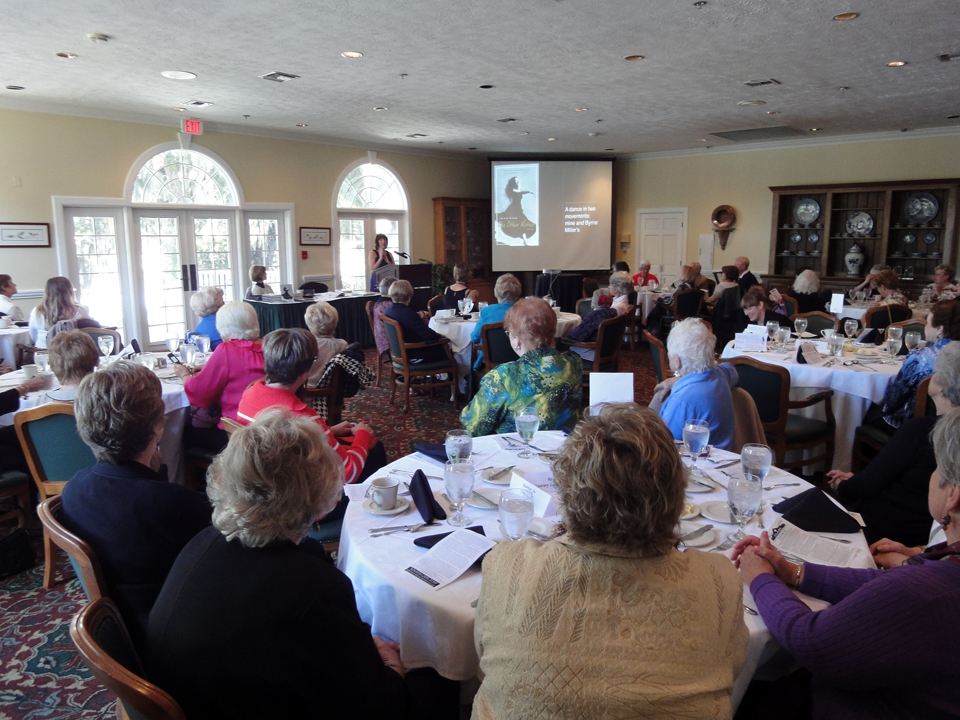
What I’ve also learned is that there are many different reasons why. Othermothering isn’t the sappy happy apple pie fantasy of nuclear families. It’s real world and defies stereotypes. After I spoke to 65 avid readers Friday at Litchfield Book’s Moveable Feast in Murrell’s Inlet, one grandmother raised her hand. I thought she might ask the question I often get: “Was your real mother ever jealous of your Other Mother?”
But instead she said she bought her ticket to the luncheon the minute she saw the book cover and title. “I figured since my daughter and I don’t always seem well matched this might be just the solution.” The whole crowd laughed right along with her and Litchfield Books sold out of my book within the hour. Most told me it was gift for themselves, and some had Christmas presents for their mothers and other mothers in mind. But when I was signing books after the talk, two different women asked me to inscribe their copies to their daughters. “Can you write something like Dear Jane, have you thought about finding an other mother?”
It reminded me that daughters aren’t always the sweet dears we like to think we are. It dawned on me why I never got the feeling that my own mother was jealous of Byrne. She was probably sick and tired of my twenty-something know-it-all self and relieved that another woman was willing to guide me into another phase of life. Hmmm…. Come to think of it one of my many nicknames growing up was Miss Information.


A Soiree for Other Mothers Everywhere
“Somewhere in the years of knowing Byrne, she had become my other mother, fearless and larger than life. I couldn’t have explained to the doctor or anyone when or how it happened any more than I could pinpoint the first time I became aware of my own name.” — Chapter 42 “The Other Mother: a rememoir”
I may never remember the exact moment I found an Other Mother in Byrne Miller, but I will always remember the moment I realized that all women, instinctively, get it. It happened last night, at the first ever “Other Mother Soirée.”
My friend and fellow writer Barbara Kelly had the idea to combine a celebration of my memoir about Byrne and a tribute to the other mothers in all our lives.

Her soirée invite list started with her own Other Mother – Betty Tenare. In the same way Byrne added me to her collection of daughters, Betty befriended Barbara when she first arrived in Beaufort and folded the nervous newcomer into a circle of support.
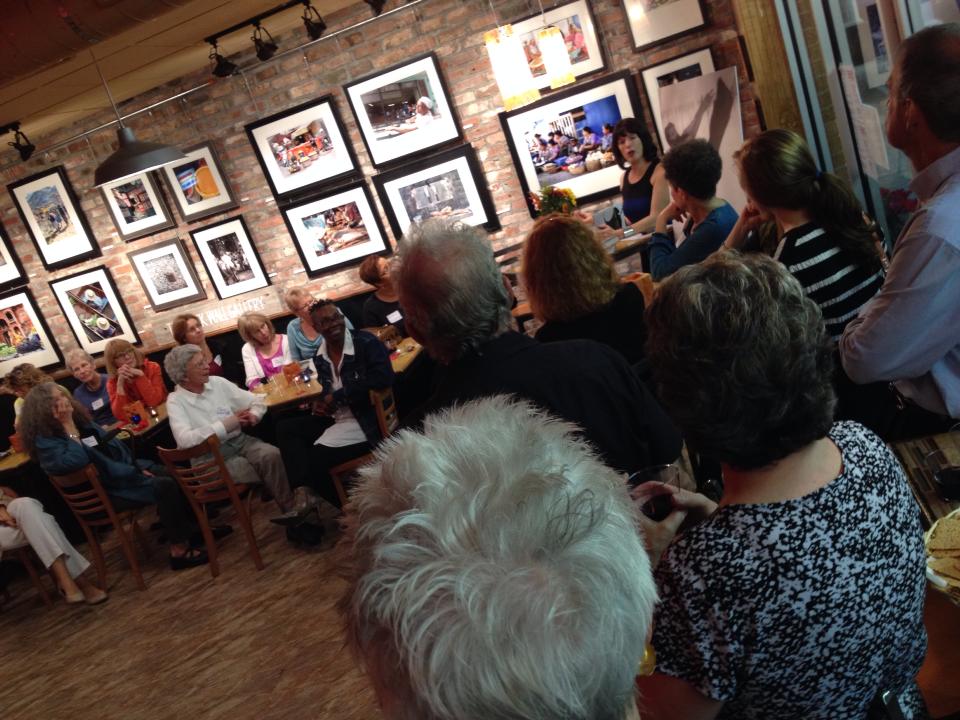
Betty sat just to my right as I read this passage from “The Other Mother: a rememoir” and I could literally feel how proud she is of Barbara and of being an Other Mother. Just as Byrne was.
“I didn’t have to ask what Lillian meant by collected daughters. I was beginning to know the silky feel of Byrne’s favor, the web she wove that made me feel more charming, witty and talented than I did with anyone else.”
—Chapter 14 “The Other Mother: a rememoir”


When we weren’t feasting on chef Jamie Darby’s creations, we raised glasses of wine and shared toasts and stories of Other Mothers. Some were literally shared. Like Casey Chucta’s story of how she used to be jealous of all the people “adopted” by her charismatic, theatrical parents Bob and Roxie. But then, when so many people paid tribute to her father at his funeral, she realized how lucky she was to have inherited an extended family. All because her father was an Other Father and her mother a generous, loving Other Mother.
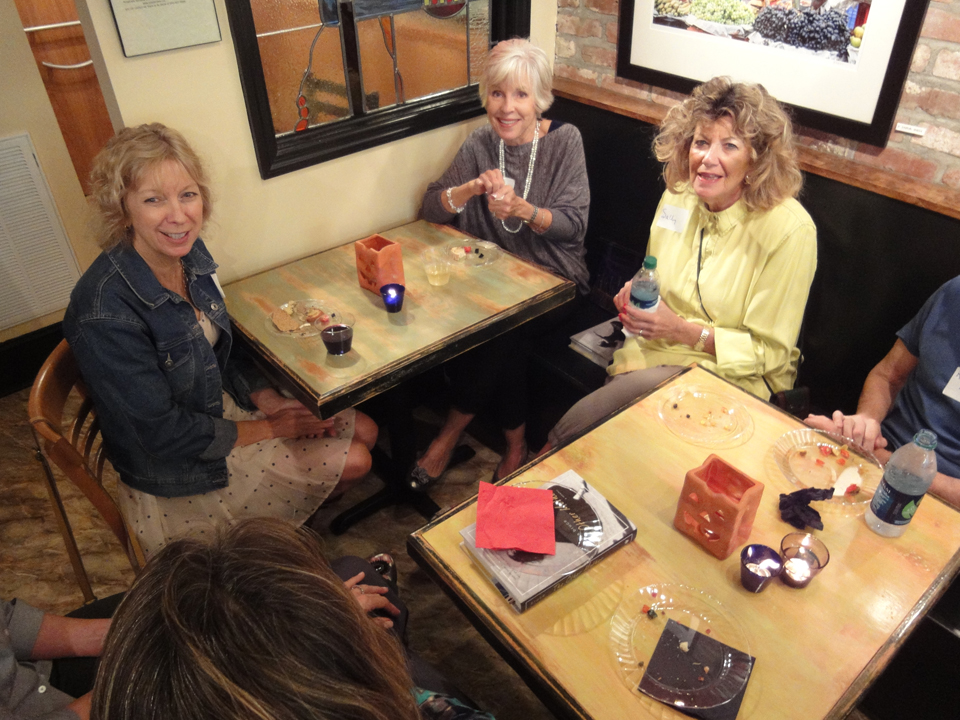
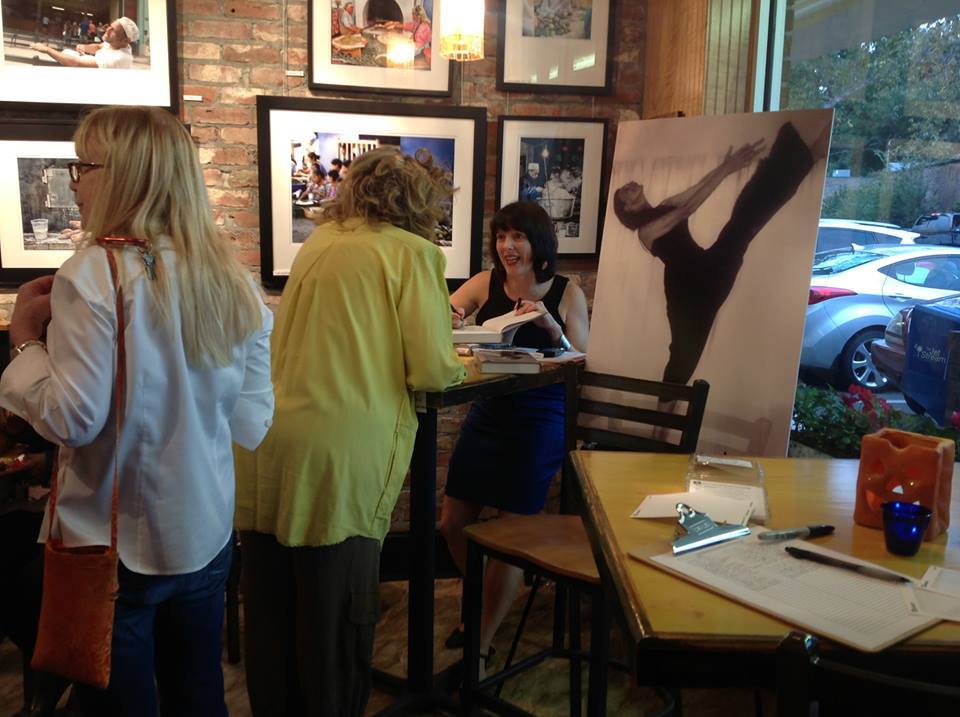


As a writer, it doesn’t get better than witnessing the way a book can connect people. Last night was my first chance since the Beaufort launch to sit back and revel in the power of othermothering. But there will be more opportunities. Two other dear friends, Andrea in Charleston and Audrey in Washington, D.C., are hosting Other Mother Soirées for me at their homes in November. And my TEDx talk in Charleston, on lessons from my Other Mother, keeps getting more views and likes as the national book release gets closer. Who knows, I may be collecting a few daughters of my own as this dance continues.
I’m out of the closet — confessions on recording an audio book
Let me apologize right up front if you were stuck behind my little white Mazda on I-95 in the late ’90s, headed south from Washington D.C. to Beaufort, South Carolina. You probably passed me in a furious hurry and wagged your finger at the sight of a furry white dog licking the tears streaming down my face as I drove. You are forgiven for whatever blond, female driver accusation you probably hurtled at me. I blame it all on audio books. One in particular: Mitch Albom’s “Tuesdays with Morrie.” Not only did this book-on-cassette keep me awake, though admittedly distracted, on the nine-hour drive to visit Byrne Miller, it changed the way I understood aging, love, grief and honesty.
Fast forward a few cars, years and hair colors later, and you’ll understand why I knew I wanted to record an audio book version of “The Other Mother: a rememoir” as soon as it was published. As a kid, I adored hearing my mother read books to me and I never outgrew it. I had to get over the weirdness of hearing my own voice when I decided to become a television reporter and studied delivery techniques with a vocal coach in grad school. I’ve been lucky enough to voice everything from documentaries for ETV to virtual news networks for the Department of Homeland Security and a Short Story America piece which aired on NPR.
So when Joggling Board Press’s marketing and social media guru, Will Green, said his recording studio at the JBP offices in Summerville was ready for me I had no reservations. He figured we’d get halfway through if we recorded “The Other Mother” for three days straight. I packed an overnight bag but thought we’d get through much more than that. Afterall, I was known as “one-take Teresa” back at WJWJ.

This is me, on day one of the audio book recording. In a closet. Literally. It’s so small the mic stand legs can’t spread far enough to balance without bungee cord assists. If I felt compelled to do a chicken dance my elbows would scrape the walls.
Now I can’t actually say that I’ve never voiced in a closet before. Back in my Ogilvy days, I had to cut the voice track of a video news release in a storage closet of a conference room at the World Trade Center. But that script was one page, about a minute’s worth of copy. “The Other Mother: a rememoir” is 417 pages – with no soundbites to break up the narration.

Will designed his studio so that he gets to sit outside the closet, listening to the recording through comfy hipster headphones at a spacious desk. The “talent” has to pass strict height and girth requirements to even fit in the shoe-box sized recording booth. Even so, the first day was fun. I tried to image that I was curled up in bed, reading the love story of Byrne and Duncan Miller for the first time. Hours sped by and despite the fact that a guy Will’s age is definitely not the target audience, he fell under the spell of the book as well.

Day two I was a little stiff and sore but my voice was holding up. Susan, my editor and the publisher of Joggling Board Press, had plenty of hot tea and honey on hand and made me stop for soothing snack breaks of plump and juicy grapes (She’s clearly got a bit of Other Mother in her.)
Even when you’ve written and rewritten, and edited and re-edited the words in front of your face, there are surprises in a marathon recording session. Like the sheer number of French and Spanish words that somehow ended up in the book. I don’t speak French, unless you count the ballet terms I learned as a kid. I had to rely on my memory of the way those dance terms sounded on the lips of many dance teachers. The street Spanish sprinkled through the pages are much fresher memories and I’ve always found the language lyrical and lovely to speak.
The tough part came when I hit the chapters where I incorporate lyrics from The Doors into the dialog between young Teresa and her common-law-husband. It made perfect sense when I wrote the book. The half-Mexican surfer character, Sonny, listened to Jim Morrison all the time. Songs like “Gloria,” “Light My Fire” and “The End” and were the soundtrack of our relationship.
But when they popped back up in front of me, I had to make a split second decision about how to deliver those lines in spoken form. On the first pass I did it straight.
Now that we know each other a little bit better, why don’t you come over here? Make me feel alright.
I could hear Susan’s guffaw from the other side of the closet wall. My PBS-serious delivery of a familiar lyric was laugh-out-loud funny. We took a break. Listened to the song on the internet. Marveled at the way Jim Morrison manages to sound simultaneously stoned and psychic. He sneers the words and yet they’re seductive. He belts out “make me feel alright” with a raspy earnestness that still makes fathers guard their daughters with shotguns.
I tried imitating it. It was even funnier than saying it straight. I tried sing speaking it. I sounded more ridiculous each minute. Finally we decided I would try to deliver the line with Jim Morrison’s cadence and rhythm since there was no way I could mimic anything else. I climbed back into the closet, took a deep breath and only exhaled when I didn’t hear Susan or Will laughing. We did multiple takes and I’ll leave it to the judgment of a 29-year-old man to pick the version least likely to elicit howls from future listeners.
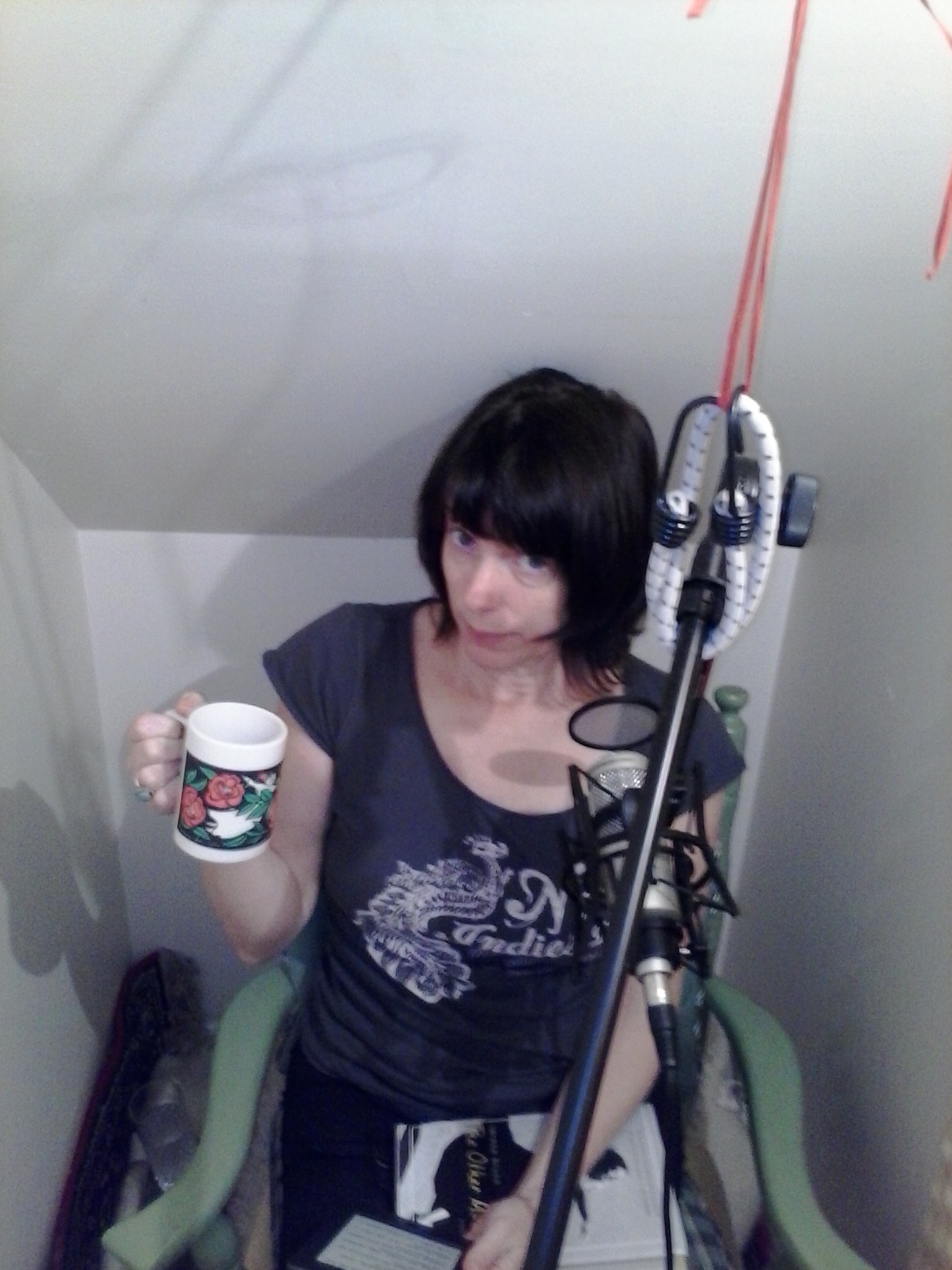
Day three and I was so claustrophobic, in character and eye-strained that I would have belted out any Jim Morrison lyrics with abandon. My one-take reputation began to crumble. Infusions of Starbucks didn’t even help. As I read each chapter I kept thinking of my likely audience – women of all ages – and how they wouldn’t be charmed by the froggy, come hither instrument my voice was becoming. We took a long lunch break and I let Will and Susan do all the talking, thinking I’d bounce back. Still, by two o’clock I was clearing my throat with more frequency than I finished sentences. I learned exactly where vocal chords begin, lower down than I had assumed before they started stinging and chafing like sand paper on a paper cut.

Ironically, just as I was falling apart, Will was hitting the book’s stride. It’s riveting stuff – electroshock therapy, schizophrenia, burlesque, open marriages, and phony marriages. He was following along so closely that he could almost predict when I would switch words or omit them altogether. At 2:30pm, a shade before the Kindle counter said I’d reached 50% of the book, Will made the executive decision to stop and record the rest when my voice has recovered.
The Other Mother: a rememoir” may be deliciously intriguing, even shocking, but it shouldn’t sound like I’m reading “Fifty Shades of Grey.”
On the wrong side of the camera
Don’t be nervous. This’ll be fun. Your hair looks fine. No, the questions aren’t hard. Sure, that outfit works on camera.
I’m not proud to admit I served up these platitudes to countless interviewees back when I was a reporter and anchor at the PBS affiliate in Beaufort, SC: WJWJ-TV. And when I left the newsroom to make public relations films in Washington DC, I re-warmed those same tired sayings to ease the anxiety of corporate CEOs and newly minted spokespeople.
Today was payback. I found out what it’s like to be on the wrong side of the camera because my former co-anchor and friend Juan Singleton interviewed me for the TV program he now hosts for the City of Hardeeville.
I knew this day would come. I’m grateful for the chance to introduce new audiences to “The Other Mother: a Rememoir” because I believe in the book and want it to be a best-seller for Joggling Board Press. I’m eternally grateful that my first TV interviewer was Juan, instead of a recent J-school graduate who will probably never read the book or care about an octogenarian dancer who started out doing burlesque in the Great Depression. But it was still waaaay harder than I thought it would be.
First of all — where is it written that I look nothing like I did back in my anchor days and yet Juan Singleton hasn’t aged a day?


Now it’s not like I’ve completely forsaken my TV identity. It was really helpful in my Ogilvy days — I actually enjoy “media training” clients. And when I’m not writing books and screenplays, I still use my reporting skills for simulated news programs for clients like the Department of Homeland Security.

Those gigs are for “field reporting” — and nowadays reporters can even get away with wearing leather jackets. But for Juan’s interview segment, I had to be an author. And I realized as soon as I got on set this morning that there was a good reason I always told guests not to wear black. It disappears on camera, especially when the backdrop is Charlie Rose serious. Suddenly forced to go sleeveless, the only thing more mortifying was realizing that my dress showed just as much bare leg as bare arm on the two-shot. I’d fire me, if I gave anyone that kind of wardrobe advice.

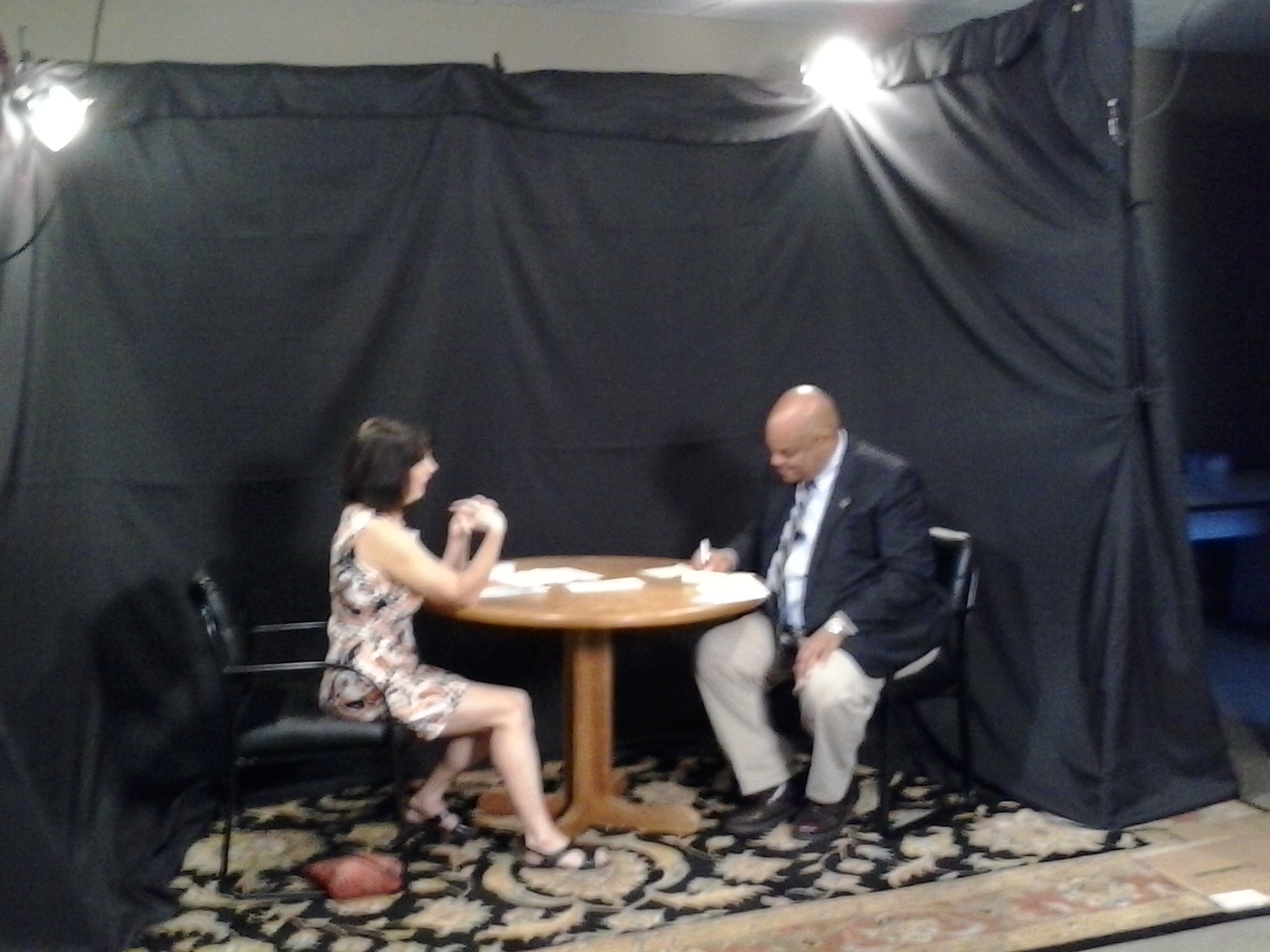
Once the cameras started rolling, I tried to forget about my various wardrobe malfunctions and concentrate on my message. I’m one of a long list of writers reading excerpts from their books at the inaugural literary festival called a “Novel” Wine tasting” at September Oaks Vineyards in Ridgeland, SC on October 26th.
Phew, I managed to get that out in one sentence. Although my husband Gary, who was sneaking pictures during my interview on my cell phone, says I talked about twice as fast as my genteel, Southern born-and-bred host.
It was Juan’s open-ended questions that presented a bigger challenge. I was a master at those too, back in the WJWJ day. We all were. I think Suzanne Larson set the world record for asking one, strategically open-ended question and letting the interviewee answer for something like 17 minutes straight. We all loved it when a Byrne Miller Dance Theatre concert was coming up. You just had to introduce Byrne and she’d seduce the cameras, and our audience.
But I knew Juan’s entire segment was supposed to be about 7 minutes. Suddenly this process I’ve always brushed off as easy, wasn’t! How was I supposed to describe what an Other Mother is, how I met Byrne Miller, what she meant to me, why I wanted to write the book — in just 7 minutes? The same queasy nerves that attacked right before my TEDx talk in Charleston threatened to make an appearance, until I remembered one my favorite Byrne Miller womenisms.
“Innate intelligence is surpassed by impeccable instincts.” — Chapter 4, The Other Mother: a Rememoir
It was TV, not brain surgery. I wasn’t being summoned to testify in front of a senate subcommittee. Juan Singleton was not the late Mike Wallace, going for the jugular. He just wanted to know more about a woman I loved enough to write a book about. (It turns out Byrne taught him a dance class or two back in her days at Beaufort Elementary.) I took a deep breath. Nobody would know if I messed up a detail from the book; that’s the beauty of becoming the expert in all things Byrne Miller. I could rely on my old TV instincts and just tell the story.
Which is when another of Byrne’s womenisms popped into my head.
“There is not a contract on earth that can’t be rewritten.” — Chapter 33, The Other Mother: a Rememoir
So what if Juan’s interview segments are normally seven minutes? It’s not set in stone. I just had to make him forget the stopwatch. It’s easy, when I’m talking about Byrne Miller. Hardeeville residents can watch the program on TV. The rest of us will get to watch it online — sometime next week — on the city’s website. As I used to say every night at 6:30 pm, “This is Teresa Bruce, reporting.”
How a mermaid gets in hot water
As readers of my new book “The Other Mother: a Rememoir” now know – my mermaidenhood is fishy, to say the least. I come clean in the book, as all memoirists should. There’s a whole chapter disclosing how my scaly side came about and I wouldn’t dream of spoiling the book for you by giving away any important details.
Instead, this is a blog about consequences. My publisher, Susan Kammeraad-Campbell, is a big believer in mermaids herself so she saw no harm in putting proof on the invite that we mailed out to supporters and friends of Byrne Miller – my other mother. I figured it’d come out soon enough anyway, since its one of the photos actually in the book.


What I didn’t count on is the whirlpool of confusion it would create for two of my favorite little girls in the known universe. Ann is a 10-year-old who lives in Beaufort (top photo) and Marina is my niece, ( bottom photo) an almost 9-year-old who lives in Florida. Both girls saw the invite with my mermaid picture. Both girls were shocked – for different reasons.
For Anne, it was more about the picture. She’s never known me before I dyed my hair black, so there’s that issue. (It seems a lot of people have that issue. I’m so not a blonde anymore. Just accept it.) She’s also never seen my mermaid tail. And that’s a problem, since we are swimming buddies who spend hours each summer cavorting in the creek behind my house. I’ve always told her I was a mermaid, but she wrote it off as just another inane thing her silly friend says to make her laugh. I’m not sure how it’s going to play out. Anne came to the launch but was suddenly shy, as if she wasn’t sure who the heck I really was anymore.
Marina had seen the picture before. She was scared that by putting it on the invitation everyone would find out and it wouldn’t be a family secret anymore. We have lots of secrets in my family – this is probably the only good one. My mermaidenhood is something like an exclusive club – even her older brothers are sworn to secrecy. Her concern is entirely logical, given that the reason I’ve always given her for my tail not showing itself anymore is that I’ve been suspended by mermaid management. On account of the first time my nephews saw my tail, in the bathtub, conveniently captured in the photograph. It happened before Marina was born but such is the way of legends.

And now I’ve gone and blown it. Outed myself. Normally when I do stupid things I ask my younger sister Jenny to help get me out of trouble. Before my suspension by mermaid management excuse, Jenny told the boys that the reason my tail isn’t visible to anyone but family is because of the secret (suntan) lotion I carefully smear all over every time I swim. Earlier this summer, when we had a family girl’s trip to Weeki Wachee and saw a mermaid show where some of the performers did NOT have tails, it was Jenny who explained that river and spring mermaids are different. She’s always got my back, or tail as the case may be.
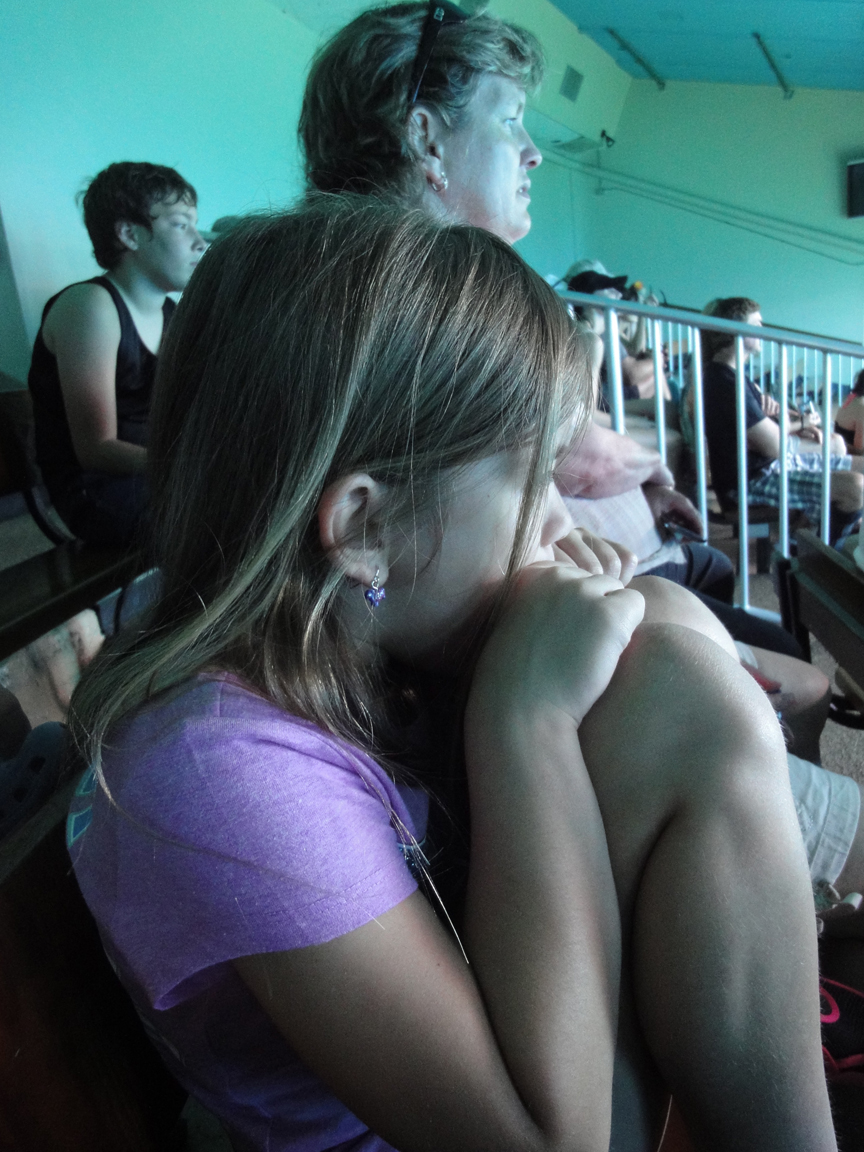
Marina turns nine this weekend and for her birthday she wanted a “mermaid encounter” at Weeki Wachee instead of a party. Weeki Wachee closes for the winter so Jenny booked the “encounter” for last Sunday.

I was supposed to go, along with my mermaid sister Lolita, but a blown tire blew our chances. We had to content ourselves with a phone call after the “encounter.” The conversation with a very tired little mermaid went something like this:
Me: I’m so sorry we missed it. We wanted to swim down the Intracoastal but even with our tails it’s too far.
Marina: That’s okay Auntie Mermaid. I had fun anyway.
Me: Did you get to swim with a mermaid?
Marina: Yes, her name is Christa.
Lolita: Oh Crista – we know her.
Me: (silently) way to go Lolita!
Marina: Is she a friend of yours too Auntie Mermaid?
Me: If I remember correctly, she has blond hair…or maybe blondish brown… or
Marina: Yes! She has blond hair and it gets kinda brown when it’s wet.
And so, thanks to both my actual sister and my mermaid sister, Anne still thinks I’m silly and Marina still believes I’m a mermaid. Now if I can just make sure neither one of them reads the book until they’re, like, twenty….
Celebrating The Other Mother
A sixteen-year-old girl from Beaufort High School bought a copy of “The Other Mother: a rememoir” on the night of it’s launch. Here’s why that makes my heart do a grand jete. It isn’t a YA book about young love, vampires or zombies. It isn’t about a celebrity or anyone her friends tweet about. It will never be made into an app or video game. So why did she part with hard-earned babysitting money to buy a 417-page book about my relationship with a former burlesque dancer named Byrne Miller?
“I danced for Ms. Miller in the Nutcracker when I was four,” she told me. “And I never knew she was so amazing until tonight.”
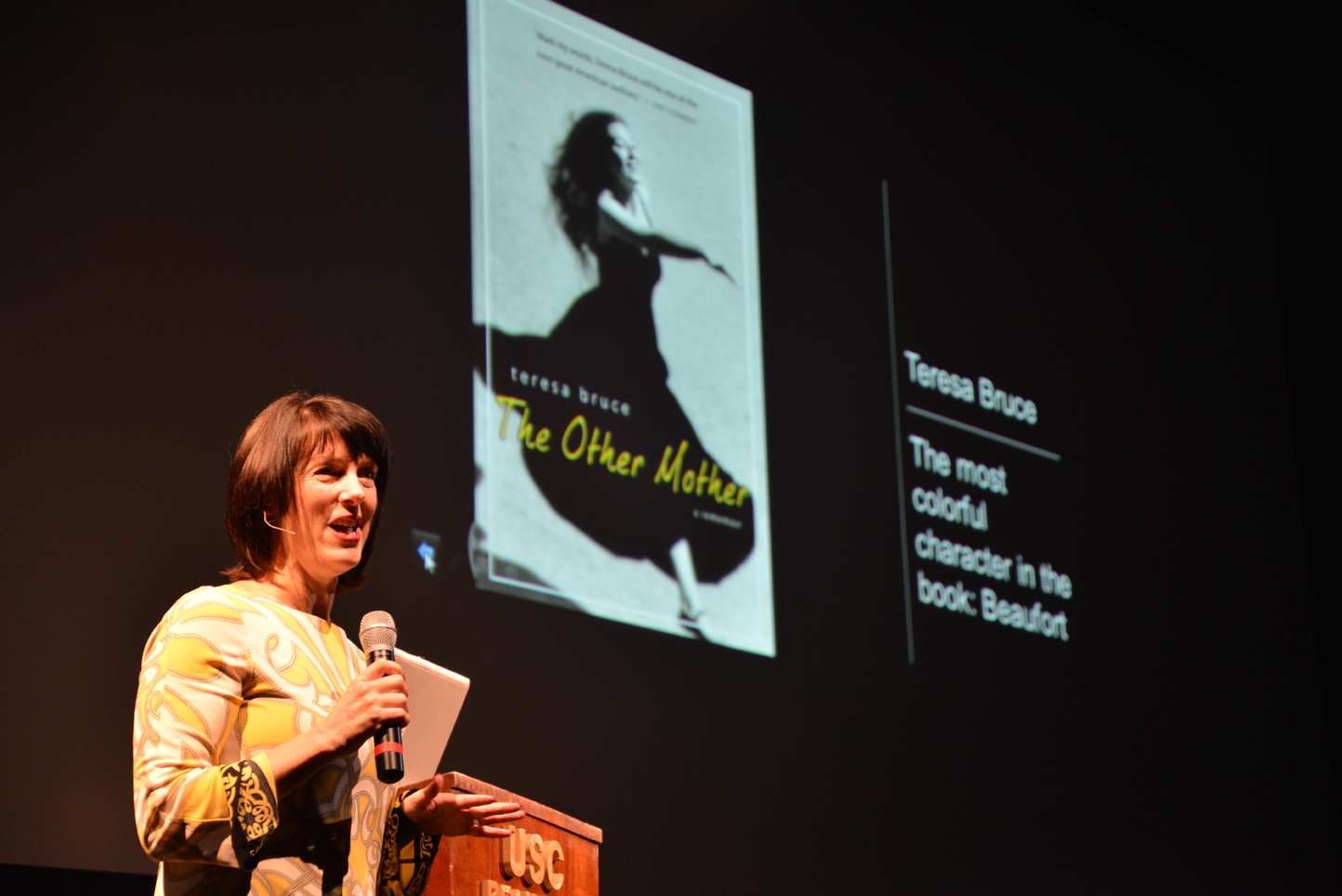

 Almost five years of research, writing, rewriting and planning this book’s introduction to the world was worth it in that instant. Byrne was Other Mother to me and many other former dancers in the audience of the USCB Center for the Arts. We were all drawn to her exuberant positivity and consider ourselves lucky to be her collected children. One of the best parts of writing “The Other Mother” was the reuniting with many of them, telling and retelling the stories Byrne planted in each of our hearts.
But I wrote the book so that the next generation of young women would have the chance to know Byrne Miller too. I told the unbelievably big crowd of book and Byrne lovers that all young women deserve the wit and wisdom of an Other Mother.
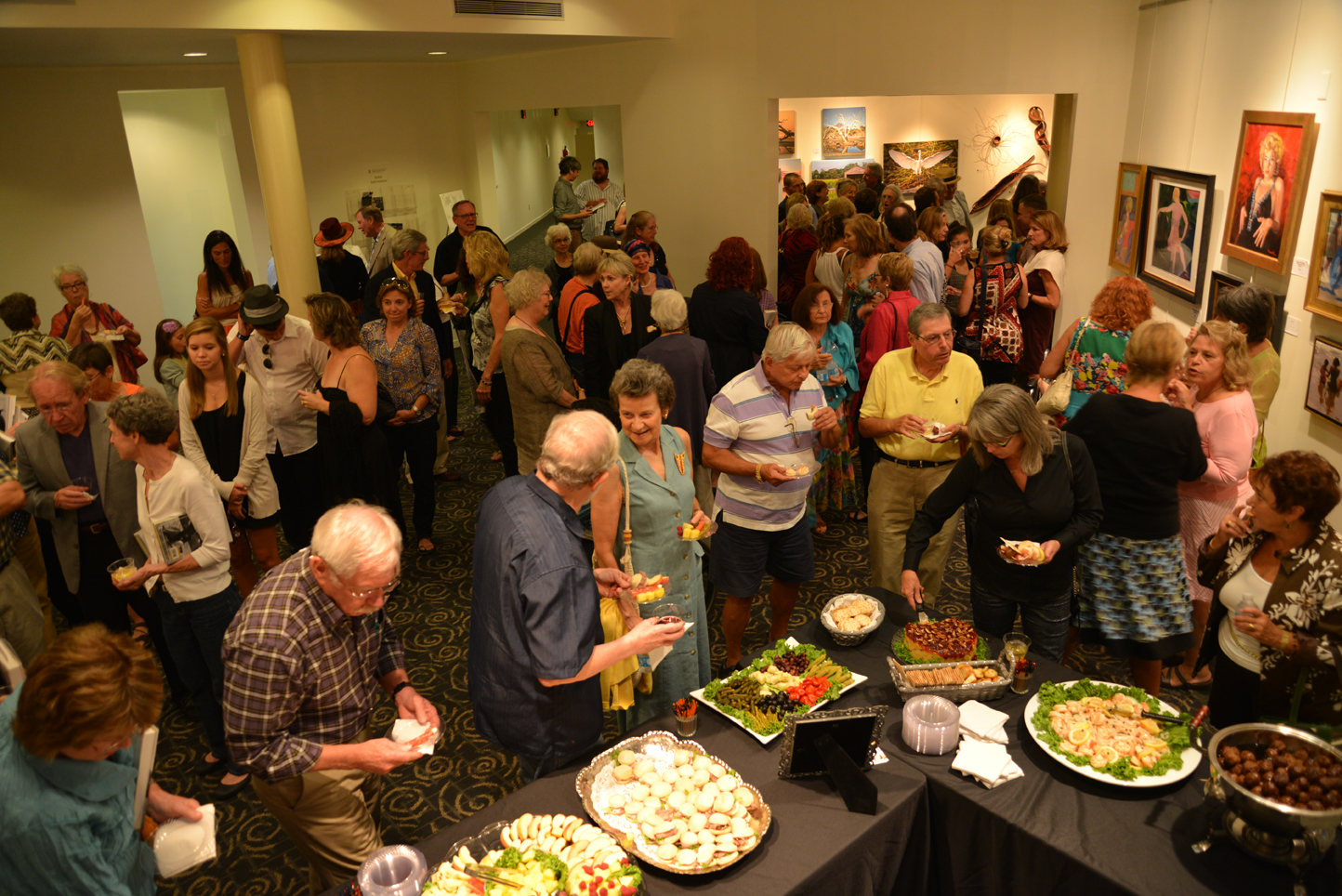
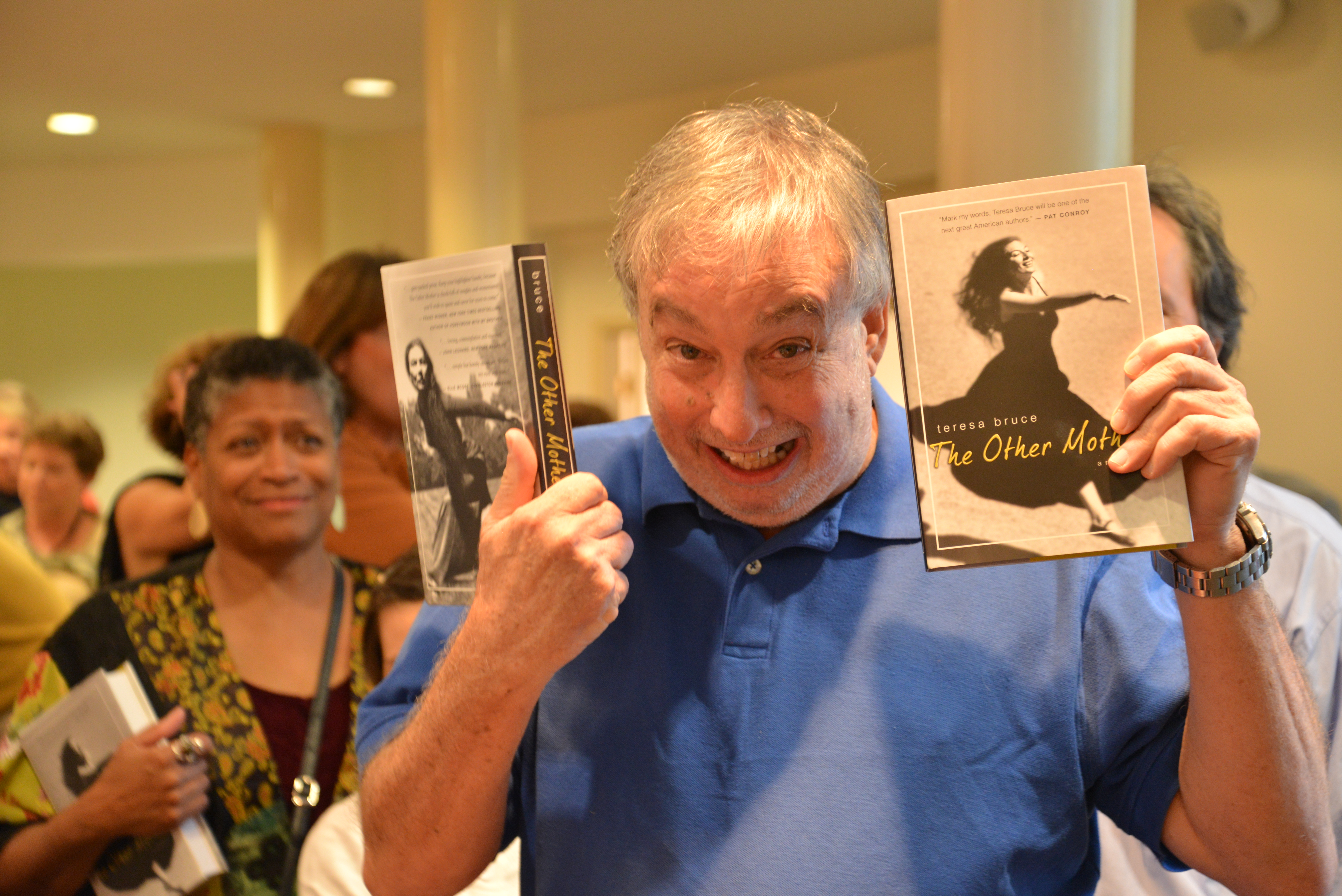
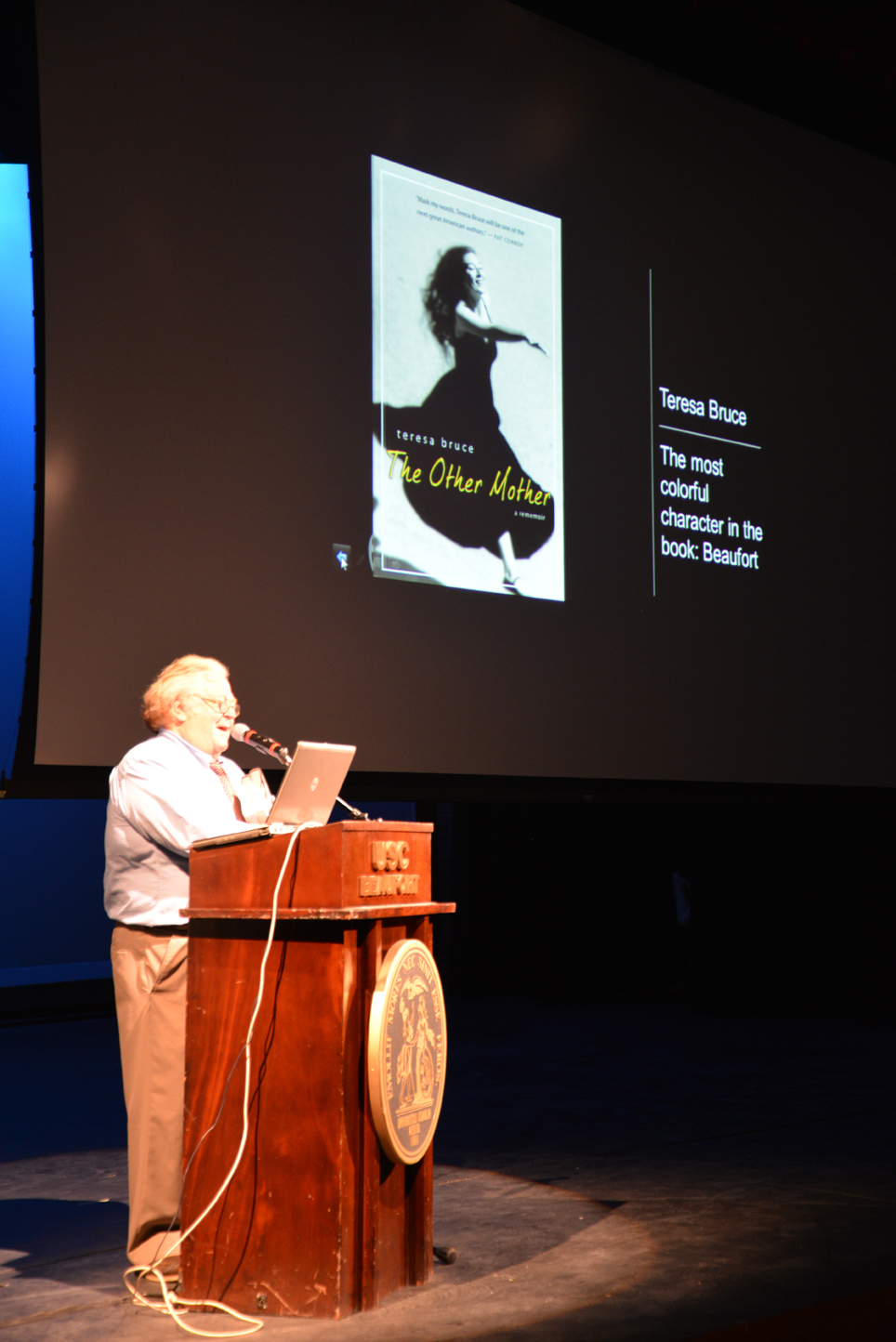
I’m a first-timer. I have no other book launches or signings to compare to Byrne’s kickoff celebration. All I knew was that I wanted it to be an event worthy of the woman with a whim of iron who introduced modern dance to the Deep South. I also wanted it to be an homage to my adopted hometown – the place Byrne and Duncan Miller chose, as I did, to live and create. Beaufort is more than a setting in this work. It is a central character.
After sharing some crowd-pleasing passages from “The Other Mother,” I watched from the back of the auditorium as two groups of dancers performed modern and contemporary pieces choreographed in Byrne’s honor. I confess when the idea for making the launch more than a typical book signing first occurred to me, I was worried that the dancers I’d invited would wear the kinds of costumes you see at recitals or that their moves would mirror what you see on music videos. Byrne was an unrepentant dance snob and even twelve years after her death I’m certain she could still summon lightning bolts of judgment.
But the moment the music started I felt my muscles lengthen, my posture correct itself and tears roll down my cheeks. These Beaufort Middle School and High School dancers are the living, breathing legacy of what Byrne Miller started decades ago. On the night of the worldwide debut of a book in her honor, they were lyrical, expressive and as committed as any modern dance company the Byrne Miller Dance Theatre ever brought to Beaufort. And if even one of them loves reading “The Other Mother: a Rememoir” I will be as proud as Byrne surely is.
Hello Baby! Welcoming a book into the world

Regular moms make cute little photo albums when their babies arrive. I’m about to bring a new book into the world — “The Other Mother: a rememoir” so why not create an album for my baby too?
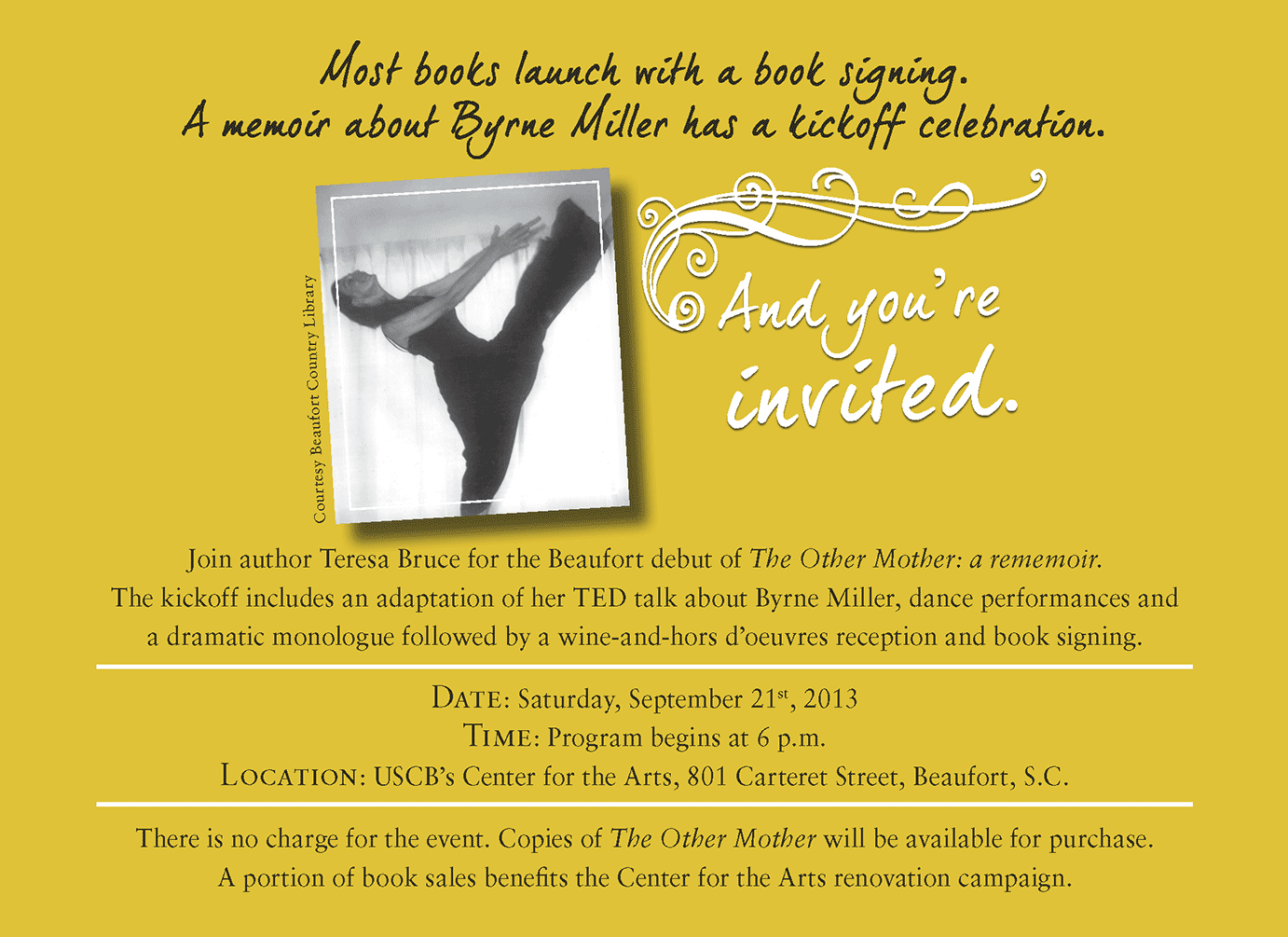 So here goes. It takes more than the author to make a book. It takes a great story — burlesque dancer choreographs a life with unrequited novelist and teaches a young TV reporter the dance of truth, becoming her “Other Mother.” It also takes a partner — and for almost five years my husband Gary has been cheering me on.

But “The Other Mother: a rememoir” wouldn’t have happened without — okay here comes the baby analogy — without midwifery of my publisher and editor: Susan Kammeraad-Campbell of Joggling Board Press. She took the manuscript of a former journalist and helped me deconstruct it. The story started fifty years before I was even born and I was trying to tell it chronologically, through stories Byrne told me over glasses of wine on her screened porch. It felt distant and restrained — nothing like the story that emerged after she showed me how to polish and string together the pearls.

And so began four years of research, writing and rewriting — interrupted by documentaries and video work to pay the bills. The former journalist in me loved the deep dive into Byrne and Duncan’s past. Even things I hadn’t thought important, turned out to be pivotal.


Eventually the research phase was finished and Susan and I began the process of editing each pearl — chapter by chapter. Coming up with
a title was the hardest part… we called it everything from “Dancing with Byrne” to “The Adagio” before settling on the phrase that defined
her. Once we had that, the marketing phase began. I gave a TED talk and created business cards featuring Byrne’s sassiest womenisms.

Byrne would have loved the design process — Torborg Davern did the spectacular cover and Shanna McGarry made the interior just as beautiful. Will Green got the social media ball rolling, making me Tumble, Tweet, Pin and Blog while the advance review copies went out to media, literary competitions and bookstores. So far the reviews are amazing — from Lowcountry Weekly and the Beaufort Gazette.
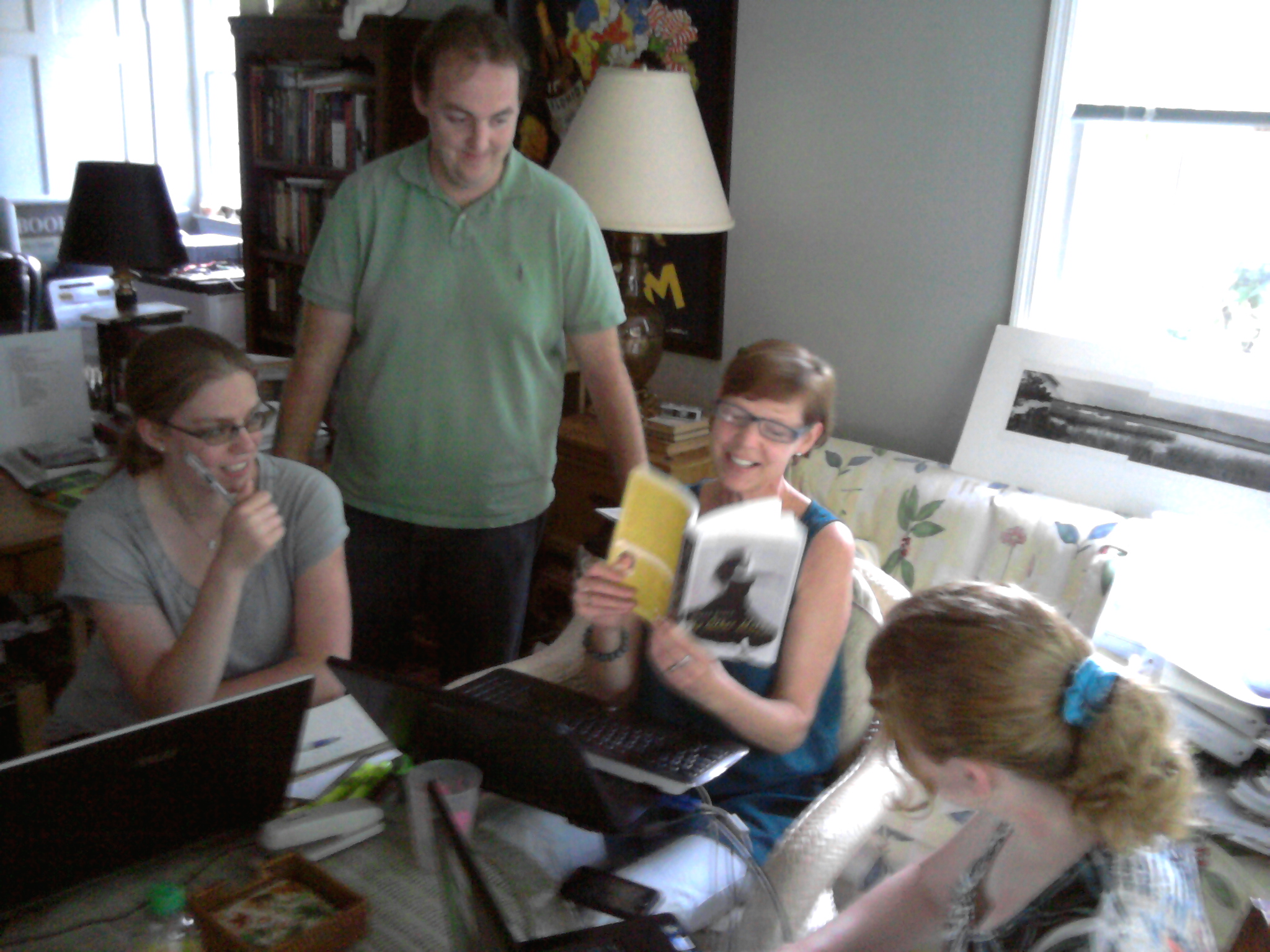

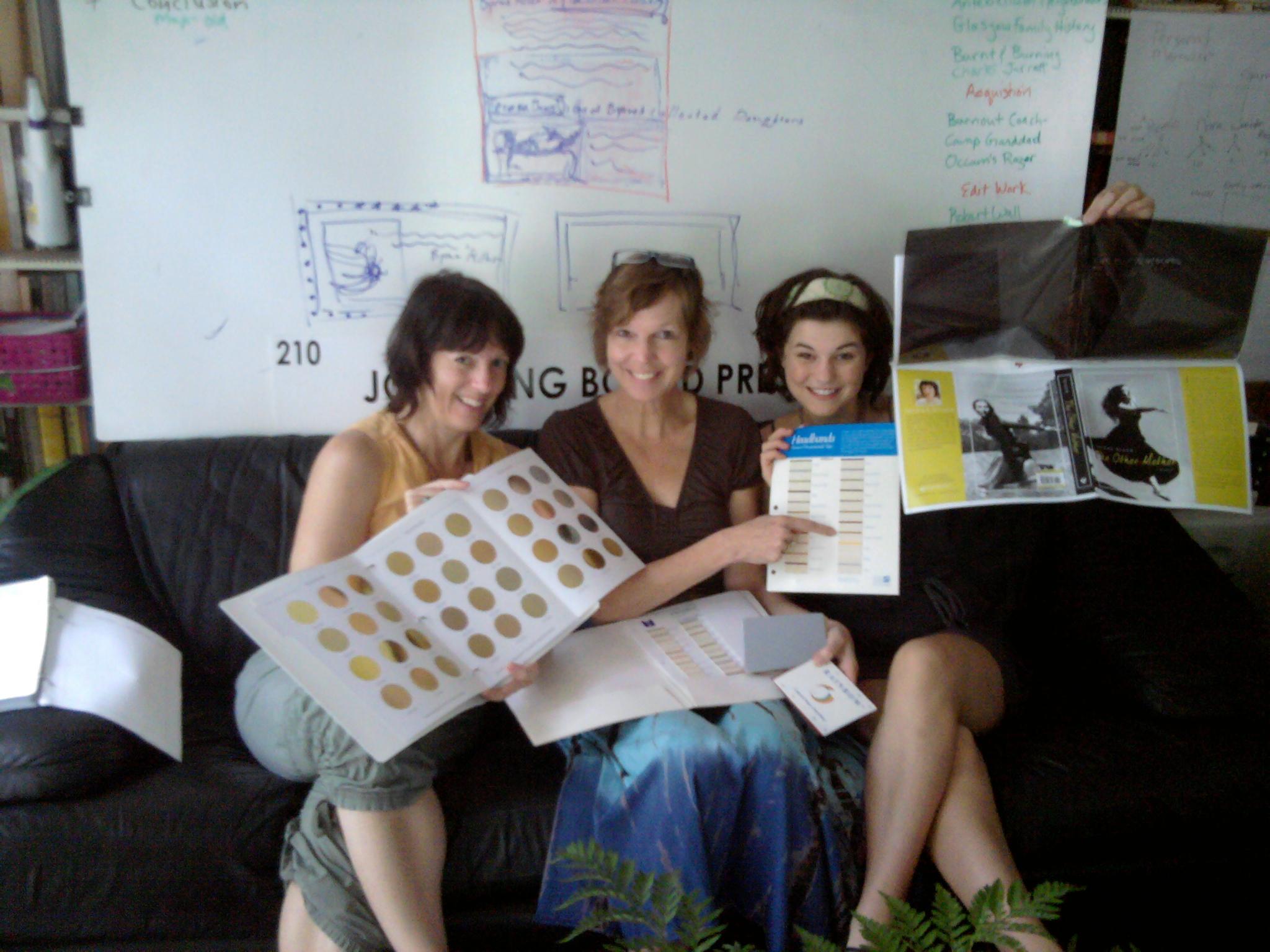
While the books were being printed — in Minnesota, USA thank you very much — we got to work planning the launch. Byrne taught
me well. Everything can be a party — from combing through mailing lists to figure out who died, remarried or moved, to
addressing envelopes. Byrne’s “collection” of children is still growing — even in her absence — because of this book. I’m sure
she’s leaping through the air somewhere at the thought of it.
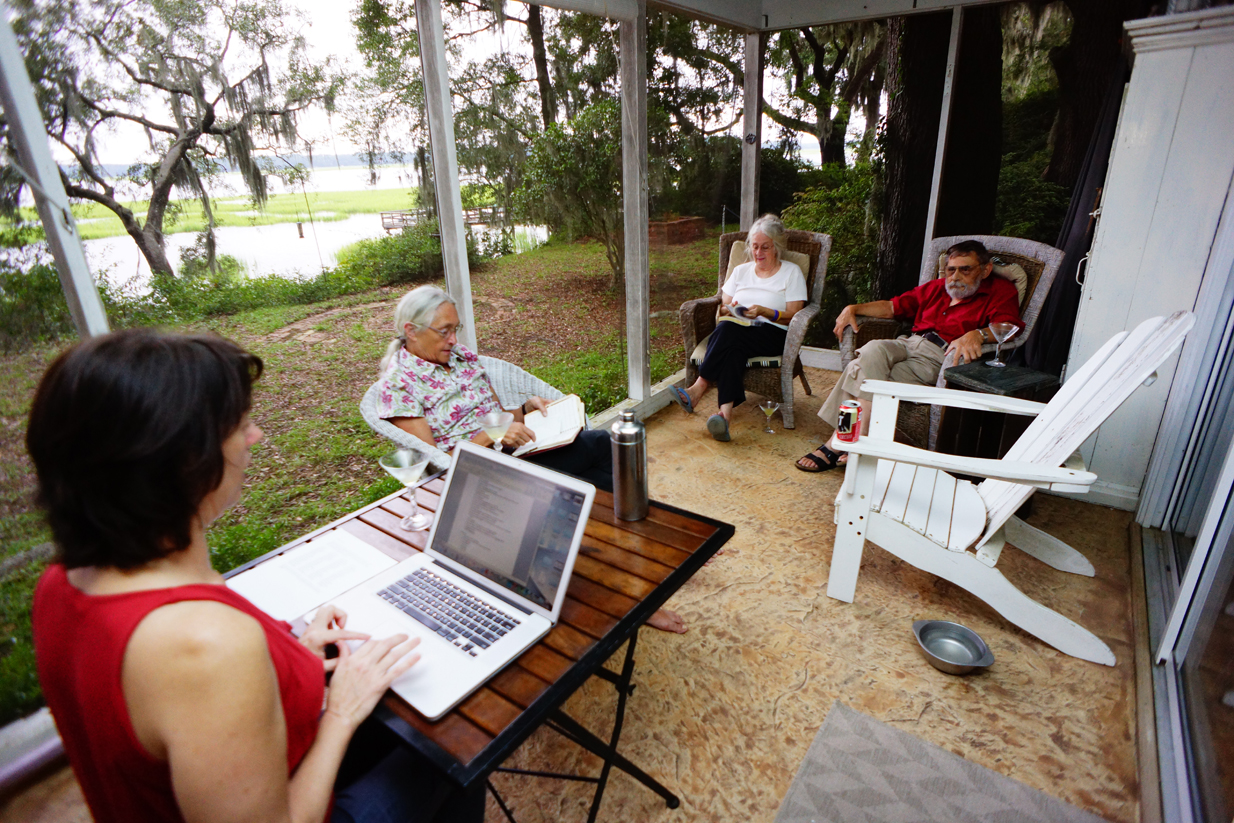
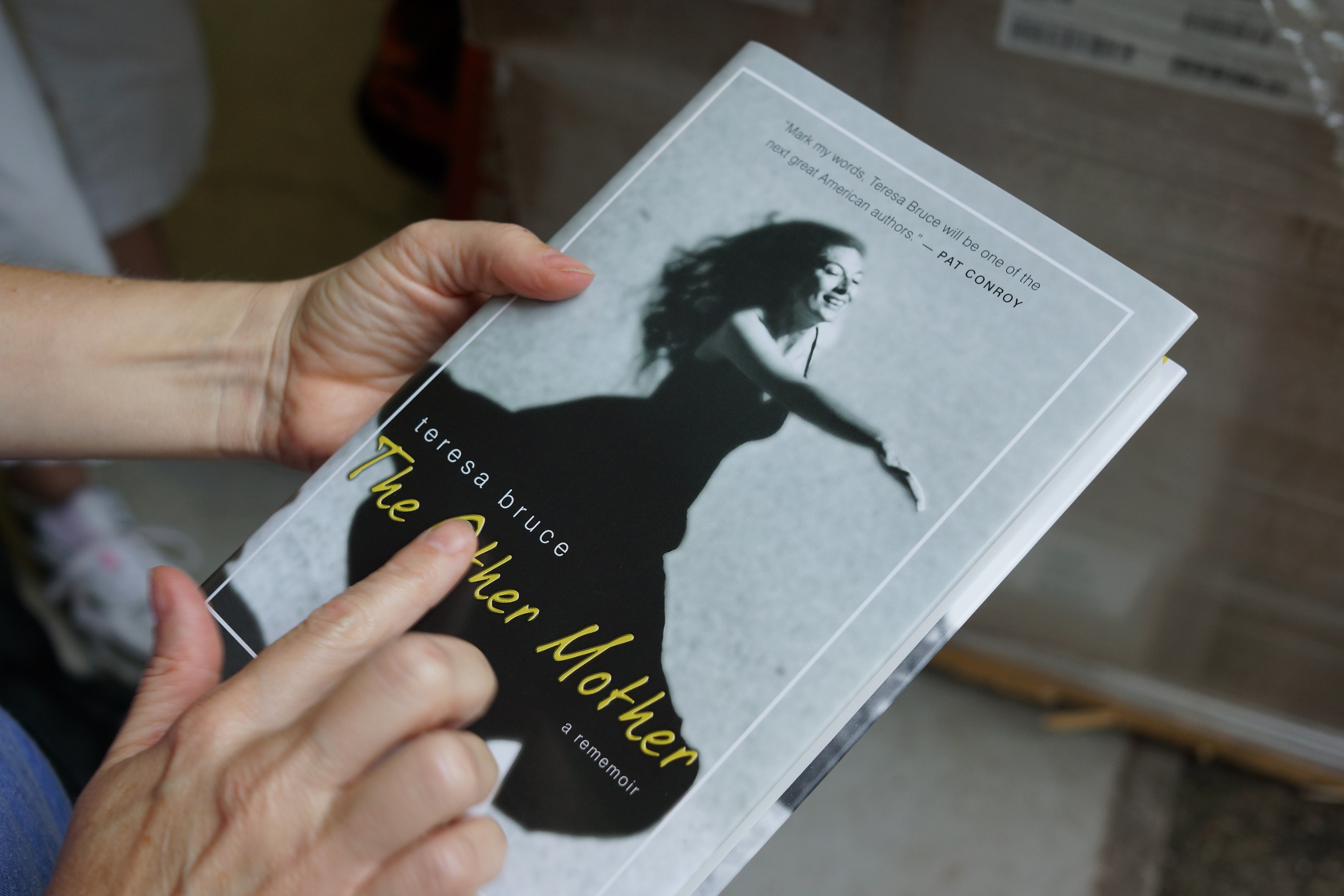
Yesterday, the books finally arrived from the printer. Six pallets worth. All of which had to be muscled from the end of Susan’s driveway to her warehouse — good thing for girl power. But at the end of the day I got to hold, in my hands, my baby. I just wish its Other Mother could have been there too, directing the new arrival.

My Naked Truth
In less than a month, my deepest darkest secrets will be revealed at the launch of my memoir “The Other Mother” – well almost all of them. I couldn’t find a way, or maybe didn’t have the guts, to fit in my most embarrassing secret. Jimmy Carter, back when he was president, saw me naked.
Now I’m not saying I was the instigator of his famous admission “ I had lust in my heart.” I was only eleven. And he probably only saw my skinny naked arms clutching my flat bare chest, as I stood hip deep in a glacial lake in Montana. But when you’re eleven, and the President, First Lady and daughter Amy, ride up on horseback to the spot where you’re skinny dipping – the event takes on monumental implications. I cried for days. And just when I was convinced he had forgotten it, my grandmother got flown to DC to interview for a cabinet position. She might have been his secretary of labor if Ronald Reagan hadn’t gotten in the way. She brought back an official photo, and told him the whole story while he signed it. It took about thirty years to forgive her, which I did when I finally visited Plains, Georgia.

President Carter has always been my grandmother Nellie’s personal hero, so it was about time that I really tried to understand why. Besides the seeing-me-naked problem I had with Carter, I was also a rhythmic gymnast on the cusp of the Olympics when he decided to boycott the games. Afghanistan didn’t come close to seeming like a good reason at the time.
But as I stood in the living room of his boyhood farm, it made perfect sense. There is a 1930’s era radio cabinet right under the farmhouse living room window that looks out over a grove of pecan trees. Jimmy Carter’s voice narrates a long-ago event. It was the second heavyweight boxing match between Joe Louis and Max Schmeling. Young Jimmy sat, on a braided oval carpet, listening to the play-by-play of a black man beating a white man in less than one round. His father, realizing the significance of the fight, opened that big picture window so that all the blacks gathered in the orchard could hear the fight without having to ask.
Much has been written of Carter’s faith and the role it played in his presidency and his life as a champion of human rights ever since. But I think the story of the Louis v. Schmeling fight explains how a boy raised on a peanut farm, in the middle of nowhere Georgia, in a time darkened by the most malignant racial attitudes since slavery, developed the principals that defined his presidency.
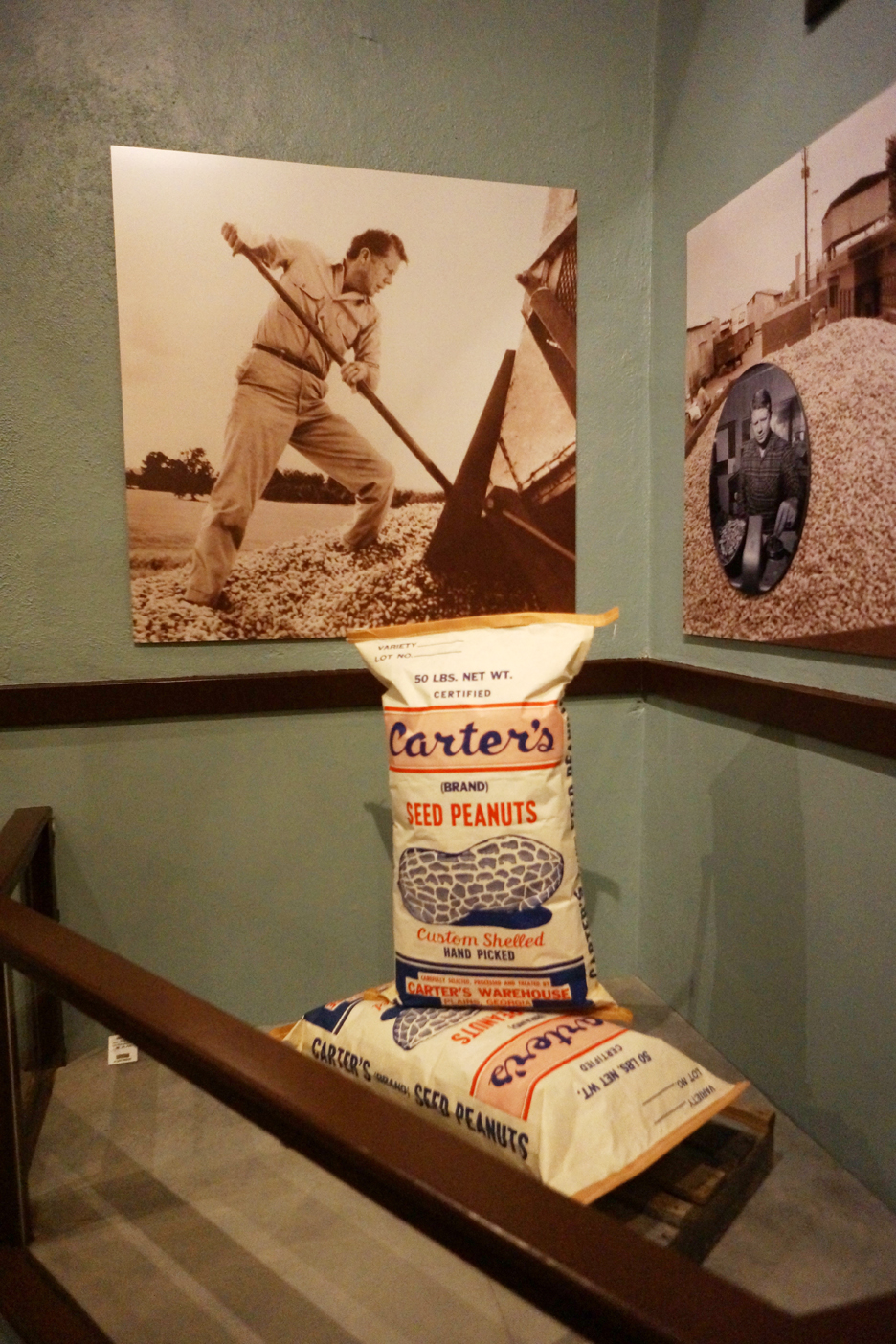
Obama and Clinton have everyman stories too. But walking into the high school where Jimmy met Rosalyn, preserved down to its inkwell desks and echoing gymnasium, connected me to an America when the best was still to come. There’s an element of nostalgia, to be sure, but also a pragmatism and sincerity that made me realize why my grandmother wanted to work for Carter. Why she still reveres him. If I could pass a bill to bring some of that back to Washington, I’d sign it with a flourish.

- ← Previous
- 1
- 2
- 3
- Next →
 "TeresaBruceBooks"