travel
Banana Pudding Angels
As shoots go, I didn’t start out thrilled about this one. It required a ten-hour drive to a town in Mississippi I’d never heard of. A town so small we had to stay in a hotel 40 minutes away. And to top it off, we were filming a nursing home.
Even knowing, as I did, that this was a 5-star rated nursing home that was being featured in a video for a national nursing home convention didn’t comfort me because one of my grandmothers is in a nursing home. Going to visit her is something I feel guilty about for not doing often enough and miserably sad every time that I do. It smells bad. People are parked in wheelchairs in front of blaring big screen TV’s for hours on end. My grandmother told me, every time, how much she hates it. Until she couldn’t remember who I am and stopped talking altogether.

So I wasn’t looking forward to filming a nursing home. From the outside, the one in Waynesboro Mississippi looks unremarkable – a 40 years old, one-story brick building with access code key pads on every door so nobody wanders in or out.
Inside though, was a completely different story. I’m used to places sprucing up when a film crew shows up. You can tell when everyone’s been told to be on best behavior and sense that once you wrap the shoot the carriage will turn back into a pumpkin. Don’t get me wrong. The Pine View staff was excited, but only to show off their Southern hospitality. A 70-year-old nurse named Doris baked us a coconut pound cake. The kitchen staff made sure we got watermelon and fried chicken for lunch. And before we left we had to put a dent in this 15-pound homemade banana pudding.

Nobody here needed to fake anything just because they were being filmed. I’ve never seen employees so proud of where they work and what they do. Working in a nursing home is a tough job – lifting people in and out of wheelchairs, taking them to the bathroom, giving baths, spoon feeding. And this facility wasn’t one of the new, fancy assisted living facilities where rich baby boomers send their aging parents. It’s mostly Medicaid and mostly dementia. The way the staff won top rating was the old-fashioned way – by caring.

The director and the chief of nursing carpool 60 miles each way, every day, to work here. Pine View has a full-time person who calls the families of every resident every day. Just to fill them in on what went right. What their loved one ate that day. Any little thing the nurses mentioned.

We started off filming the department heads around a table discussing how to lower re-hospitalization rates and keep staff turnover at zero. As in nobody quitting in over a year. Then each department head met with their staff in team talks, throughout the day, so that every new hire and janitor knew what the goals were and any problems that need fixing. I usually film videos for Fortune 500 companies and have never seen that kind of internal communication.
I got to be behind the scenes, incognito. I wasn’t directing this shoot or interviewing the head honchos. I was just helping the producer and Gary – I was the film crew equivalent of the housekeepers at the nursing home. So those housekeepers, and maintenance guys, and receptionists talked to me, unguarded, throughout the day.
Here’s the casual conversation that stunned me. I saw an old lady in a wheelchair sitting in the hallway next to a man I assumed was her husband. She patted his knee and asked him if he was going to take her home. He turned to her and said, “Who are you?”
It was a laugh/cry moment – the epitome of dementia. I asked a certified nursing assistant standing next to me how common wanting to be anywhere but a nursing home is. She said it’s normal and lasts a few months. I’ve been on the family side of this — my grandmother pleading to be taken home — but never thought about its impact on caregivers. So I asked the CNA if it was depressing. She said all she can do is be honest. She tells the confused residents that this is their home now and they’re here because their family loves them and wants to make sure they’re safe and healthy. And then she holds their hands and softly brushes their hair until she sees a smile.
My sister in law Lyn, who wrote the book on Person-Centered Care — literally – says this is a kind of revolution. For decades, low-paid caregivers were taught that “therapeutic lying” was the best way to ease that transition from independence to nursing home life. I thought of all the times it was easier not to answer my grandmother’s pleading questions (a form of lying) and imagined how hard it would be to work at a nursing home and have to answer those questions from almost every resident. I wouldn’t cut it at Pine View – that’s how high their standards are.
I still think one day we, as a society, are going to look back and question why we allocated more resources to jails and military bases than state-of-the-art facilities for our elders to age in. But until then, at least there are associations who reward those nursing homes that make the most of what they have: people who care more than most of us can imagine. Banana Pudding Angels.
My Naked Truth
In less than a month, my deepest darkest secrets will be revealed at the launch of my memoir “The Other Mother” – well almost all of them. I couldn’t find a way, or maybe didn’t have the guts, to fit in my most embarrassing secret. Jimmy Carter, back when he was president, saw me naked.
Now I’m not saying I was the instigator of his famous admission “ I had lust in my heart.” I was only eleven. And he probably only saw my skinny naked arms clutching my flat bare chest, as I stood hip deep in a glacial lake in Montana. But when you’re eleven, and the President, First Lady and daughter Amy, ride up on horseback to the spot where you’re skinny dipping – the event takes on monumental implications. I cried for days. And just when I was convinced he had forgotten it, my grandmother got flown to DC to interview for a cabinet position. She might have been his secretary of labor if Ronald Reagan hadn’t gotten in the way. She brought back an official photo, and told him the whole story while he signed it. It took about thirty years to forgive her, which I did when I finally visited Plains, Georgia.

President Carter has always been my grandmother Nellie’s personal hero, so it was about time that I really tried to understand why. Besides the seeing-me-naked problem I had with Carter, I was also a rhythmic gymnast on the cusp of the Olympics when he decided to boycott the games. Afghanistan didn’t come close to seeming like a good reason at the time.
But as I stood in the living room of his boyhood farm, it made perfect sense. There is a 1930’s era radio cabinet right under the farmhouse living room window that looks out over a grove of pecan trees. Jimmy Carter’s voice narrates a long-ago event. It was the second heavyweight boxing match between Joe Louis and Max Schmeling. Young Jimmy sat, on a braided oval carpet, listening to the play-by-play of a black man beating a white man in less than one round. His father, realizing the significance of the fight, opened that big picture window so that all the blacks gathered in the orchard could hear the fight without having to ask.
Much has been written of Carter’s faith and the role it played in his presidency and his life as a champion of human rights ever since. But I think the story of the Louis v. Schmeling fight explains how a boy raised on a peanut farm, in the middle of nowhere Georgia, in a time darkened by the most malignant racial attitudes since slavery, developed the principals that defined his presidency.
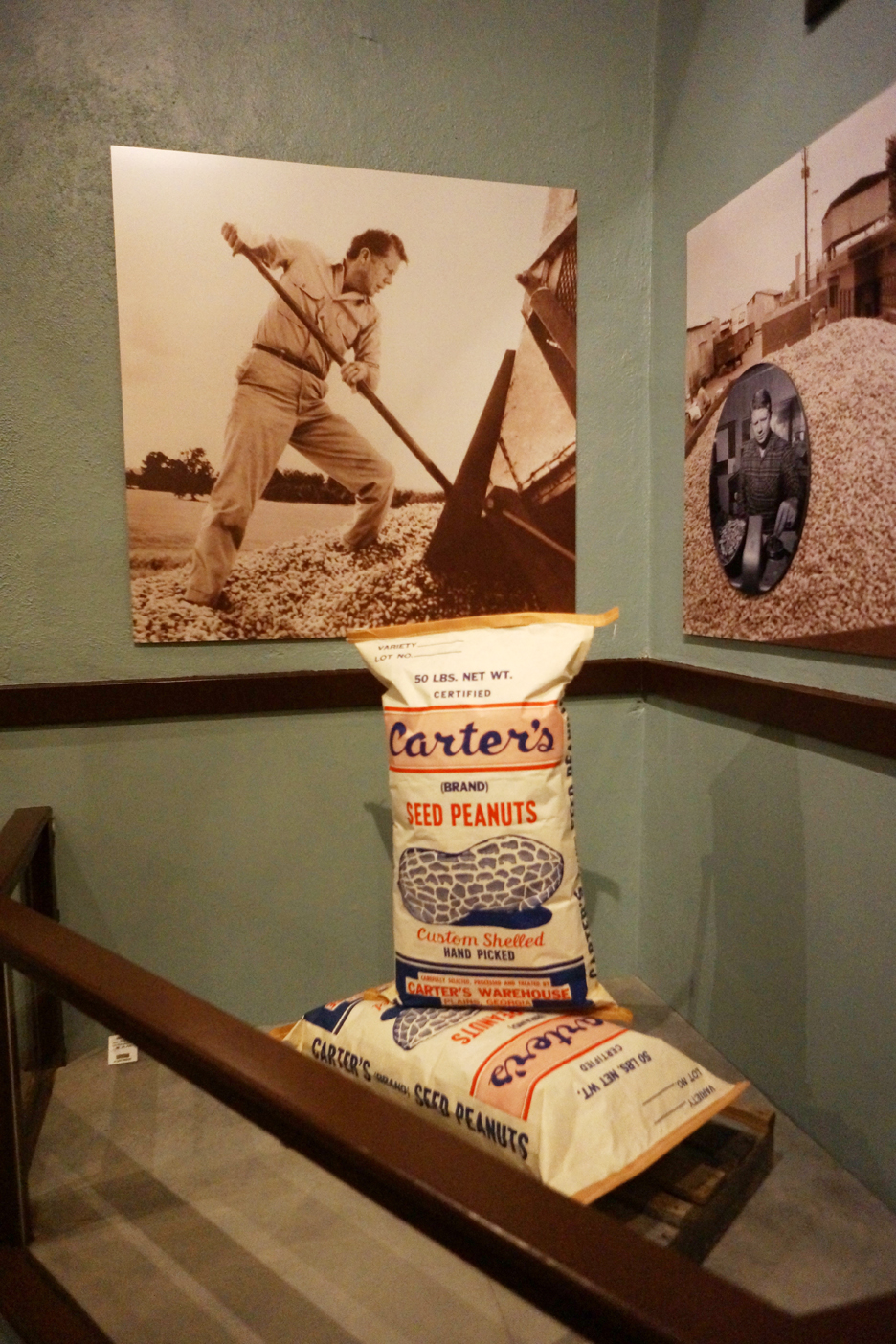
Obama and Clinton have everyman stories too. But walking into the high school where Jimmy met Rosalyn, preserved down to its inkwell desks and echoing gymnasium, connected me to an America when the best was still to come. There’s an element of nostalgia, to be sure, but also a pragmatism and sincerity that made me realize why my grandmother wanted to work for Carter. Why she still reveres him. If I could pass a bill to bring some of that back to Washington, I’d sign it with a flourish.

Romancing the Oyster
Having coffee on the porch this morning reminded me of why visitors spend hundreds of dollars a night to wrap themselves in the beauty of Beaufort county’s creeks, marshes and beaches. First there was the rainbow, arching over the Beaufort River during a sun shower. Then an osprey flew past with a fish clutched in its talons, torpedo style. So forgive me if I’m feeling a little romantic about this little slice of paradise.
I’m blaming it on an aphrodisiac that literally surrounds us – the oyster. Friday I had the chance to help some DNR scientists build castles for these sexy creatures. Yes, you read that right. Not just a home for oysters, or a habitat, but castles. And where better than one of the most scenic spots in all of Beaufort: the marsh abutting the Pigeon Point public boat landing.
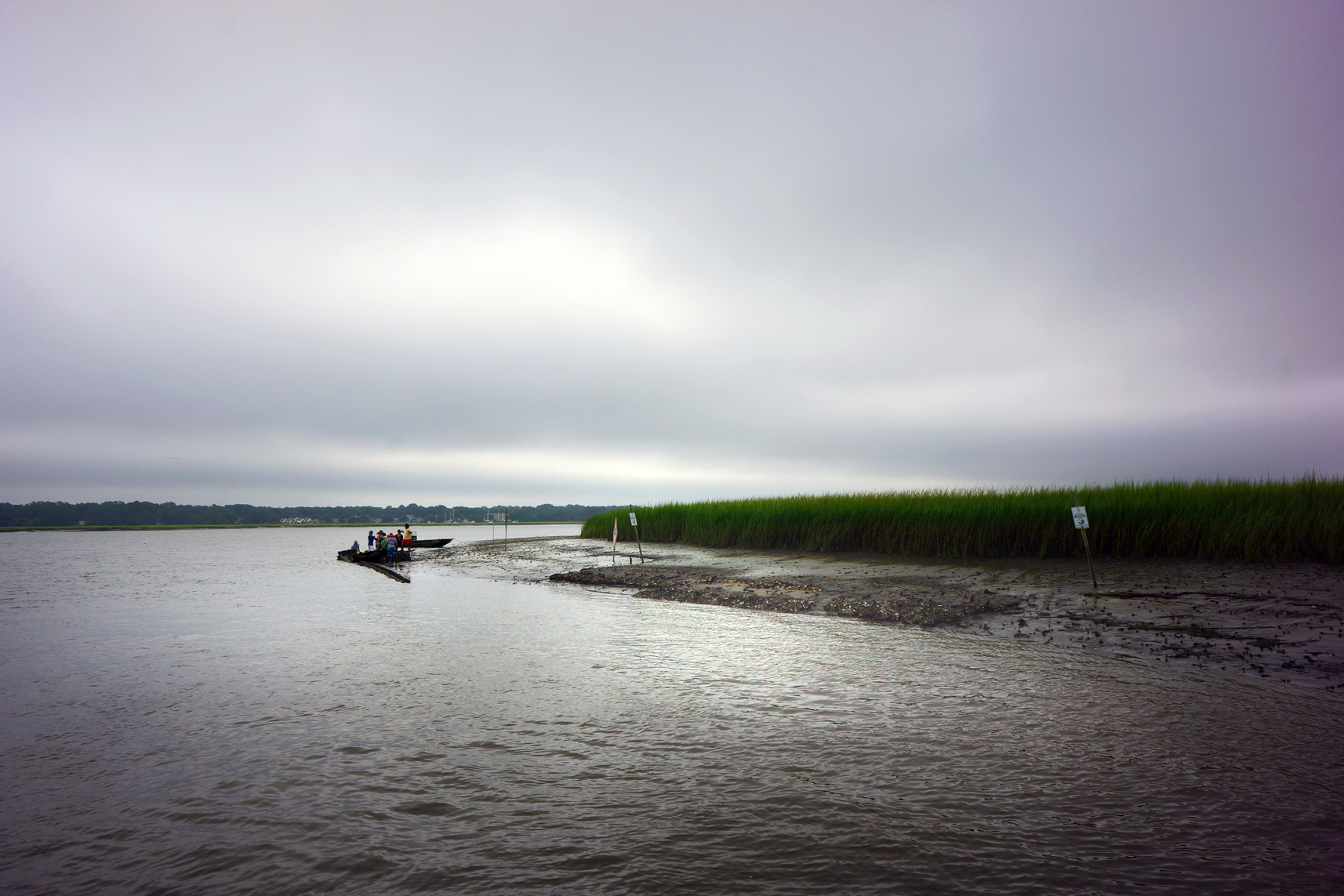
It turns out the wave energy at that particular bend of the Beaufort River, and the substrate under the water, demands the VIP treatment. I’ve done other oyster habitat builds for SCORE and Friends of Hunting Island, where volunteers form a human chain and deposit bags of discarded oyster shells into shallow areas to refurbish depleted oyster beds or build new ones. But that works best in muddy, somewhat protected areas. The spot at Pigeon Point needs something heavier, less likely to roll and break apart in the wakes of passing snowbirds.
So the scientists at the Department of Natural Resources and the National Estuarine Research Reserve waived their magic wand and came up with the idea of building castles for oysters in the ACE basin. Here’s a picture of a jon boat full of them. Think cinder blocks but with fancy crenellated tops that stack together like Lego.

Castle building is not for the lily-livered. Only die-hard, hopeless oyster romantics can heft the heavy castles from trailer to jon boat and finally to pluff-mud and sandy river shore.

The skies parted, the humidity lifted and a light breeze seemed to bless the quest. Only one in 1.145 million oyster “spat” (pea-sized, cross fertilized larva — according to Naturalist Todd Ballantine) survive the starfish, oystercatchers and drum fish that prey on them. But one adult oyster can live ten years and yield billions of babies. And if that doesn’t warrant a palatial nursery I don’t know what does.
This is a long-term love story. There are plenty of ways to help keep it going strong. If you missed Friday’s build at the Pigeon Point Landing there are two more chances this week: at 1pm Tuesday and again at 2pm on Wednesday — both at Pigeon Point Landing. The DNR provides oyster-castle-building gloves and plenty of cold water – all you have to bring are your own rose-colored glasses.
If it’s candles and wine you want, then come hear an ACE basin expert – Dean Harrigal – give a GreenDrinks talk at Saltus on Bay Street tomorrow night (Tuesday) at 6pm and stay for a romantic dinner.
Fashion for book covers
For a minute yesterday, I thought I was having an 80’s flashback. My publisher invited me to help her pick out headbands and gold foils. Seriously?
Oh yes. Very. It turns out much fashion sense goes into designing a hardcover book. Here’s what I learned at Joggling Board Press’s HQ as we went over the proofs for “The Other Mother: a rememoir.”


Here comes the headband part. I wasn’t kidding. See that striped red and gold piece of fabric at the base of the book’s spine? It’s called a headband. I’ve never noticed them before, but that’s because they’re normally a boring black or grey that blends in with the hardcover. Nothing bland or ordinary will do for “The Other Mother” — if Byrne Miller ever wore a headband I’m sure it was as groovy as our gold and magenta pick.
And finally the gold foil part…

See all the little gold medallions I’m holding? Intern Sylvie (on the right) helped me pick the perfect shade of gold to serve as “The Other Mother” lettering on the cloth-like interior cover. It had to complement that gray swatch Susan’s holding in the middle — if you ever lose the dust jacket on this hardcover you’ll still have an elegant, modern looking hardcover for your bookshelf.
As Byrne often said (one of my favorite womenisms) … “If you’re going to be a snob, be unrepentant!”
Fun with commas in sex scenes
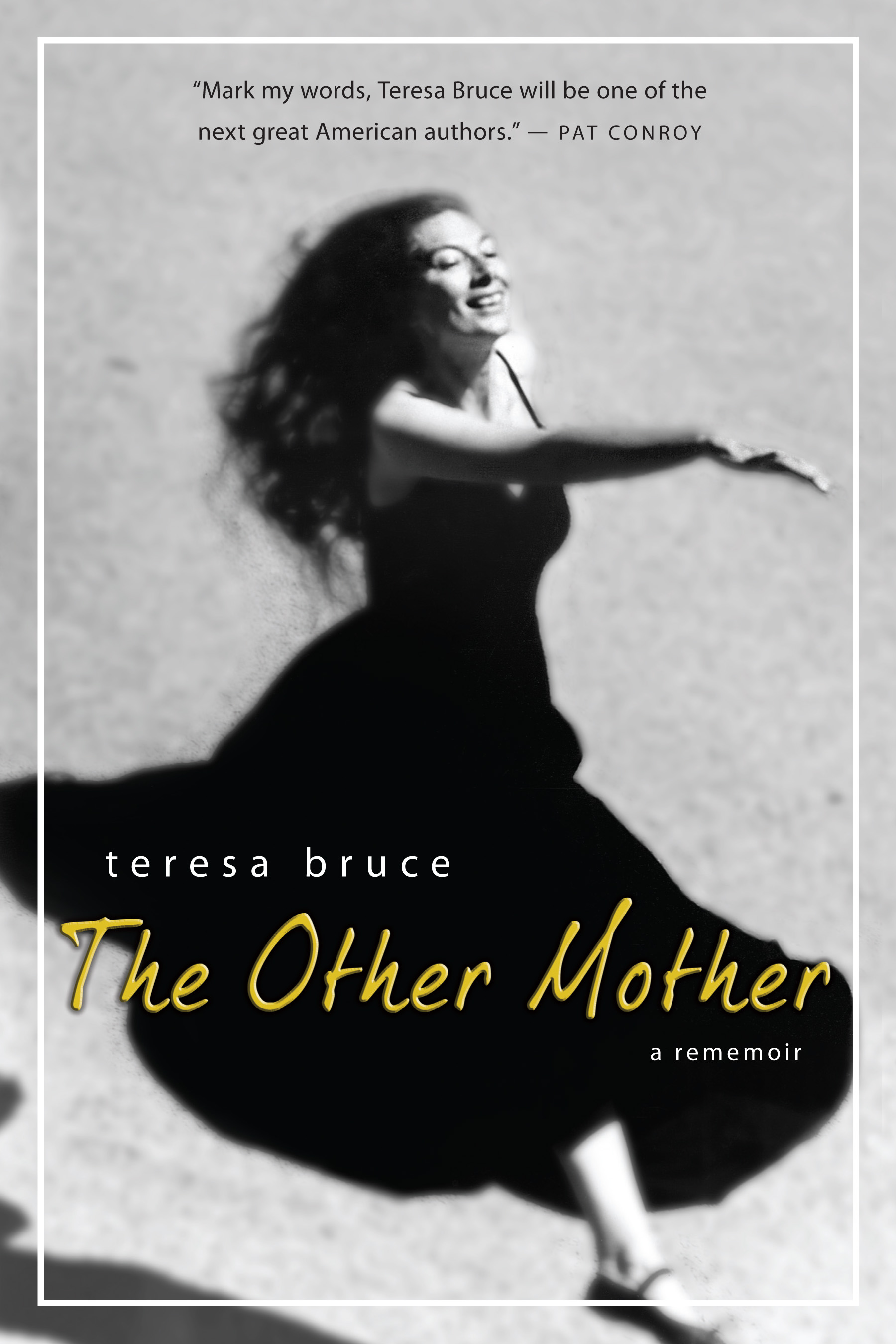
“The Other Mother” is finally at the printer – where it will be transformed from a gigantic electronic file to a 417-page, hardcover memoir with a beautiful embossed cover in a satiny matte finish. That last part makes my publisher and her staff moan and drool. Though I know nothing about the subtleties of paper textures and finishes – the team at Joggling Board Press does.
I was handed sample after sample of hardcover books and told to touch and feel. I pretty much commented on the heft and weight of tome, which elicited more groans. Apparently gloss is uncool and satin matte finishes are sexy. I wanted sexy for Byrne and figured the design phase was the end of it.
Turns out there’s sexy in the proofreading process too. Take, for example, commas. I’d like to blame my woeful inadequacy in comma placement on the fact that I was raised in South Africa, a country more influenced by British grammar than American. That’s what the proofreading team at Joggling Board Press assumed when my propensity to use the “Oxford” comma became evident. But in truth I just toss commas into sentences based on reading my own work aloud. I did pass AP style class in journalism school, honest I did. But I immediately began writing scripts instead of articles and in the world of broadcast, punctuation is a rhythm not a rule.
So how, you ask, are commas sexy? Take the moment Byrne first meets Duncan. She is 24, he is 18 and wears a twist at the corner of his mouth that makes her wonder if he’s smiling or laughing at her. This is how the sentence looked before a marathon, nine-hour proofreading session before we put the book to bed .
“I’m a Southerner who misses the water,” he said. It was a genuine smile, she was certain of it, once she saw the sparkle in his eyes.
Alas, the interior designer and the future-editors who are interning at JBP were not as certain of my meaning. So this is how they fixed it.
“I’m a Southerner who misses the water,” he said. It was a genuine smile; she was certain of it once she saw the sparkle in his eyes.
The first sex scene in “The Other Mother” comes on page 63 – when Byrne and Duncan consummate their almost-instant attraction in Central Park (back then the section known as “the Ramble” really was overgrown and possible to hide in.) But before they’d even unlocked limbs, the unconventional, free-spirited Byrne popped a question that shocked the younger Duncan.
“What kind of wedding shall we have?” she asked him when the spasms of his release still ricocheted through his body. She held him captive for an answer, her long, bare legs wrapped around his solid waist under the cover of her swirling skirt.
Can you spot the problem with the sentence?(and I don’t mean to imply that she should have waited until after the wedding to be tumbling in the Ramble.) The JBP team decided “when the spasms” should be “as the spasms.” I never thought I’d be discussing the grammar of a sex scene in such detail, let alone with super-smart interns, some still in high school.
It turns out nothing shocks them, except bad punctuation. In a scene where a much younger Teresa butts heads with an immigration official, there is much mental cursing. In the book, I indicate inner-dialog by italics, and in this sentence I’m insulted by the immigration official’s assumptions.
“Fuck you mister, I don’t owe Sonny anything.”
Before I could even blush at my own language, the youngest intern at JBP pointed out that I missed a comma after fuck you. Sorry, dear readers, it appears I have a lot of commas to catch up on.
Losing Alejandro Santiago
An artistic legacy


Artists have an advantage when they die. Their work, particularly if they’re successful, preserves their legacy. They don’t have to rely on a loved one dragging out a family photo album to remind grandchildren of their existence. I know this and yet I’m still deeply saddened by the passing yesterday of my favorite artist, the Oaxacan painter and sculptor Alejandro Santiago.
Longtime readers of my blogs will remember my unsuccessful pilgrammage to find the depopulated village he immortalized in his Migrante project, and my elation at winning best screenplay at the Oaxacan International Film Festival because the prize was a statue by Santiago.
On the night of the awards ceremony, I didn’t get to meet Santiago because he was still making the trip back from Mexico City where the statues were cast into bronze. But later the film festival organizers took me to his home, where I met his…
View original post 352 more words
On Faith and Trayvon

I can’t shake the wave of sadness that hit me with Saturday’s verdict in Sanford, Florida. If I was religious it might have shaken my faith but because I’m not it might have strengthened it. Let me explain.
I was raised by an angry atheist. My father blames God for the death of my little brother and I can’t blame or judge him for that reaction because I don’t have kids and can’t fathom the pain of wrongfully losing one. But here’s how it played out. Growing up in my household, people who need the Bible to make decisions about right and wrong were ridiculed. That’s what brains are for. You shouldn’t do the right thing only for fear of eternal damnation. People who do bad things and then ask for forgiveness on Sunday are hypocrites. Religion caused all wars, yada yada yada.
I rebelled, as all teenagers do, and got a full scholarship to a Church of Christ college and found my religion classes to be the most meaningful of my entire academic experience. I’ve come to realize that my father’s objections to God essentially pivot on the problem of evil, which is not that different than where I part ways with organized religion.
But stewing over the Trayvon Martin verdict yet again this morning, I realized that my secular worldview is equally incapable of solving the problem of evil. I like to think that the principles of democracy can preserve human dignity and promote collective consciousness. I accept the rules and laws arrived at through this secular system even when they are personally inconvenient or overreaching. Basically I’ve substituted one rule-book-and-punishment approach for the one ridiculed by my father.
The problem is, the secular system of right and wrong failed Trayvon Martin. Rules and laws written by fallible men made it possible for a lawyer to defend George Zimmerman in open court by calling a teenager, walking on a sidewalk, “armed” with concrete. Our secular system justifies one man following another, hiding a weapon and shooting to kill when he begins to lose a fight with someone half his size.
Even if Zimmerman has not a racist bone in his body, he couldn’t see that if everyone behaves the way he did it would end civilization. He showed no evidence of an internal moral compass, at least the kind you need to make decisions without the aid of religious beliefs. Zimmerman couldn’t see how wrong his actions were because he had a rulebook to rationalize them.
I’ve read the Bible in its entirety. I don’t refer to it everyday or consider it infallible, but what I remember of its commandments makes much more sense than the laws that allowed Zimmerman to escape any consequences at all.
My first words in the New York Times
Link Posted on
My first words in the New York Times
Hey there… the very cool arts beat blog at the NYT asked for readers to share the catalyst for their careers in TV – and my story got picked!
5 Steps to a Great Stay-cation
How awesome of the Fourth of July to fall on a Thursday, giving us a four-day weekend and a chance to try out something new: a stay-cation. Normally by July we’re swelteringly in need of a break from 100% humidity. But after a week in Santa Fe last month I’ve actually developed a renewed appreciation for humidity (a broken down air-conditioner at the moment notwithstanding) So instead of hitting I-95 ourselves for a getaway, we invited some friends down from Washington DC. I can’t remember a nicer four days staying in one place, so I thought I’d share my top 5 tips for anyone else hanging close to home this summer.
1) Invite out-of-towners to join you. It’s so easy to take your hometown for granted and the best cure is to see it through fresh eyes. It might take some convincing – most non-Southerners would rather slit their wrists than face the sizzling heat and oozing humidity we’re famous for. But tell them to check the weather stats. Right now I’d argue we’re having the best weather in the country. Eating at Duke’s BBQ in Walterboro never tastes as good as when two friends sitting across from you are groaning in ecstasy. I’d forgotten how quirky and hospitable antiquing in the Lowcountry can be, or how sumptuous and eccentric the squares of Savannah appear to outsiders.
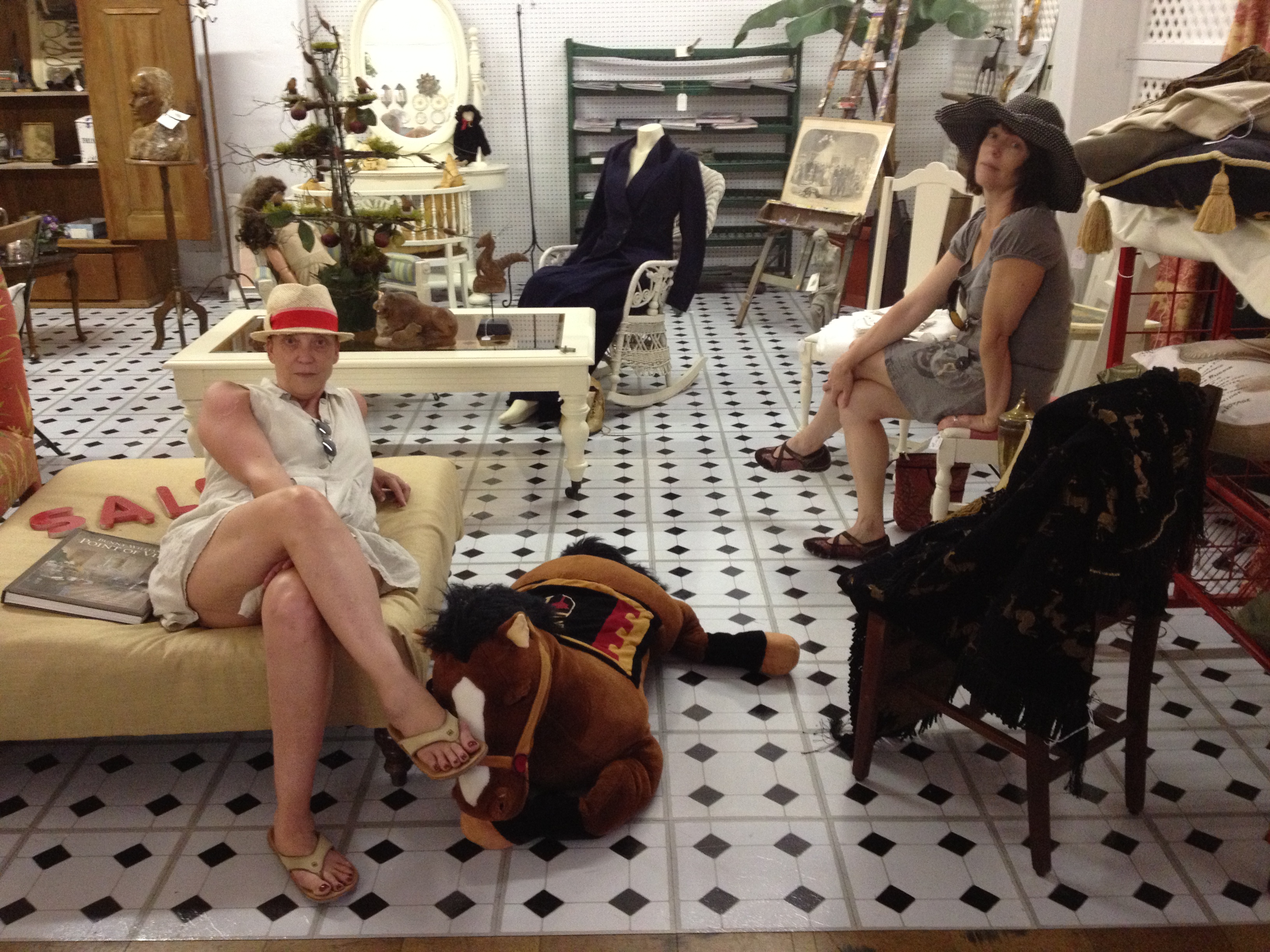
2) Invent a signature cocktail for the stay-cation. Think about it. When you go stay at a hotel in some resort destination you probably don’t sit around the pool drinking the same old cheap beer. You try new cocktails and find yourself reminiscing for years about the perfect habanero margarita you had in Tulum. For our stay-cation, I adapted the signature martini of a famous New York restaurant: The Indochine. It required some preparation: infusing a bottle of vodka with the core of a pineapple and a plug of peeled ginger and not touching it for two weeks. But when I filled the silver-bullet martini shaker with 3 oz. of the steeped vodka, 1 oz. of Cointreau, 1 oz. of fresh squeezed lime and a gulp of pineapple juice it was the beginning of a new story for me and my DC friend Marlene.

3) Go camp. As in, remember all the best parts of summer camp when you were a kid and recreate them. Here in the Lowcountry we have winding tidal creeks to explore by kayak and loggerhead turtle beaches to comb for hours. But even if your stay-cation is in a big city I bet you’ll have a blast tooling around it by fat-tire bicycle.

4) Stay up way past your normal bedtime and sleep in like a slovenly teenager. It’s all about breaking the routine and indulgence. Now I’m usually nodding off by 11pm so this was tough for me. The solution was another Beaufort treat: the drive-in movies. Nothing says you’re on vacation like lawn chairs under the stars while you congratulate yourself for not paying full price to watch Lone Ranger.
5) Finally – unplug. It will never feel like a vacation if you’re checking emails and tweeting your every thought and observation before you’ve even experienced it. Here’s a game to get you started. Have an Indochine martini or two and then throw out a theoretical question. Actually banter back and forth with conversation instead of looking it up on your phone or I-pad. I bet you’ll remember those answers and conspiracy theories long after Wikipedia becomes cliché as the word “stay-cation.”
A Picture Can’t Stop Time
Art can transport you to another place. It can pause time. But it can’t stop it. Yes, I’m on about time again, because on our New Mexican ramblings I got to see two places I assumed art had immortalized.

The first was the site of the adobe church in Hernandez where Ansel Adams famously captured a lonely moonrise. It’s my favorite of all his images because I’ve always imagined this desolate, remote place as protected, looked over each night from above. I’m not religious but this photograph explains why people have faith. It reminds me of the aloneness I felt as a kid living on the road with nomadic parents. No matter how far from home we traveled in our dilapidated camper the same moon still rose and set above me.
Ansel Adams could not make his photograph today. The dirt road where he set up his tripod to capture the moonrise is now a four-lane highway, minutes from a sprawling, dusty city called Espanola. Even under the glow of a rising moon you couldn’t see the church’s cross from the road’s high vantage point because it is obscured by ordinariness. Its foreground is subtracted, diminished by squatty buildings, power lines, unloved yards and broken down cars.

We drove down to the church anyway and I asked Gary to take this picture in the dog hours of the afternoon. He didn’t have a wide-enough lens to document the surrounding squalor so this shot makes it look better than the harsh truth. The sun felt like it was peeling back my skin, branding me with disappointment. Even the graves to the side of the adobe church seem abandoned and overrun by time.

The same disappointment washed over me when we stopped at Francisco de Assisi – in Rancho de Taos. The view of this church that Georgia O’Keefe painted was never meant to be photo realistic. She isolated the lines, blended colors and smoothed shapes into the weathered strength she saw in all of New Mexico. But it had always been real to me, my favorite of all her paintings, until I saw it in person. It’s hemmed in by Taos now, buildings so close on three sides it feels claustrophobic.

It was under renovation when we arrived — the patched up adobe still wet and the smell of straw filling the air. In a way the construction debris made me feel better – this place is still revered enough for periodic face lifts. I have no right, I realize, to demand that time stand still for my benefit alone. I don’t even worship in these structures built by those who do. And that’s the crux of it. I’m clinging to an aesthetic while those for whom Hernandez and Assasi were intended experience it as a living house.

It was less unsettling, in a sad way, to find these ruins on our way to Georgia O’Keefe’s studio and house in Abiquiu. This once beautiful adobe outpost of faith is returning to a state of rest – dust to dust, literally. There are telltale signs that it will be missed – a giant handmade cross leans into a patch of dead cactus and someone tacked a rosary to a crumbling wall.
Perhaps, when it is gone, its absence will be more present than famous churches, forced to coexist and change along with us.
 "TeresaBruceBooks"