travel
Neck Rings and Bullets to the Head
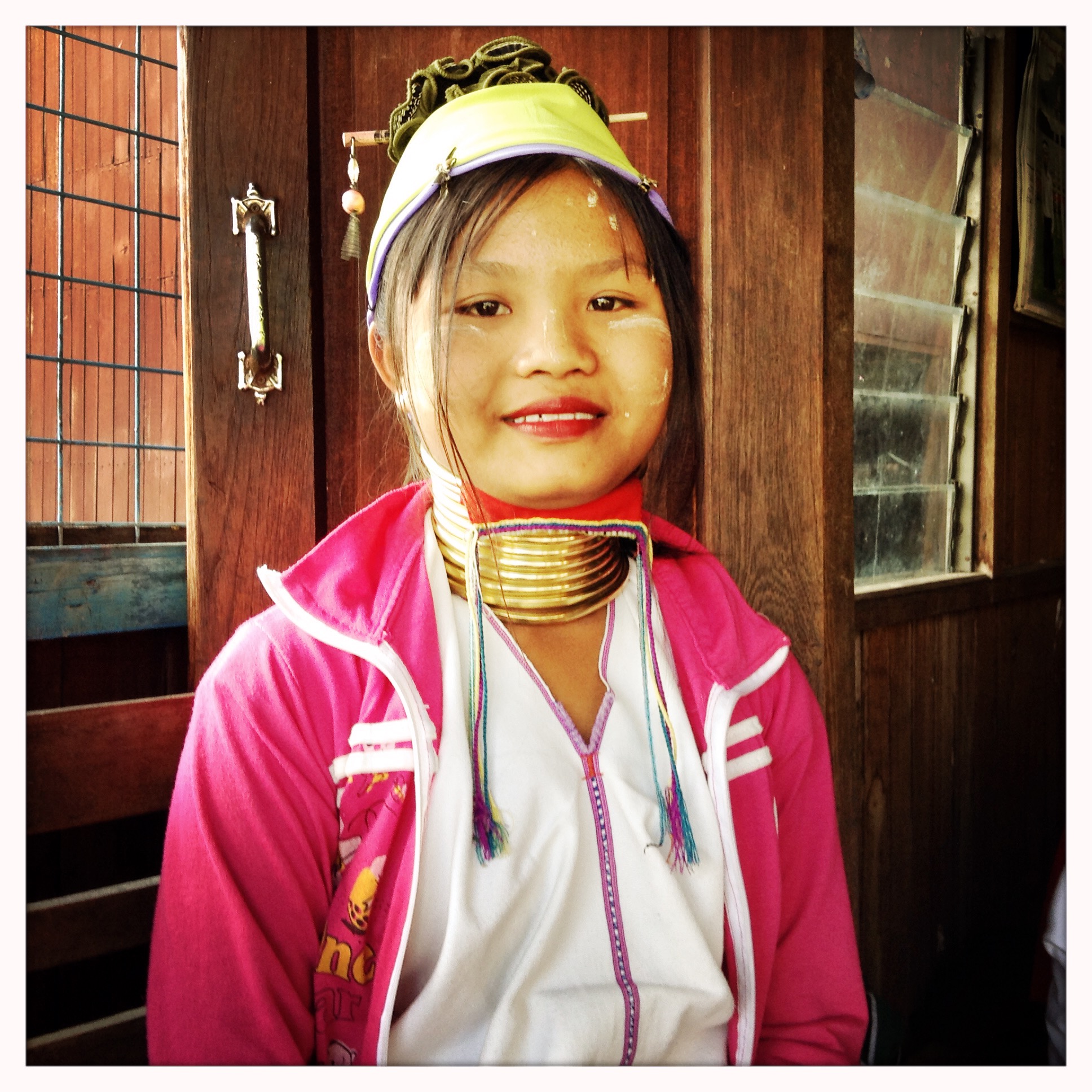
I’m trying to be more moderate. Really. But I’m standing at the corner of a National Geographic moment and a slap in the face. I’ve just met Ma Moo Ooh – or at least that’s how I think she spells her name. She is thirteen years old and her job is to pose for photos with tourists visiting her Padaung aunt’s weaving shop on stilts above Inle Lake in central Myanmar.
Right now I’m distracting her but a glimpse at the smile on her aunt’s face tells me it’s okay. We are playing a game. Ma Moo Ooh writes a word in my spiral notebook and I try to copy her beautiful scroll while she collapses in giggles.
It’s part of Padaung custom for girls to begin wearing gold rings around the neck at age nine. Ma Moo Ooh loves her ten rings – it’s teen bling on another whole level and she suffers no lack of self-esteem. Until I ask her what grade she’s in. She looks down. Her parents made her stop school after three years.
“I cried and cried and cried forever,” she tells me in incredibly impressive English. “I love school and never want to quit.” But she did what was expected of her – pitching in to raise the family out of poverty by taking advantage of Myanmar’s exploding tourist industry.
I feel guilty and outraged all at once. Up until now, I confess that I’ve blamed religion for gender inequality in girls’ education around the globe. Religious extremism I should say – remember, I’m trying to practice moderation in my attitudes as well as appetite.

Up until meeting Ma Moo Ooh, I saw the issue of gender-based discrimination as epitomized by Malala Yousafzai. I’m reading her co-written memoir to give a talk about it back in Beaufort, South Carolina. The world will never forget her. She’s the Pakistani schoolgirl who won the latest Nobel Peace Prize after being shot in the face by the Taliban in 2012.
Perhaps because she has written this moving, triumphant memoir, her shooting and the reason for it (advocating for girls’ education) seemed singular to me – a horrific incident perpetrated by terrorists with religious fanaticism at their core.
I am in no way equating Ma Moo Ooh’s situation with Malala’s but what is dawning on me is that I can no longer compartmentalize the issue. It’s not just fanatics like the Pakistani Taliban or Boko Haram to blame but also a worldwide lack of commitment to girls like Ma Moo Ooh and Malala.
I’m not a mother. My outrage is not just because this is happening to little girls who could be our collected daughters. It’s is also rage for the consequences to their lives as women. Two-thirds of the world’s non-literate adults are women. Still. Today. Or at least as recently as 2012 when these results were reported to the United Nations’ Committee on Ending Discrimination against Women.
So if I’m trying to look beyond religious beliefs as the root of this inequality, why is it still happening? UNESCO experts and others who have written about the issue point out that it’s often about money. It’s the opportunity cost of a poor family losing someone to watch over younger siblings or contribute wages when their daughters go to school instead of staying at home. The neck rings that make Ma Moo Ooh feel beautiful and connected to her tribe are also economic shackles that feed her family.
I sit next to a little girl comparing our handwriting and trying not to cry for all the opportunities she will be denied. And now I understand the insistence of advocates ranging from South Africa’s Campaign for Education to the World Bank: insistence that governments have to bear the costs of educating boys and girls. Private donations and non-profits and singular efforts are not enough. Beyond building schools, governments have to make education truly free – no hidden costs for uniforms or textbooks. The United States subsidizes scores of other foreign aid projects – why not also the opportunity costs of daughters going to school instead of dropping out to become shepherds for the family’s animals or babysitters for the younger children?
It’s easy to think of this problem as too intractable to cure. But the uplifting part of all of this is that change is happening. It didn’t happen in time to save Malala from an assassination attempt. But if a girl with a bullet through her brain can still have faith then so can I. So can every other mother.
It’s not easy – one fifth of the world’s children aged 5-17 years are exploited by child labor, but even in Africa, where education disparity is proportionately among the worst in the word, the perception that it is more valuable to educate boys than girls is changing. The introduction of free primary education in Uganda, for example, caused total girls’ enrollments to rise from 63% to 83%, and enrollments of the poorest fifth of girls from 46% to 82%.
Stipend programs and conditional cash transfer programs have been employed in settings as diverse as Brazil, Yemen, Nepal, Tanzania, Malawi, Madagascar, Gambia and Kenya, and have succeeded in reducing girls’ drop-out rates and delaying early marriage.

But still, I can’t help thinking of how far we have to go. Some 200 schoolgirls kidnapped in Nigeria last year are still missing and it feels like our country thinks that hashtag activism is the answer. Tweeting #BringBackOurGirls won’t save the next Malala.
Here is Malala Yousafzai’s own plea. Donate to the causes she supports: Free The Children, Save the Children & the United Nations Foundation. Or give to the charity she started: the Malala Fund.
And don’t forget the organization that has always considered education a human rights issue: Amnesty International.
If you’re passionate mostly about improving the situation in Pakistan, consider donating to the alliance formed by Oxfam, Plan Pakinstan, Care International: the Girls Education Alliance Pakistan.
But back to the Padaung women and girls in Myanmar. It’s time to get into my boat and head back to my hotel on Inle Lake. I will probably never see Ma Moo Ooh again but I will never forget her. I’m just about to close my little spiral notebook when she wants me to learn another phrase. I repeat it after her and when she is finally satisfied enough to stop giggling at my pronunciation, I write it down the way it sounds to me.
Ta-Lye-Bahn-Na. I do a double take. My phonetic spelling out of Ma Moo Ooh’s phrase looks like Taliban. She repeats the phrase. It is musical, as lovely as the expression on her face. “It means thank you, where I come from,” she tells me as she squeezes my hand goodbye.

New Year’s Resolutions & Revelations in a Traffic Circle Temple

I’ve taken off my shoes and socks at the base of a traffic circle in Yangon. As far as I know it’s the holiest of all roundabouts in the world: the Sule Pagoda. It’s not as big or famous as the giant Shwedagon, but there’s something intriguing about the way the Sule Pagoda exists literally at the center of city life here, not apart from it.


Inside you can still hear the honking horns and revving engines of Yangon’s 2.5 million residents circling the temple. But the fumes from the belching busses and bumper-to-bumper taxis gradually succumb to the scent of burning incense and strings of flowering jasmine.
Not being a practicing Buddhist, I’m not expecting any revelations. I’m mindful only of the soles of my tender feet stepping on tiles seared by Yangon’s mid-day sun. Instead, I stumble upon a New Year’s resolution. It practically jumps out at me, by virtue of being the only text written in English. It’s on a list I figure is a rough translation of the Noble Eightfold Path. My stomach rumbles, on que, as I read about eating in moderation.
Every year around this time I make lists that inevitably include a certain number of pounds to lose or food to eliminate from my diet. Maybe it’s the melodic chanting of the women on prayer mats all around me but it occurs to me that my resolution obsession could use moderation.

This little hand-painted list with questionable grammar is actually a sign that I’ve been approaching New Year’s resolutions selfishly. Instead of resolving to cut back on calories to make myself look better next year, I could consider food as a resource the whole world needs to share. Calories are a gift of life-sustaining energy and like all gifts, not to be hoarded by one person. It’ll be tough, shifting this focus from self-absorption to self-realization. I’m not the meditative type and I’ll need all the help I can get.
Luckily the Sule Pagoda has that covered. I hand over some crumpled khat banknotes in exchange for a packet of gold leaf and stand in line for what looks like a miniature ski lift in the shape of a swan. But when it’s my turn, the lady in charge of sending the little swan gondola up a cable to the gilded pagoda grabs my hand. She wants me to crank the handle myself. I’m already sweaty and feeling conspicuously pale and clumsy in this land of slender women half my size but there’s no time like the present to start shedding those calories. In moderation of course.
Leave Lonely Planet at home and bring fiction when you travel to Myanmar
As soon as I click the “submit” button and buy my plane ticket, my mind is already obsessing on the details of the travels ahead. I download the latest Kindle version of Lonely Planet like a drug addict counting the number of pills in a bottle. I know I shouldn’t – real travel experiences come from spontaneous decisions made in the moment. But the left-brain side of me wants to memorize the details, cross potential pitfalls off a million lists and plan the perfect trip.
None of which is really possible when it comes to Myanmar. U.S. sanctions were only lifted a few years ago and it’s changing so fast that guidebooks specifics are practically useless. And the beautiful photographs are like landmines to avoid – if they’re in the book then the reality has already been altered.
Luckily I’ve found a cure for my own inevitable over-planning. I fill my carry-on bags with tattered paperbacks because fiction is the only truthful account of life in a place I’ve never been.

For Myanmar, that means stepping back to the time when it was known as Burma. I start with an old favorite: Daniel Mason’s “The Piano Tuner.” Never mind the movie version, the first sentence is what made me yearn to visit Myanmar in the first place.
“In the fleeting seconds of final memory, the image that will become Burma is the sun and a woman’s parasol.”
The book is a slow burn, tracing one man’s seduction. Not by the woman he meets but by the entire country. In the end the English piano tuner can’t trust anything he thought he knew. He doesn’t care, as long as he never has to leave. It’s lush and romantic and every time I read it I am as shamelessly besotted with the idea of Burma as Edgar was.

Which is why, the first day we walk through the sticky heat of Yangon I head straight for the book section. The book section isn’t in a bookstore. It lines entire city streets – a reminder that this country is new to Internet and that books were once the intellectual lifeline to the outside world.
I pick up a cheaply printed knock-off copy of George Orwell’s Burmese Days – knowing that it will snap me out of The Piano Tuner’s spell. Orwell’s account of the same era in Burmese history is the brutal hangover after my earlier indulgence. He describes a country not meant to be over-lorded and capable of doling out exacting punishment to any visitor. Particularly those of a Colonial bent. I have English blood and this book makes it back up and run through my veins in the opposite direction. I grew up in a different, one-time British colony – South Africa – and the vulnerable yet ultimately cruel Elizabeth feels far from fictional.
So whose story should I trust as I set out on my own journey through Myanmar, the romantic Edgar in “The Piano Tuner” or the disillusioned Flory in “Burmese Days”? The first winds up shot in the back and the latter blows his own brains out – neither one comforting to a traveler in a country only recently emerging from the chokehold of a military junta. I suspect the truth of Myanmar will split the two extremes, like the wavering air.
“The woman walks into a mirage, into the ghost reflection of light and water that the Burmese call than hlat. Around her, the air wavers, splitting her body, separating, spinning. And then she too disappears. Now only the sun and the parasol remain.”
Travelers and Sanctions: Should We Wink And Go Anyway Or Wait Them Out? Clues in Cuba and Myanmar
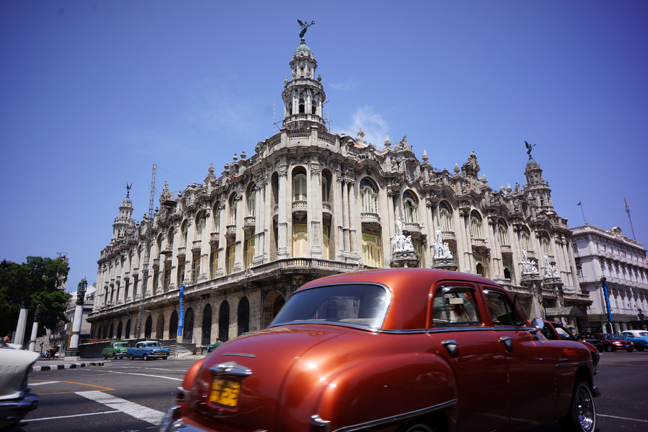

This is a true story of travel, sanctions and two optimistic Millennials: Amuh is from Mandalay, Myanmar and Alex from Havana, Cuba. One has come of age after Americans began traveling to his country, the other has never known a world without sanctions.
Amuh drives a taxi owned by his mother and chatters freely about politics. Right now he’s pissed that elections in Myanmar have been delayed until late 2015 but thinks Aung Sang Suu Kyi’s party will win a majority and change the constitutional amendments that prevent her taking her rightful role as president. He worked legally in Malaysia and realizes that his philosophy diploma from a Burmese degree mill university system is useless. He plans on starting a business before starting a family.
Alex is also a college graduate. His degree is in English and he spends all day trying to convince tourists that his uncle owns the Buena Vista Social Club and he can get them a good ticket. He feels sorry for Americans because we don’t get free healthcare and education, thinks Raul Castro is awesome for allowing cell phones in Cuba but can’t afford the $6 an hour it would take in an internet café to build the tour guide website he hopes will provide a better future for his wife and baby girl.
Amush and Alex’s stories explain why travel is so important to a free society and why even the most principled tourists have doubts about the effectiveness of sanctions.
As someone who grew up in South Africa during the era of Apartheid, I have complicated feelings and experiences with international sanctions. I applaud the humanitarian ideals behind them. But I’ve seen, first-hand, the economic misery they create when immoral, corrupt governments use sanctions to dig their own hole deeper.

I’ve also seen how inflated Americans perceive our importance to be. And how hypocritical we can be. Myself included. We Americans somehow think that visiting Cuba under the special exemptions of guided photo clubs or university tour groups is okay, but that skirting the rules and arriving on our own via Mexico or Canada is somehow immoral. We’re okay with pilfering baseball players from their $100-a-month island teams but buying Cuban cigars is evil. On a good day we can see across the Florida straights but people are forced to risk their lives to reunite with their families. The original intent of the sanctions might have made sense 54 years ago but the way we dance around modern-day Cuba is nothing short of ethical contortionism.
I’d like to think that the heavy, well-intentioned hand of American sanctions will help, like they eventually did in South Africa. But Alex is still hanging out in Plaza Vieja, gratefully counting his egg and sugar rations and waiting for Raul’s next handout. I don’t know whether to be comforted by his naïve optimism or heartbroken.
But what about Amuh’s more cautious hopes for a better future? Again, I’d like to give credit to sanctions. But for the last twenty years, European and Chinese tourists largely ignored them and visited in well-heeled droves. The surface changes evident in Myanmar today may have had as much to do with Internet access, Chinese and Indian economic investment and the diplomacy and well wishes of ordinary tourists.

I’ve dreamed of visiting Myanmar ever since working/traveling in three of its bordering countries: Thailand, Laos and China. I stood on the banks of the Mekong, my tattered, beloved copy of “The Piano Tuner” in hand, wondering if I could look myself in the mirror if I crossed that river to the land once known as Burma. The beloved daughter of its national hero was under house arrest, the military junta was killing monks and jailing journalists.
I couldn’t do it. I waited until the sanctions were lifted and “The Lady” was free. I waited until my old agency, Ogilvy PR Worldwide opened an office in Yangon. I waited for my conscience to be clear. And guess what? I still have mixed feelings. I’ll be writing about my travels in posts to come but I have no answers. I could buy an Aung Sang Suu Kyi T-shirt, made in China of course, and not have to look over my shoulder or worry that the shopkeeper would be arrested. But I was still not allowed to venture out West, where Rohingya Muslims are still kept in what are essentially concentration camps.
If anything, I feel like I waited too long. Not because Myanmar is already so tourist-savvy and overpriced. But because by staying at home I could not be a witness – to its triumphs or its tragedies.
Screenwriting Tips from Oaxaca Film Festival
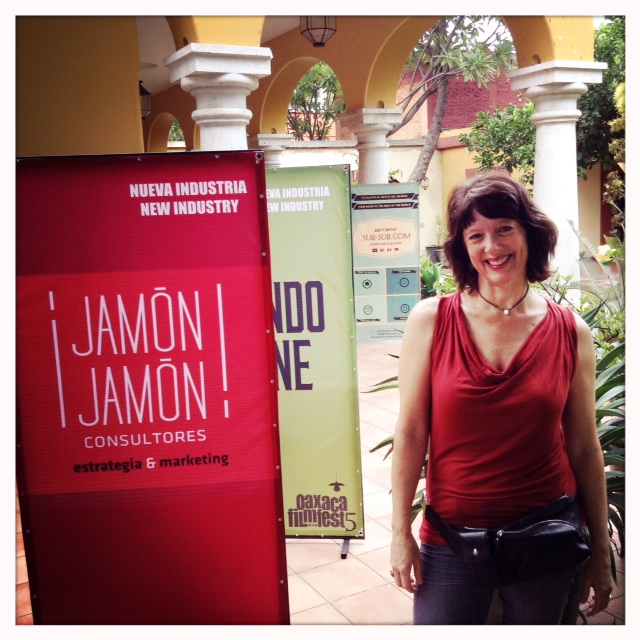
 One reason Movie Magazine ranks the Oaxaca Film Festival so highly is because of the attention the festival pays to writers. In most film festivals, screenwriting is the also-ran category, added more for entry fees than for the advancement of writers. Oaxaca turns that on its head. This year, the festival’s fifth, there were two days of workshops and pitch opportunities, in addition to the (ahem) networking screenwriters do at the after-film parties.

Here are a few tips I picked up:
#1 From Dove Sussman (just sold a script for a big Clive Owens film) — dive into the setting. Make the setting a character. Start by imagining its streets, its bars, its scary places. It’ll inform how your characters act and react.
#2 Also from Dove — try speedwriting. To unblock you. To prep for his Oaxaca Film Fest workshop, he and a pal in Puerto Escondito wrote a screenplay. In one night. Mezcal might have been involved but hey, whatever releases the creative juices.
#3 Backed up by screenwriter and writing guru Jacob Krueguer – if you’ve always been methodical, try blitz writing. If you’ve never worked with a partner, give it a shot. You might be in a rut.
#4 Jacob again — figure out what the main character wants and make him try to get it in every scene. While being tormented, tested and thwarted every step of the way.
#5 Jacob again — make sure you do a “reader’s draft” — checking your “me” draft against what a coverage reader will be thinking about. Make the screenplay easy to skim. Cut down on lengthy exposition.
Heard and understood.
Mad for Mezcal

My taste for mescal started on a road trip through Oaxaca, a stopover on a journey down the Pan American Highway in a vintage 1968 camper. Modern day Oaxaca is not particularly camper-friendly; the streets are narrow and filled with empanada stalls and hippies selling hemp necklaces. But thirty minutes up the hillside above the city we found an American who operated an RV-park of sorts in a field of experimental mescal plants. Here’s an excerpt I wrote in a journal I kept on that roadtrip:
“Douglass is a twitchy 52-year-old, originally from California, who looks like he should have a long surfboard strapped to the top of a VW bug. He is convinced that mescal can be distilled from more than just the 16 varieties of agave plant customarily believed to be possible in the industry. It’ll take nine years to fully prove his theory; these plants don’t grow to mescal maturity quickly, but we sipped two varieties from recycled glass jars that Douglass filled with a plastic funnel. The youngest, cheapest variety scoured my esophagus. But the more expensive variety, aged in oak barrels like a fine cognac, passed through my throat with a smooth, low vibration and a hint of woody sweetness. When Douglass bottles and sells this line of “El Scorpion” mescals, he puts a dried scorpion exoskeleton in each bottle. Local Indians who once laughed at his horticultural ideas now stop by his house everyday to fill their own plastic containers.”
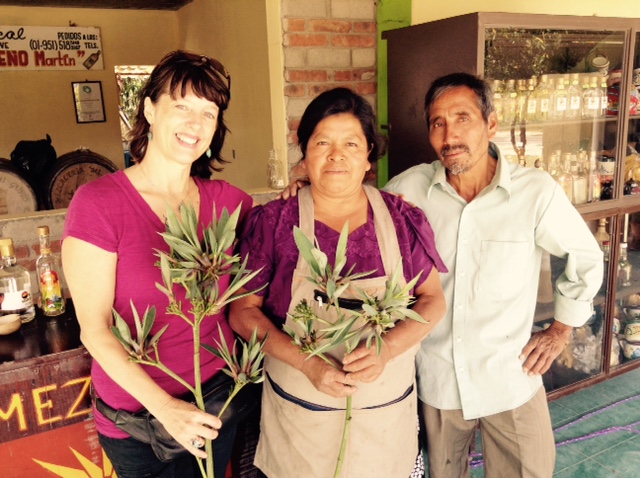
Leaving Oaxaca on that roadtrip, near a village called Santiago Matitlan, we found an indigenous mescal maker named Martin Garcia whose spirits we like even better (and have returned many times to buy more). But it turns out Douglass-the-American got the last laugh. His “El Escorpion” is now exported and available for close to $40 a bottle in the U.S. The mescal industry has gone from Mexican moonshine to the new, hip drink in swanky cocktail lounges – lauded in articles in such unlikely places as Garden-and-Gun and the Wall Street Journal.
All of which is part of the reason Martin’s mescal has also gone up in price – from $5 a bottle three years ago to $25 a bottle now. It’s still worth every peso. Not only do you taste nothing but the agave plants he roasts on site, but it has meant a better living for Martin and his wife. They’ve expanded, from a one-horse operation ten years ago to two today. They’ve planted more acreage and built a proper stand from which to sell their varieties. Martin wasn’t shocked to hear that high-end mescal bars in neighboring Oaxaca sell shots of the best stuff for $10 each – because he says the government has its hand out now. Taxes have skyrocketed, both on the land and the product he makes from it. Banditos have taken to stealing agave plants in the dead of night. Still, he’s making a good enough living that one of his sons wants to take over the family business. He’s even modernized the label – from a rustic image of a sombrero and the name “Mi Gusto Es” (It’s My Pleasure) to a stylish skeleton festival scene under the name “La Comparsa” – costumed carnival-goers. A perfect invitation to join the band wagon.
Getting into the “spirit” of the season
I’m originally from Oregon and my husband is from Wisconsin. Between our two home states we’ve kind of covered the micro-brewery landscape. If we wanted to be beer snobs, we’d have justification. The thing is, neither of us drinks much beer anymore. Maybe it’s because we live in the Deep South now, but we’ve both switched to stiffer stuff. So when TEDx Charleston held it’s speaker party at the new micro-distillery in Charleston — it was the one social event Gary willingly attended. They make a mean gin, and they didn’t pay me to say that.
But it was on our last trip to Milwaukee that I actually got to “tour” a micro-distillery. My brother-in-law bought us a bottle of Rehorst Gin a while back and I even found it at our local liquor store in Beaufort, SC — it’s that highly ranked. So Great Lakes Distillery was top on our to-do list when we spent a week niece-sitting. They went off to school like good girls; we hit the spirits.
To call it a “tour” is a bit overstated. We were led down stairs from a bar serving cocktails well before noon, to a basement. Where there are some fermentation vats, a row of oak barrels and a copper still. Pretty copper still. But that’s it. Nothing to see here. The longer you ask questions the less time there is for tasting. Which is why people “tour” the Great Lakes Distillery. Because in addition to the aforementioned Rehorst Gin, they make utterly neutral and natural vodkas (I’m told that’s a good thing — meh?) a tasty rum from sugar beets called Roaring Dan, some god-awful pumpkin flavored concoction (a nod to the season, and women who don’t stop at pumpkin and cinnamon scented candles) and then the best surprise of all.
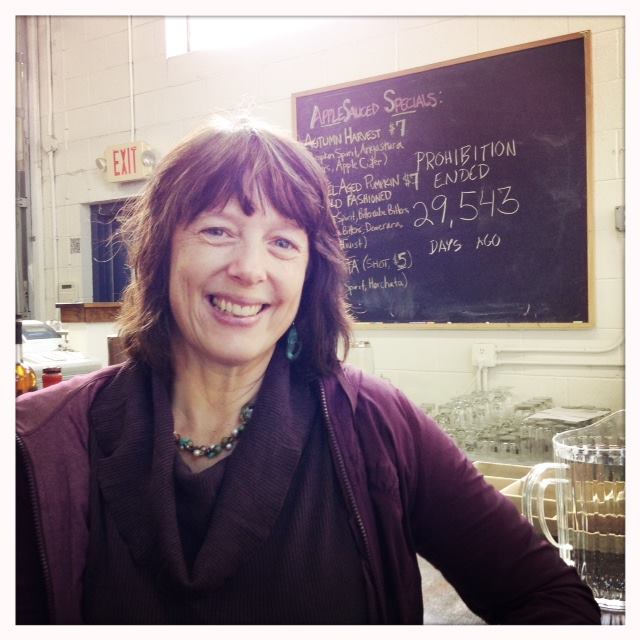
I’ve never liked whiskey. Or Bourbon. Which makes me pretty much an embarrassment to my Scottish heritage and a pariah in my adopted land of the Deep South. Brown liquor always tasted bitter and burned going down. I’m no wimp — I take my tequila and mezcal straight and strong — but I couldn’t take whiskey. Until I tried GLD’s Kinnickinnic Blended Whiskey — on my birthday. It was the best present of the day and I’m now going to lead a one-woman crusade to bring it to Bill’s Liquor in Beaufort. Besides, what other tour celebrates a convert’s birthday by marking the chalkboard with the number of days since prohibition ended?
A Southern Quirk — Joggling Boards
Since my now 1-year-old book “The Other Mother: a rememoir” is published by Joggling Board Press in Charleston, SC — I thought I’d explain the peculiarly Southern bench JBP is named after. I like this definition the best, but in my own words — a joggling board is a delightful anachronism of a time long before sexting or hooking up substituted for courtship.

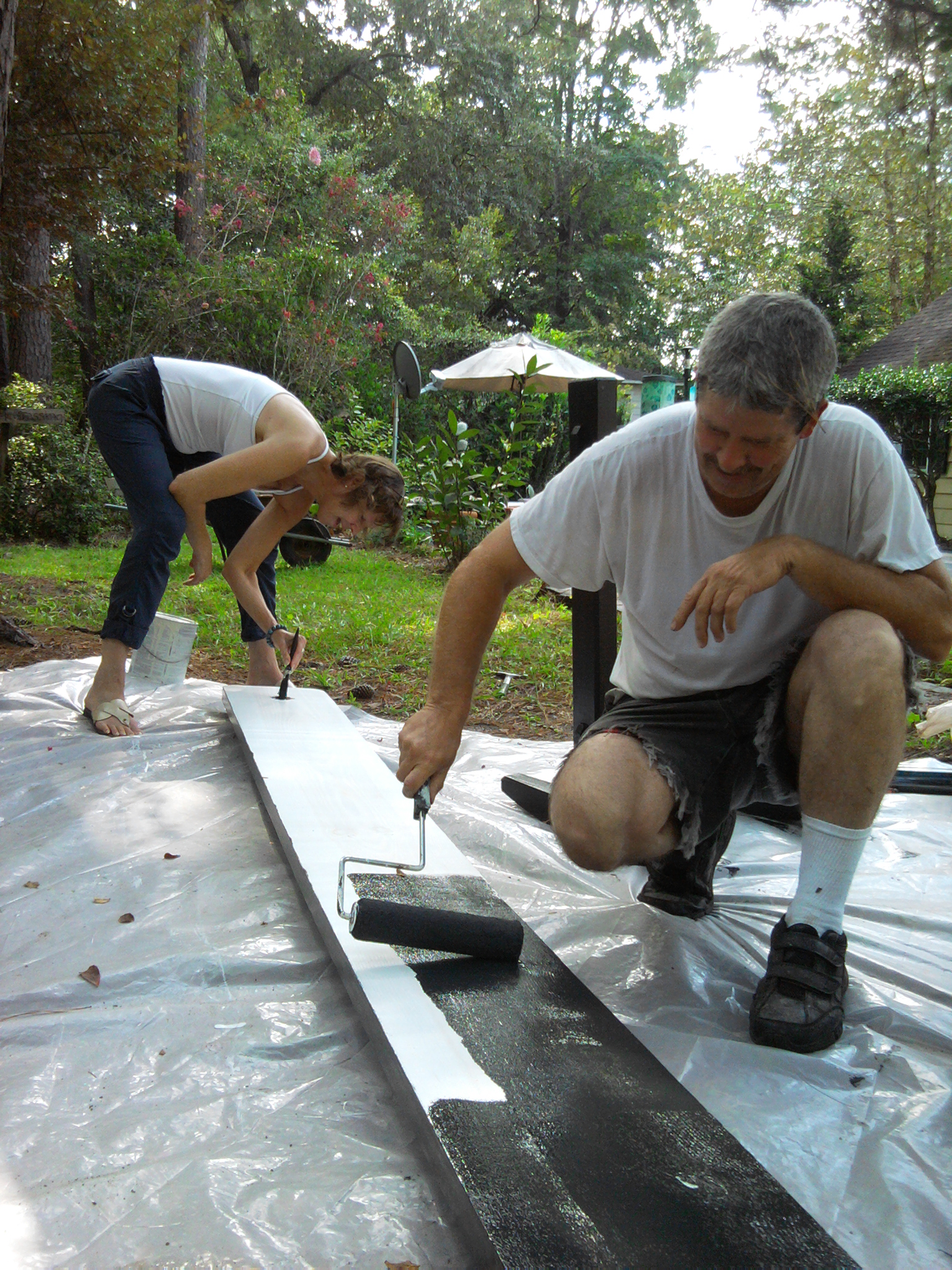
It’s a long wooden plank suspended between two rockers that give it a saucy bounce. The idea was, the man sits on one end and the woman the other. As their relations progress, they scoot and jiggle a little closer. By the time cheeks met, intentions were declared and chaperones relieved. Bless their hearts. The fact that it might have been devised or even imported by Scottish plantation managers kind of spoils the native charm, though the Scottish part of me chuckles at imaging the whole affair done in kilts.
One day I’m going to have a joggling board made for my bluff overlooking the Beaufort River, and I’ll have an engraved plate installed to commemorate the two best love affairs I’ve ever witnessed: the one between my recently departed Granny Vera and long-gone Grandpa Jock Bruce and the other the partnership of Byrne and Duncan Miller.
Then when my favorite aunt visits from Oregon each year, we won’t have to act like silly kids on the joggling board outside the SC Artisan Center in Walterboro, where this one graces a porch.



The Other Mother’s First Birthday!
The Other Mother: a rememoir is one year old today! November 5th was the national release date and the start of a fabulous dance with readers. If I had to make a David Letterman-style “Top 10 list” of the first year of a book’s life it would look something like this:

#10 The thrill of seeing my baby in the window of my hometown bookstore
#9 The pinch-myself moment when I saw it in the main Columbia library during the SC Book Fair – where I got to be on a memoir panel.

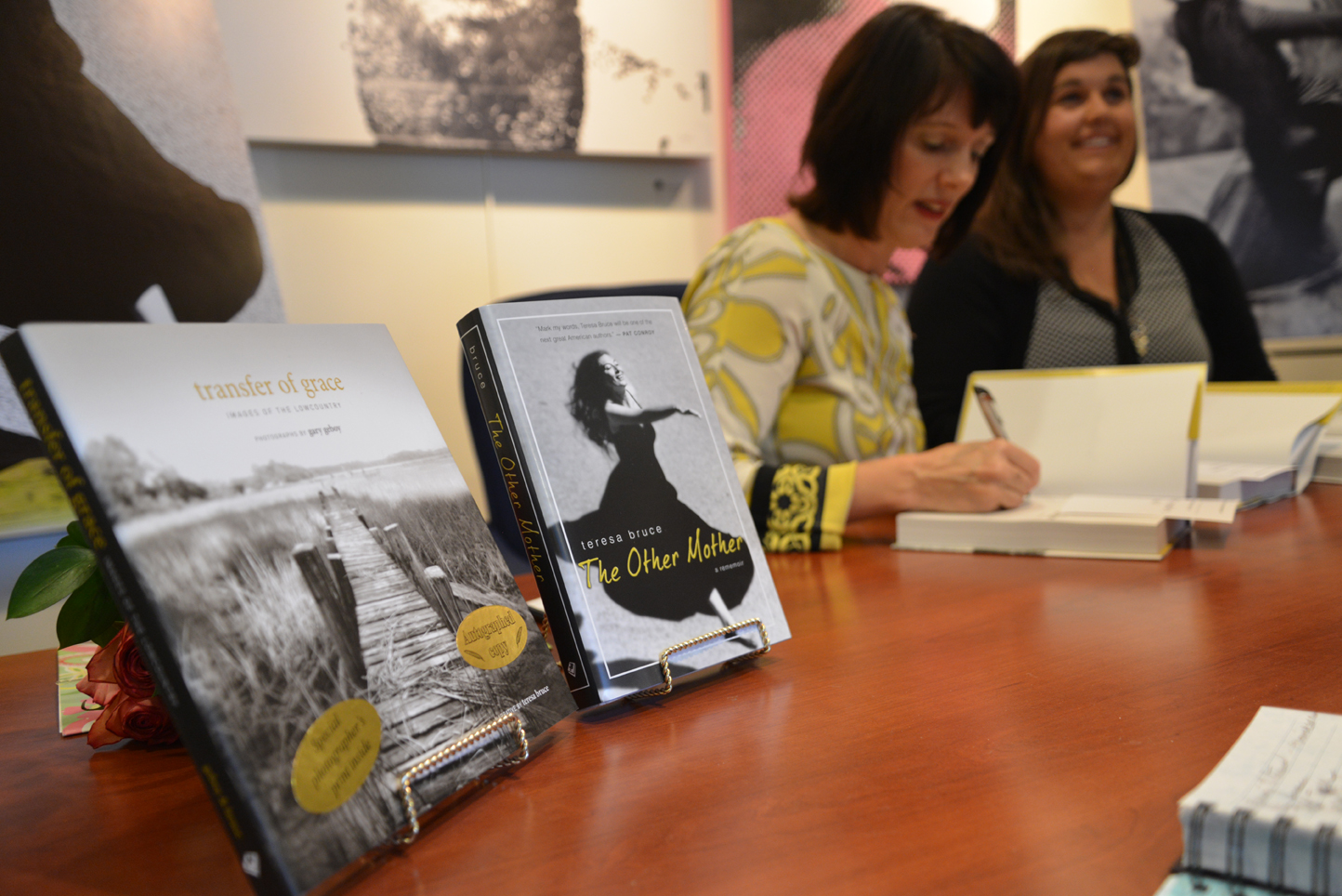

#8 Book signings galore — it turns out men love to buy the book for their wives, and women for their sisters, aunts and other mothers.
#7 A sold-out crowd at Litchfield Books’ Moveable Feast luncheon – where one woman told me she bought the book as a gift for her daughter, hoping she’d “get herself an other mother right quick!”
#6 A blog tour that introduced Byrne to dancers and readers around the country and got rave reviews you can check out on the “reviews” tab of my website.
# 5 An “Other Mother’s Day” PR campaign that introduced the book to newspaper readers in North Dakota, Utah, Ohio and Pennsylvania; morning talk radio listeners in New York and Providence and public radio fans in Berkeley, California.

#4 Hearing all the stories of how other mothers transform us at the fabulously elegant Other Mother Soiree’s hosted for the book in Beaufort, Charleston and Washington DC

#3 Signing 18 copies of the book for Pat Conroy to give as gifts to all the daughters and mothers in his life!
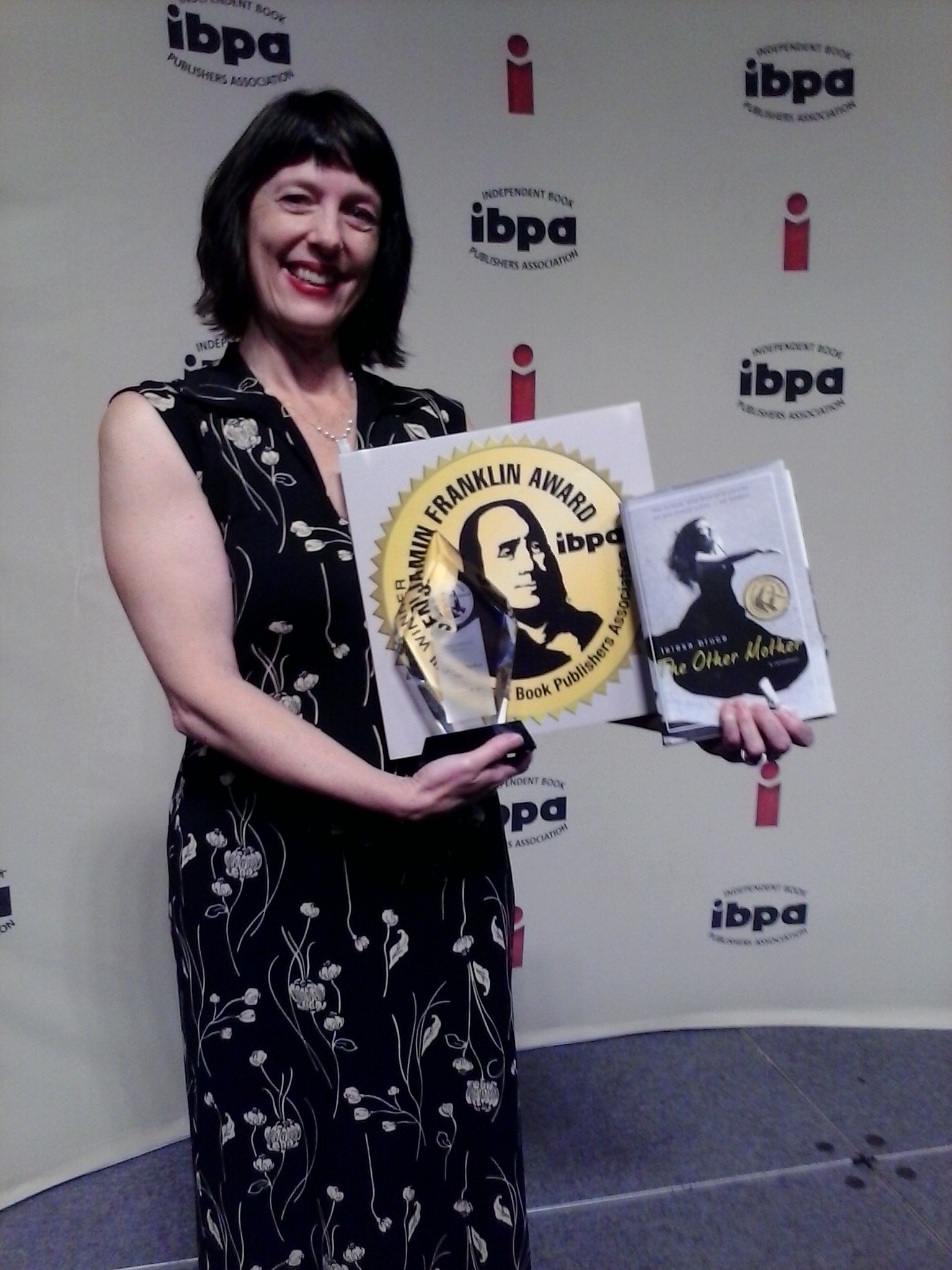
#2 Winning the Independent Book Publishers Association’s 2014 Benjamin Franklin Award for Best New Autobiography/Memoir in New York

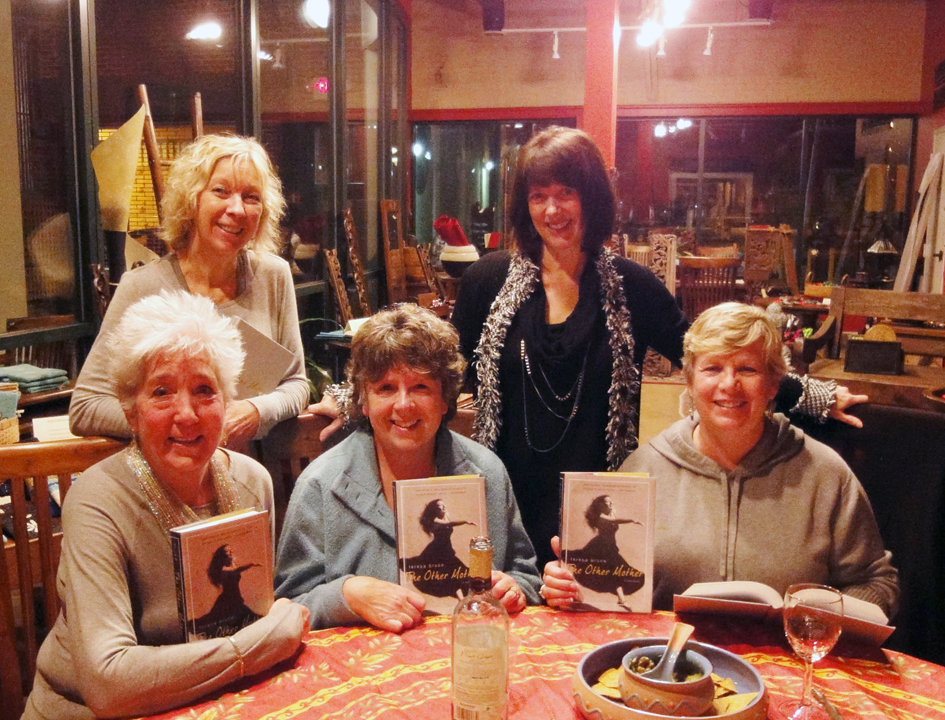

#1 My favorite part — talking to bookclubs (including one in a yurt!) and hearing perspectives that always surprise and delight me!
The Mother of Reinvention
For a few years now, I’ve been blogging about Other Mothers. The title of my blog — Womenisms — was a word I invented to describe the spoken wisdoms of my own Other Mother: Byrne Miller. She was a champion of reinvention, something I passed on in my TEDx talk before the book launch. So I think she’d love the fact that I’ve renamed the blog “TeresaBruceBooks” and made it simpler to find on the web. Now all you have to google is teresabruce.me.
Me — my latest reinvention. By way of Halloween and Frida Kahlo.

I’m not alone in long admiring Frida — as much for her fierce spirit as her art — and I always make a pilgrimage to her house in Mexico City whenever we pass through. So when I stumbled upon a stack of vintage, velvet-and-beaded tops in an antique store in Oaxaca I couldn’t resist. It was torture waiting for Halloween, to add the faux jewels I picked up in Milwaukee Goodwill stores and Byrne’s antique poison pendant.
As Frida impersonators go, I’m a white girl without enough hair. But then reinvention isn’t about copying and it’s never permanent. My homage to Frida was a chance to open my mind, to more fully imagine her life and look at mine through her lens.
It wasn’t until I penciled in the unibrow that the transformation, however temporary, began. I, like most self-critical American women, fastidiously shave and occasionally pluck to fit the norms of our society. But flaunting the unibrow was more than liberating. It felt beautiful and defiant — unapologetically earthy.
The costume party I attended as Frida-light was a spectacle of reinvention. Watching all my friends in their creative alter-egos made me realize we all crave reinvention. Hiding behind a mask is actually a chance to parade the inner self. It took a trip to Mexico to make me want to stomp my feet and join in.
Since my new, reinvented blog allows me to insert videos — take a look at this one. Byrne would have loved these dancers — ordinary villagers who reinvent themselves every chance they get. Viva la transformacion!
 "TeresaBruceBooks"